Direct Cinema

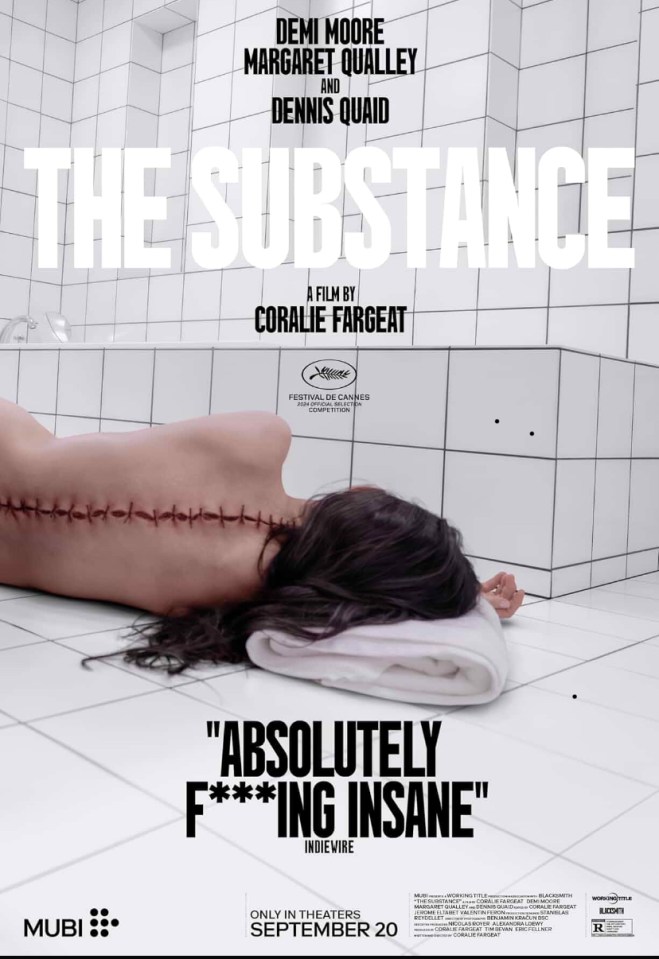
‘Essential’, ‘Unforgettable’, ‘Body Horror Classic’, ‘Feminist Cult Classic’, ‘Dark Comedy’, are some of the quotes being thrown around about ‘The Substance’, a new film by Coralie Fargeat, starring Demi Moore. The best description I’ve seen is the line in the teaser from New York Magazine, “An enraged scream in cinematic form”. Having been released during the season of America’s self immolating election, ‘The Substance’ is a testament to society’s desire to go backwards into thin fantasy worlds created to protect us from looking at ourselves.

The film is relentless and brutal and without compromise. Many viewers may be repulsed, or even traumatized, although I question if anything on the screen matches the daily horror displayed on the evening news. The film juxtaposes the sleazy spectacle of Donald Trump style beauty pageants with explosions of rage that reminded me of the movie ‘Carrie’, as well as the tortured physical metaphors often portrayed in the films of David Cronenberg.

Blending horror and comedy in a surrealistic mix of ‘pumped up’ visual extremes we see in television commercials and popular magazines, ‘The Substance’ pushes up against cinema’s most powerful operatic limits. The intent is to forcibly shock the viewer awake. Its images are grotesque and direct, and anyone not altered in their presence is either unconscious or braindead.

In the face of extremes of hate and violence pushed by those who wish to rule and profit, the floodgates of truly political art have opened in the mainstream. Films like ‘Barbie’, ‘Women Talking’ and ‘Poor Things’ speak directly to the atrocities of female oppression. ‘The Substance’ is one of those, and it isn’t trying to be reasonable or gentle in a world where the spectacle of politics has taken us to the edges of absolute chaos.

During the drawn out, horrifying and over-the top final cataclysm in ‘The Substance’ there’s a close up shot of a terrified little girl covered in blood. She’s been dressed up to echo the exotic sexual fantasies paraded before her on the stage, and her face displays the full horror children witness everyday in a world trapped in its fantasies and dominated by its own irrational fears.

Women Talking

In (2023) I managed to see most of the movies nominated for the Best Picture at the Academy Awards. (except ‘Elvis’ – I was never much into Elvis and am not particularly fond of biopics in general.)

That was the year ‘Everything Everywhere All At Once’ won the award.

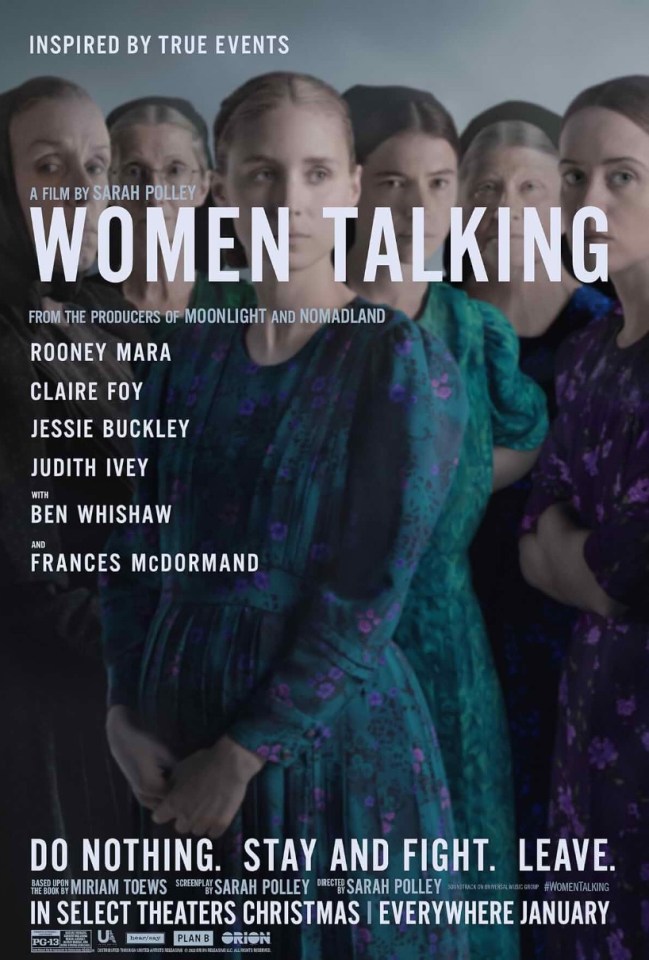
Sarah Polley’s film ‘Women Talking’ was awarded ‘Best Adapted Screenplay’

I thought it deserved ‘Best Picture’ – at least.

When I saw it at the theater I wept tears from the beginning to the end. I just watched it again on Prime Video, and it had much the same effect, although I was able to draw back just a little bit and appreciate the pure technical perfection of the film. (It won the Movie Of The Year from the American Film Institute.)

No film in my memory has affected me so deeply. I’ve elevated it to my top three favorite films of all time. (It falls between ‘Wings Of Desire’ for its depth, ‘Drive’ for its technical perfection – ‘Women Talking’ has both, and the best acting ensemble I’ve ever witnessed). I haven’t seen a better movie before or since.

Coming into this election and all of the struggles it has brought to the surface, ‘Women Talking’ perfectly exposes the deepest and most universal issues at play in this nation and in the world.

Barbie and Bella

It’s interesting that two of the most prominent films in the same year carry themes as ‘similar as ‘Barbie’ and ‘Poor Things’, while offering radically different and original approaches. Both are comedic fairytales that confront our common fantasies about female autonomy, while being directed toward different audiences and leaving us in different places.

Both films center on the theme of following a single character from a more or less one-dimensional state to the development of a self possessed personality. Both Bella and Barbie begin their journeys by learning how to walk. By the end one has achieved a state of dominance and autonomy, while the other is left more or less still at the beginning of the path.

‘Poor Things’ centers itself in the remarkable performances of its cast. (I was thrilled to see Hanna Schygulla as the elderly dowager that Bella encounters on the ship. I confess that she was my greatest screen crush in my younger years, and I’d recognize her smile anywhere.) This film dwells in an imaginary Victorian dreamworld, while dealing more forthrightly with intimate issues of control through sexual dominance and submission. The denouement is definitive and satisfying, while being entirely fanciful.

The central characters in ‘Barbie’ are actually the contemporary images and fantasies to which we’re exposed in consumer culture. Every scene saturates us with references to movies and television and advertising. Homages abound, from old MGM musicals to ‘The Matrix’. We move back and forth from imaginary ‘Barbieland’ to corporate and middle class Los Angeles, ensuring that even the most obtuse viewer is aware that it’s our own world being challenged. At the end of this movie the central character has only begun to face the real world, and we the audience are left exactly where we are.

It’s an opportunity to watch two stylistically different and excellent films approaching similar themes in the same year. ‘Poor Things’ reminds me of Terry Gillian’s ‘Brazil’, while ‘Barbie’ dwells more in the realm of Jean Luc Godard (if he were capable of doing a popular musical comedy).