America In The Squeeze

Guns versus smartphones

I’m just turning 75. My life has been formed, and is almost completed, throughout a breathtakingly brief and cataclysmic era in global history. In future accounts it may be referred to as ‘The Neoliberal Era’, ‘The Era Of American Hegemony’, ‘The Age Of Economic Globalization’, or perhaps, as the cataclysm intensifies toward its resolution, ‘Capitalism’s Final Crisis’. There will be a few references to something called ‘The American Empire’. It will appear as a flicker between the centuries, and one of the shortest lived empires that ever endured.

We are at the beginning of a 2nd American Revolution, one that is long due. Whatever the outcome, it will radically reshape the outcomes for global civilization. The age of the nation state is gradually going out of phase with the needs of the physical world. There will be times of breakdown and struggle. We must reintegrate with the workd. This will take some time and will never be at an end. I believe that in the next phase there will still be nations, and languages and cultural boundaries. The dimensions of power will be altered in structure and better managed, through education and the cultivation of respect. The flows of the twin rivers will be, at least until the next glacial scale disruption, in better harmony, as each distinctive part realizes its necessity to the whole.

Technology presents new perceptual models of the world much faster than anything we can control or even keep up with. We are continually confused. The time has arrived for us all to take a deep dive into questioning who we are and who we want to be, and what are the ultimate stakes. Complacency is deadly. We’d been so long buried in our own work, forgetting our reasons for working, or what makes up the whole mechanism of our survival.

We generally see and enterpret the word ’revolution’ to refer to specific cataclysmic changes in the procession of historical events. To understand what moves these events it’s necessary to go beyond specific dates and times and logistical patterns, and embrace the flowing evolutionary trends, ever constant, ever shifting, beneath the surface of what we see.

There are two constant revolutions/evolutions going on at any given historical moment. One is economic, and the other is cultural. They are woven together in close procession, at times in harmony, and at other times they appear to flow in opposing directions. The economic evolution is by nature conservative, its primary focus to preserve stability. Economics is a measure of the river of things, the movement of necessities and the produce of our desires.

Cultural evolution is something broader and more ephemeral, and yet central to our sense of well being. Something within us is driven by an impulse to break the rules, to advance, and to enter new territories. We are curious and inspired. Culture is the river of our perceptions. They are sometimes clear and accurate, and at other times only marginally connected to the world beneath the fog.

These twin streams never stop moving, never stop changing. They are inseparably linked, either energizing or obstructing each other, acting over and through us like the ancient gods in Greek tales about siblings and rivals.

It’s becoming abundantly and existentially clear to much of humanity that survival depends on a true understanding of the role we play as part of a bigger organism. Globalization is the political term for an economic transition. We go from centralized industrial production to widely distributed supply chains stretching across oceans and continents. At its essence, this is like the early evolution of the cell. A number of independent organisms come together as a cooperative community and eventually merge into a single complex organism. A process called symbioses.

Along with economic revolutions, cultural revolutions advance at an unprecedented rate, driven by the tides of information that flow through the system, reshaping at every instance our perception of the world.

We are currently engaged in a third world war, which is a new kind of war, fought with numbers and ideas and conceptual systems playing across screens. The handheld weapon in this war is the smartphone in our pockets.

Things are moving very fast, worldwide…one event or action leads to others. People find out who their allies are. They’re encouraged to become more boldly resistant. A major university resists a government takeover. Prominent financial managers begin speaking out. Republican Town Meetings get rowdy. People, in general, are educating themselves. All of this builds toward an ultimate breakdown of life as usual.

Kilmer Abrego Garcia, like George Floyd before him, like Alfred Dreyfus long before all of this (see ‘Dreyfus Affair), is an unfortunate victim of history. On April 19th, demonstrations, even more enormous than on the 5th, will expand the focus beyond Musk and Trump to embrace and defend Garcia, and his young family, and ourselves, against the fascist brutality that landed him in a living hell.

Trump and company are waiting for an opportunity to gin up excuses to go after dissenters, with fierce repression, just as they did during the George Floyd era. Just like then, only more so, there’s an international reaction to their policies and cruelties, and they now feel cornered.

The American economy is now riding in the back of a cybertruck, under the control of the madman we gave the wheel, heading toward a Thelma and Louise denouement. I fully expect that we will go over that cliff, taking a good chunk of the world with us.

There is, at present, a very thin line standing between democracy and fascism in America, and the next few weeks will determine whether that line is holding. I’m talking about the Law, the Courts and the the Universities.

The 5th Estate, the Press and the Media are barely functional, not even willing, for the most part (except comedians), to call out fascism by its real name (they use the academic term, ‘authoritarianism’ – it’s elite and vague and sounds less threatening).

Social Media has taken up the slack of what remains of democracy and free speech, performing the role that pamphleteering did between the first American Revolution and the Civil War. I find myself no longer getting my news and analysis directly from newspapers or television, and the marketplace of ideas is boundless and international. This is a completely different realm of media, with a whole new set of rules, evolving constantly, that govern behavior and trust.

The vessel of our freedom is still encapsulated in words and institutions inspired and put into action more than two centuries past. If these barriers are breached, we will be in a new state of civil war. At that point another line of defense comes into play. There’s the police, the national guard, the military, led by educated commanders who’ve taken pledges to defend the Constitution and the law. These are forces composed of people from communities most affected by the actions of this administration. We will be in unknown territory.

We are in a Squeeze.

America will survive. The world will survive. The relationships between us all will be radically altered. We will have been through a deep process of self examination. Perhaps for the first time since the last World War, since FDR and long after, we will be forced into revisioning our entire political and economic culture.

My generation won’t be around to witness the conclusion of that process. But we will have been privileged to see its beginning, and to have learned much on the ride along the way.

Civil Wars

I just finished the remarkable new book by Nancy Pelosi, The Art Of Power. It was on the one hand an inspiring first hand account of indomitable courage and determination in the face of difficult odds and a history of the major political struggles I’ve witnessed since 1987. On the other hand it’s an account of a time of civility in politics and government that has frayed and all but collapsed since the rise of Trump.

I feel both pessimistic and useless in the face of what’s coming. I now find myself reading books about the lead up to wars; Eric Larson’s The Demon of Unrest, about the five months preceding the first American Civil War, and The Proud Tower, by Barbara’s Tuchman, about Europe and America before World War One. Each marked the necessary transition from one state of civilization to the next. I find that reading history helps me out of a state of helpless depression, perhaps it helps me to accept that what’s likely to happen has happened before.

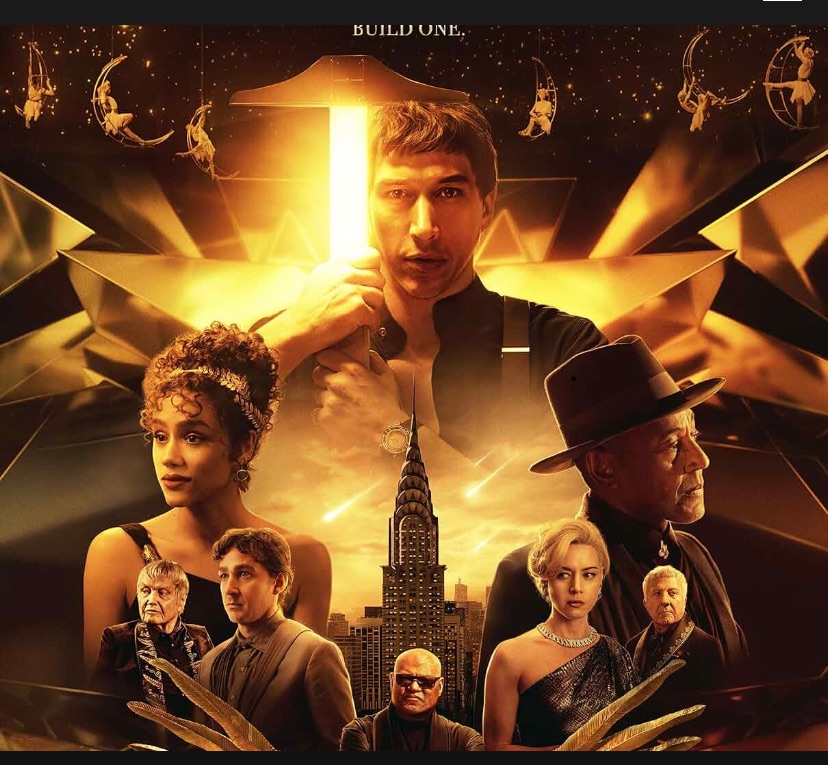
Yesterday I saw Coppola’s new and perhaps final film, Megalopolis, which is a rather surrealistic fable depicting the conflict between creativity and stagnation in a world of decadence and decline. It ends in a rather fanciful and/or hopeful conclusion, where creativity and progress apparently triumphs over our clinging to the past.

I was reminded of the film that has had a strong impact on me this year. Civil War depicts in realistic and down to earth terms a likely scenario should the USA descend once again into bloody conflict. In interviews, both the director and the actress Kirsten Dunst refer to Lee Miller, upon which her character is based, and the subject of the newly released Kate Winslet film, Lee She was a World War Two photographer who bore witness to some of the worst atrocities of that conflict.

I’ve come to believe that the likelihood of an election without violence and a peaceful transition of power is unlikely, no matter who wins, and the only thing you or I can do to alter events is to choose not to participate in the violence in word or deed. We must refuse to spread the hatred and fear being directed by so-called leaders, against the poor, the weak and the ‘others’ in order to advance a bid for supremacy and power. We must recognize the seeds of fascism that are being encouraged everyday, and deny them from taking root within us.

I’ll be driving up to Denver to take a flight to Cleveland to visit family on October 24th and will return to Santa Fe the day before the election. I wonder whether this trip will mark a rise or fall of the world we’ve known. Right now I’m not betting either way.

Peter Zeihan As Clickbait

I was recently sent the recent Peter Zeihan book, The End Of The World Is Just The Beginning: Mapping The Collapse Of Globalization. Upon reading it I feel compelled to offer my critique. Aside from the rather dismissive and generally smart-ass style with which the author delivers his doom prophecies, the book is very informative in terms of outlining the complex systems and their interrelationships that currently run the world, and it offers valuable pointers toward highlighting the system’s strengths and weaknesses. At the same time it’s a vivid illustration of the trap of over reliance on statistical data when addressing complex systems. I’ve rarely encountered an argument that rests on so many facts that work against the very case that the book is making. Not only is it full of contradictory and sometimes questionable assumptions, the data that backs the world view the author delivers could equally support the likelihood of continued globalization as it can for its dissolution.

The fulcrum of Ziehan’s argument hangs on two assumptions:

1.) Aging populations and declining birth rates will result in a worldwide demographic collapse that will upset the patterns of production, distribution and consumption that fueled the economic boom times since World War Two.

A 1968 best seller by Paul and Anne Ehrlich,The Population Bomb delivered, in a similarly apocalyptic tone, a revival of the 18th century theory by Thomas Malthus, that the growth of population with the rise of prosperity, particularly among the poor, would inevitably exceed humanity’s ability to grow enough food. While Zeihan’s argument runs exactly in the opposite direction, both prognostications rely on a set of ever-shifting statistics to make their case.1 Food production since the time of Malthus has continually outpaced the growth of population. Problems with global starvation and famine are due less to population increase than to the unplanned consequences of war and the inequitable distribution.

Over the course of my many decades of living on the planet under the constant threat of extinction, I’ve been presented with so many predictions of impending catastrophe that I’ve lost count. From the Rapture to nuclear war to DDT and Y2K and global anarchy, the predictable constant is that in times of anxiety and change these prognostications sell books and provide rich fodder for talk radio. Attempts to reduce enormously complex systems to fit into the terms of one or two basic assumptions invariably fail to meet anyone’s predictive timescales. Demographics are one single factor among countless others that can affect outcomes, leaving aside our ever shifting politics and human resourcefullness, our ever advancing technologies affecting the ways we live and work and talk to one another, and our dawning collective awareness of the effects of climate change, to name a few.

2.) Zeihan’s second assumption is that the American Empire will simply give up on the world ‘Order’ that it has helped establish and maintain since the World Wars. Apparently America will simply conclude that it’s simply too much trouble and expense to continue enforcing the peace and we’ll withdraw into our geopolitical fortress. After all, we’re geographically in a position to grow our own food and make our own shit and let the rest of the world go to hell. Aside from espousing an incredibly arrogant, if not popular view of American exceptionalism, the very fact that our economic prosperity has been fostered by our multicultural ties and the intricate trade and military relationships we’ve constructed over these many decades makes it extremely unlikely that we will or can turn away. Even if we attempted such a thing, undoubtedly other entities or alliances would take our place, and we’d be shuffled a little lower in the deck of international authority.

Which brings us to China2. Having read and listened to a number of accounts from inside China. (I highly recommend the ‘Drum Tower’ podcast from ‘The Economist’ magazine for a more down to earth view of Chinese politics and culture.3) Zeihan spares no opportunity to dump on China, leaving an impression that its the very model of his overall thesis that most of the rest of the world is doomed in economic terms, while the USA and North America will pull through rather nicely. In reality, for anyone that takes a closer look through the paranoid cloud of American propaganda, it appears that China’s problems, both economic and demographic, are practically a mirror image of similar problems being felt in both America and Europe. In many cases the realities in China (the biggest crisis right now is too few opportunities for young people – not too many) are largely distinguished by the fact that, unlike the USA they are actually able to quickly respond in dealing with them. China ain’t going anywhere, and neither is America, or Europe, except perhaps in the fevered ‘click bait’ imagination of people like Zeihan. These major blocks of world power are so inextricably interdependent that the likelihood of any of them being left behind in the foreseeable future is vanishingly small.

For several years I was on the mailing list of ‘STRATFOR’, the organization that Peter Zeihan once worked for. Like Zeihan they have a world view that sticks closely to the ‘geography is fate’ interpretation of world history promoted by conservative scholars like the very prolific Robert Johnson (‘Modern Times’, ‘The Birth Of The Modern’, and histories of America, the Jews, Christianity, Ireland, plus biographies of Churchill, Jesus, Darwin, George Washington and others – a few of which I’ve read and been impressed by.). I agree that, so far, global history has been largely determined by access to the oceans. From the conquest of the great ‘pirate’ empires of the 15th – 16th centuries right up to the rise of ‘globalization’, this view has been accurate. However, we are all now swimming in a different ocean, one that’s linked by the instantaneous communication and management of economics and resources through the ubiquitous ocean of digital media. This is now where business is driven, wars are made, alliances are formed and broken.

I remember Stratfor’s frequent skepticism that Europe could ever manage to hold together. Virtually none of their predictions have held true over the years. The recent Soviet invasion has catalyzed an opposite movement toward increased solidarity rather than further fragmentation. America, meanwhile, is showing increasing signs of weakness as it breaks into regional conflicts and rising paranoia. It has made it almost impossible for the nation to deal substantially with basic problems like poverty, endemic racism and rising political violence. Meanwhile China not only holds together, it exerts increasing global influence as it steps into the weakening breach of American influence in Africa, South America and the Middle East.

Every nation is an ongoing experiment in how to manage growth and change in an increasingly complex web of global relations. Not one gots it completely right or completely wrong, and every error is an opportunity to learn. Peter Zeihan grossly underestimates, in my opinion, the capabilities, creativity and ingenuity of people in general, especially anyone who isn’t living in North America. Unfortunately, in much of his writing I hear echoes of the Trump crowd, mindlessly shouting USA!!!USA!!!USA!!!

The proposition that America will withdraw from the world in some form of neo-isolationism is one that nearly every fact and trend sighted in Zeihan’s book actually makes less, rather than more likely. His theory of collapse, requires a kind of bunker mentality in which every nation stands essentially on its own and only the strongest will thrive or even survive.

History doesn’t tend to move backwards, and the sort of decivilization that Zeihan predicts, in a world as interdependent as the world he describes, no nation, especially one as central to the function of the whole intricate mechanism as the United States, can afford to go its separate way. America’s economy, as much as China’s or England’s or Argentina’s or the Philippines’ or Russia’s, is a ‘global’ economy. Oceans and hemispheres that once divided the world into separate kingdoms and empires are no longer effective barriers against the changes that affect us all.

No one can deny that there will be profound disruptions that will reshape the political, military and economic landscapes in the coming decades. To anyone paying attention, it’s evident that our modes of consumption and governance will be forced to adapt and evolve in ways that we only dimly imagine. We will face wars, famine, pandemics, climate events, natural disasters and shortages of things we’ve taken for granted. Every political entity will be confronted with its own contradictions. In the long run the question is whether these changes and challenges drive us, as global citizens, further apart or force us to recognize our absolute interdependence. Zeihan’s book assumes the former. I don’t necessarily disagree with his statement, “Shortage forces people – forces countries – to look after their own needs.” I would add that history also shows that in the face of shortages and disasters people, and perhaps nations, also awaken to their common needs.

(I have to add that Zeihan’s understanding of global agriculture is particularly weak. Statements like “You can have organic farming or environmentally friendly foods. You cannot have both”, are simply absurd. It’s been demonstrated again and again, in China and America and all over the globe, that the per hectare production of food grown using intensive sustainable methods on smaller scale farms generally exceeds that of the industrialized monoculture farming promoted worldwide and dominated by corporate culture, while leading to much less long term environmental devastation.)

The kind of hair-on-fire apocalyptic messaging delivered by Zeihan and others certainly sells books. Apocalyptic visions have aleways had an appeal in the popular imagination, and are guaranteed to gather attention from Joe Rogan audiences, talk radio hosts, and down various YouTube rabbit holes. The ‘paranoid style of American politics’ 4 has always had particular appeal in uncertain times, when folks are stirred up by the direction things are going.

As for American exceptionalism, that’s so much a refrain in Peter Zeihan’s view of the world, I’m reminded of the Sergio Leone quote:

“I began to understand that ‘America’ in reality belonged to the whole world and not just to Americans. The idea of America had already been invented by the philosophers, the vagabonds, the dispersed of this earth, long before the Spanish ships got there. Those whom we call Americans have only rented it for a time. If they behave badly, we can discover another ‘America’. The contract can be canceled at any time.”

  1. https://worldaffairs.blog/2022/07/09/debunking-peter-zeihans-shocking-and-popular-china-predictions/
  2. https://www.nextbigfuture.com/2023/01/here-is-what-peter-zeihan-got-wrong-on-the-joe-rogan-show.html
  3. Linkhttps://pca.st/podcast/21f082b0-377d-013b-efb0-0acc26574db2
  4. https://harpers.org/archive/1964/11/the-paranoid-style-in-american-politics/

Can’t Get You Out Of My Head

Reflections On The Work Of Adam Curtis

Adam Curtis considers his films to be strictly journalism. 

Having unlimited access to the vast archives of the BBC library, Curtis snips and cuts the myriad fragments of visual history to arrange them around themes guided by his own narrative and analysis. To relegate these works to the narrow field of conventional reporting would be to entirely miss their import and effect. The subjects of his films dive deeply into the wilderness of inherent contradictions between reality and the artificial reproductions of reality, between fact and imagination, between linear narrative and memory, and the many ways we rearrange our perceptions of reality to serve our own agendas. His most recent work, the six part series titled Can’t Get You Out Of My Head focuses on the dialectic between historical and psychological forces that drive individuals into increased feelings of isolation and helplessness and the barriers to effective collective action.

The emotional power of well selected images poised in sharp juxtaposition has been  explored as long ago as in the montage techniques pioneered by early filmmakers like Sergei Eisenstein. The use of montage takes us out of the illusory realms of objectivity and well into the territory of ideological expression. Directors like Jean Luc Godard and the ‘underground’ filmmakers of the sixties made radical use of the technique to purposely challenge the conventions of narrative film. While their work was perceived at the time as radical, our immersion in the frenetic medium of television makes them appear prophetic. The rapid disorienting shift between scenarios, the intrusion of seemingly unrelated sequences in commercials and the use of sound as compliment and contrast has increased our ability to shift attention rapidly from one image to another without loosing the narrative thread. Adam Curtis takes advantage of the growing sophistication of our visual language while pushing the form further with each successive work, encouraging us to take larger leaps along with him.

(My favorite film makers of the sixties were the French New Wave’director Jean Luc Goddard and the English director, Nicholas Roeg. Being a contrarian by nature I was always thrilled at the premier of a Godard film on my college campus and particularly pleased when a third to half of the audience walked out in bewilderment or disgust. This I deemed an indication of the film’s success. Both Godard and Roeg used techniques of radical montage to pit direct and sometimes disjointed, emotionally charged images against the linear revelations of plot. Godard went the farthest, often rejecting the very structure of ‘beginning, middle and end’ in films like 2 Or 3 Things I Know About Her, Sympathy For The Devil and See You At Mao. Nicholas Roeg managed to corral these techniques into challenging narratives interrupted by out of synch and out of time sequences taking the viewer out of the linear present into realms of memory, imagination and pure emotion. His use of popular musical icons as actors in films like Performance and The Man Who Fell To Earth became immensely popular with the psychedelic generation. 

At least since 1992 with Pandora’s Box, followed by the more ambitious Century Of The Self and into the present Adam Curtis has employed montage with increasing ambition to deliver films that offer historical analysis along with imagery that comes across with devastating emotional impact. To Curtis the purpose of journalism is not merely to report, but to explain. His method is to distill and arrange out of the many sounds and images of a given historical period a presentation of coherent themes that persuade the viewer that his interpretation matches the reality. Journalism in this sense is the art of persuasion. 

Human beings are addicted to narrative. If presented with a random set of images our minds will eventually assemble them into stories. If we stare at a wall long enough our minds will weave narratives out of the imperfections in the paint. This is a key to the methods of psychological testing that is critiqued in much of Curtis’ work. Ironically perhaps, it’s the key to his own art and his approach to journalism. When the reporter in a war zone decides to point the lens of their camera they are continually selecting the elements of their own narrative. When Adam Curtis wades through the BBC archives the images he selects are made to fit the preconceived patterns of a story he wishes to tell. 

Episode four of his most recent work is titled ‘But what if the people are stupid.’ It’s primary theme is how our disillusionment with institutions born out of the emphasis on individualism in the sixties and seventies morphed into a retreat into nationalism in the eighties and nineties. Curtis pulls together accounts that range widely across the period, from the unsuccessful coup of the Gang Of Four in China to the somewhat tragic life of a transexual pioneer in England, the rise of Al Queda in Iraq, disappointment in the wake of the Live Aid effort and events that led to the crushing of protests in Tiananmen Square. All of these events are bracketed by accounts of psychological experiments carried on by Daniel Kahneman in the seventies leading to the thesis that people’s choices aren’t made primarily on a rational basis but are determined by their previous experiences and how they effect the deeper, mostly subconscious structures in the brain. By focusing on the personal dilemmas and contradictions faced by particular individuals against a backdrop of massive social movements Curtis dramatizes a specific and worldwide shift in our collective experience serving to frustrate our ability to organize coherent resistance to the growing power of elites. This sets us up for the next episode, ‘The Lordly Ones’, which explores the comforting national myths we construct to justify the blunders and atrocities carried out to maintain the rule of dominant capitalist elites over the rest of the world.

On the surface Curtis’ approach resembles that of an historian or archaeologist as much as that of a journalist. All are storytellers and agents of artifice, weaving our perceptions into coherent streams of interpretation and all deal with data fragments from moments gone by. The stories Adam Curtis chooses to tell center on the influence that modern psychology has  had on the manipulative techniques of advertising, the growth and dominance of consumerism, and most importantly the isolation of the individual in the shadow of the capitalist state, rendering concepts such as personal freedom and choice almost entirely irrelevant.

We’ve become helpless as collective societies to effectively act to change our circumstances. Instead, our every activity is measured, tabulated and arranged in predictive models that serve to anticipate and then to manipulate our behaviors. Human behavior has been programmed into machinery that uses algorithms to further the power and wealth of economic elites. Only by breaking free of the conceptual prison of the techno-capitalist state can we even begin to imagine a future that meets actual human needs.

Perhaps we expect that journalism and documentary gives us a more accurate glimpse of the real and the true. What we should have learned in an age of propaganda, ‘fake news’ and the Internet is that in the selection and manipulation of images just about any version of ‘reality’ can be made to appear as truth. In the view of Adam Curtis the true value of journalism is to ‘make sense’ of the world in new and original ways that evolve continually with our continual appetite for the new. This is the only way that we can cast off the oppressive chains of the past. We might do well to make his revolution our own.


Thoughtmaybe.com for access to a full catalogue of Adam Curtis Documentaries and many other worthwhile films.


An outstanding interview with Adam Curtis at: Jacobin.com

AN INVITATION

My Publishing Career

When I was in elementary school I was given for Christmas a small printing press  that could make stuff the size of business cards or raffle tickets. I started a number of membership organizations among my classmates that could be activated simply by asking for a card: ‘The Hoppity Hooper” Fan Club,’ ‘The Rocky and Bullwinkle Fan Club,’ and our final, three color masterpiece, a membership in ‘Camp Palumbo’ along with a small certificate of the official currency, the ‘Pazzuza.’ 

Later on my neighborhood friends and I, all bing in the same Boy Scout Troop, would take each issue of the Official Boy Scout Magazine paste in alternative headlines and captions cut out of other publications and turn Boys Life into what we thought was a hysterically funny parody inspired by Mad Magazine, a publication we really took seriously.   

In high school, myself and my high-minded friends published and repeatedly got in trouble for a series of independent journals printed via mimeograph machine and silk screen press at our local Peace Movement Offices. I continued this though college and after, until moving to Santa Fe, when I got a bit more seriously embedded in the writer’s world. 

In 1984, after attempting to convert reams of handwritten notes, poetry, short stories and essays into a publishable form into typewritten documents (a frustrating process) I took a class in the new Word Processing technology at the local community college. About midway through the course the teach came into class entranced by the release of the first Apple Macintosh computer. I don’t remember what he said but his trance was somehow infectious, and before the end of the year I’d acquired my own machine and the accompanying laser printer.

For a number of years I published articles and reviews in ‘The Journal for Humanistic Psychology,’ ‘Annals of The Earth’ and ‘Shaman’s Drum’ magazine. 911 happened. I was not particularly surprised that it happened but that didn’t make me less angry. So, I started a blog, called ‘The Arclist,’ which continued view email and website for the next 20 years. After the 2016 election the list pretty much was reduced with short headline introductions to various news and resistance links and very little else. Meanwhile the host site and software became contaminated and obsolete and harder to manage, until a couple of weeks ago I decided to abandon the list in email form and rethink the whole thing. 

I was diagnosed with cancer. This marked an opportunity to rethink everything. I went though my existing contact list and entered them into another email client service that I’d learned to navigate through as a business application. More up to date and flexible and easier to manage in creative ways, I’d like to take advantage of this by setting up a new version of the Arclist, more in the tradition of a Journal that accommodates creative ideas, creative projects and creative discussions between interested folks. I think we are all somewhat anxious to move beyond obsessive focus on the disasters of this past year and turn our attention to future possibilities. Perhaps this could provide an opportunity.

I have a list of names that I’ve gleaned from my contact list. Many of you were part of the previous mailing list or were listed as a ‘friend’ on my Facebook page. Some of you might have gone away for any number of reasons. Some of you may not wish to hear from me ever again. Before engaging the new list I want to send a formal invitation for you to respond, either positively of negatively, and I will then formally activate or delete your membership. If your answer is ‘YES,’ and I hope it is, I will begin sending out my creations, or forwarding others, on some semi-regular basis.

Meanwhile, I’ve attached to this invitation a sampling of the sort of stuff you might expect to receive on the New ARCLIST. Should you wish to subscribe and get the material on this site in our email just send a reply to remelcher@arclist.com, or leave a Reply at the bottom of this page.    


My Favorite Podcasts (Current) 12/13/20

Not included are podcasts I’ve favored In the past but I’m no longer following regularly (this American Life, Masters of Scale) or podcasts that were short form or serialized or no longer being produced (‘Studio 360,’ ‘The Ballad of Billy Balls’). By ‘current’ I only mean current, and this list will continue to shift from day to day as I get turned on to new podcasts.

History

Throughline

One of NPR’s Most Popular Daytime Shows, this hour long documentary style delves into all of the corners of history we are never/rarely taught in school. To fully understand the present events in the context of historical realities the show is unmatched. The two hosts are from first and second generation Iranian and Palestinian families, which may give a clue  to the unique depth of their approach to telling stories.

The United States of Anxiety

A little scary but enlightening as it focuses on the areas in American history that indicate the conflicts that have split the body politic from the beginnings of the USA.

This Day in Esoteric Political History

Somewhat oddly named, focusing each day on a single event (many of which I’d never heard of) at a particular moment in American History, a lively and educated discussion of the event’s historical environment and its influence and indications in the present.

Politics

Hacks On Tap

Political strategists from both sides of the ‘aisle’ toss around their critiques and projections about both parties. Anchored by David Axelrod (Democrat) and Mike Murphy (very ‘anti-Trump’ Republican), with a variety of chummy guests, the analysis is delivered with a good deal of humor and real ‘insider’ knowledge of how political campaigns actually work.

FiveThirtyEight

I’ve been listening to these guys since 2015. A relief from the general alarmist nature of political news and analysis. Sometimes a bit over-the-top ‘wonky,’ I favor 538 for a strictly data-based view of political realities balanced by a crew of mostly contrarians in one form or another. I simply like these guys. As I was about to write this review, unfortunately the departure of Clare Malone is a great loss. Relative newcomer Harry Bacon Junior has brought a similar contrarian sensibility and a much needed black perspective to the panel, Malone brought an equally important feminist and Midwestern (Ohio) perspective. 

The Ticket

One of the better interview shows from The Atlantic. Host Isaac Dovere chooses subjects that are generally slightly out of the mainstream news but closer to actual events. Always new information and insights.

The Axe Files

Long form, one hour interviews of a range of public figures, illuminating their biographies and focusing on their positions in regards to contemporary politics. David Axelrod, currently head of The U. Of Chicago School of Politics and once Obama’s chief campaign adviser, is relentless in his ability to get beyond easy rhetoric to the true nature and personality of his guests.

Amicus

A bit alarmist in the ‘Slate’ style this is the best way to keep up with the arguments, decisions and implications for the future of the Judicial branch of government.

Intelligence Squared

Both sides of every question, thoroughly and respectfully debated. Particularly helpful to those in the habit of considering the ‘other side’ to be totally without brains or merit. (Note: This applies only to arguments that actually apply when a et of common facts are agreed upon.) 

Reporting

The Daily

The New York Times, in its breadth and depth of coverage is still at the top of the media heap. This podcast offers a sampling every morning, with a single news story or interview and a short headline summary. On Sunday an archived ‘feature story’ is read in entirety. I highly recommend checking out the Dec. 6th edition: “The Social Life of Trees.” 

Global News Podcast – BBC

I start the day with this one, as the focus isn’t obsessively on America and it’s ridiculous politics, it’s coverage is delivered with an almost universally cheerful, or at least less apocalyptic stance. Given all of the ‘Brexit’ angst in Briton these days, I suppose several hundred years more of living history kind of levels out ones perspective on the present.

The New Yorker Radio Hour

I wasn’t sure just where to place this since the coverage is as much news as it is cultural commentary. I decided that since the coverage is essentially ‘journalistic’ in approach, this fits.

Business/Journalism

Pivot

Two of the most knowledgeable people on the fringes of Big Tech, Kara Swisher and Scott Galloway make a ‘perfect couple’ with their insights into current and future trends in business, investing and the politics around technical innovation and culture. Punctuated by personal banter and good natured kidding these two have been going at it for a couple of years of successful and popular podcasting. Swisher, the journalist, keeps things on track while almost cagily draws out brilliant insights from Scott, the NYU business professor and investor. Guests are featured with back and forth interviews by both Kara and Scott.

The Professor G Show

Scott Galloway’s own podcast (see above), where he calms down while proving himself a capable interviewer, while giving himself some time to deliver, John Oliver style, some incredibly insightful, critical, and sometimes inspiring ranting about ethics in politics and business.

Sway

Kara Swisher’s new interview show from The New York Times where she is featured as a regular Opinion columnist. The NYT is managing a very successful and profitable switch into the digital medium. Swisher is a digital candidate for the Maureen Dowd chair of journalism. Her interviews so far have included a diversity of subjects (from Dowd herself to Hillary Clinton to Jane Goodall).

Science

New Scientist Weekly

Friendly, British, delivered with a touch of humor, the most up-to-date international coverage of the scientific progress on Covid-19, and the latest questions and discoveries in scientific research.

Philosophy

Hi-Phi Nation

Philosophy revealed through contemporary storytelling and interviews that reveal in our present dilemmas their deep roots in philosophical discourse. A uniquely illuminating approach and my ‘great discovery’ of the month.

Into the Zone

An original approach to ideas and storytelling from novelist Haru Kunzru, who focuses on how ‘opposites’ shape our world. While founded in stories from the ‘real’ world Kunzru’s approach is delightfully filled with literary twists and turns and metaphor. I was turned on to him in an interview with ‘The Book Review’ podcast (see below).

Storytelling/Literature

The New Yorker Fiction

I’ve been listening to this podcast for more than 10 years. It’s one of my main links to the world of short fiction. A writer each month gets to choose one of their favorite stories from another writer in the archive and to read it out loud. Afterwards the author/reader discusses the story with Fiction Editor Deborah Treisman, focusing on how the story inspired and influenced them.

Imaginary Worlds

Being a heavily invested fantasy, sci-fi and comic book geek, how could I miss this one. ‘How we create Imaginary World and why we suspend our disbelief.  ‘Nuff said!

The Book Review

From the New York Times Book Review, but less intimidating. It features author interviews plus short discussions and reviews of some of the latest books out on the shelf.

Poetry Off The Shelf

A refreshing break into the dimensions of pure sound and word. Poems are read, interviews and analysis are delivered. A little Poetry Magazine online.

Humor

Beef and Dairy Podcast Network

I cannot really desgribe this to you. It’s British and hllarious. Every episode begins nearthe absurd nand then carries one beyond…

Mission To Zyxx

By now an old stand-by for fans of imprvisational humor, sci-fi and those with a need to fill the void between space-based intergalactic blockbusters.

Weird Tales

I became dismayed and extremely frustrated the other day when somebody for which I carry a lot of respect and affection parroted to me the same right wing propaganda that constantly proliferates on You Tube and Facebook. Both sources are essentially ‘Rabbit Holes,’ programmed to drive gossip, controversy and sensationalism while selling ads.

Between the paranoia and the propaganda, much of it not even generated in this country, our adversaries have gotten America’s number. We are a society that appears to be coming apart at the seams. Only the slightest encouragement is required to cause us to turn on one another like frightened dogs. Since Americans tend to trust our screens more than our actual experience we are VERY ripe for programming and manipulation. Tell a good yarn and it’s certain you’ll create a following. Provide a cliffhanger or sense of constant crisis and you can, like Trump, create a cult.

A cult functions like a cancer on the collective consciousness. Ideology is substituted for facts, programming takes the place of thinking, Individuals begin to function like robots. People once regarded as intelligent humans begin repeating the currently circulating memes and claims in a kind of science fiction nightmare that features suffocating hordes of mindless clones.

When a sufficient number are pulled into the myriad belief systems and ideologies that offer alternatives to the actual processing and evaluation of information, collective decision making becomes almost impossible. There can be no accord, because every position becomes an absolute. The quest for solutions becomes a battle between religions.

So, here we are America, trapped in our own tar pits of misinformation and increasingly obsessive fanaticism. As a nation we appear to be suffering various forms of mass psychosis, shouting at one another from totally different perceptions of reality.

The anxiety of the final days and weeks leading us toward our fate is that we don’t really know how bad is the disease. We know it’s pretty bad, and it’s spreading in waves, mostly driven by social media and those who profit from chaos. Everyday the stories and rumors get more imaginative and ridiculous, while people huddle in groups formed mainly to reinforce their own fears and premeditations.

Perhaps there are still enough Americans out there who are capable of rational decision making, who aren’t afraid of facts and data, who can make the mental leap to figure out that voting out of fear and insecurity will only lead to more of the same.

It’s hard to tell. Rational people find themselves trying to be heard above the noise, and the noise is everywhere. In the year 2020, with pandemic, racial tensions, climate change and election fever all appearing to peak at once, we will be forced to see more clearly, once the dust settles, just who and what peers back at us in the mirror.

Continue reading “Weird Tales”

In Defense Of The OSCARS

One of the most prominent features of OSCAR season is the sheer volume of snarky commentaries by everyone from the film snobs of academia and the New York media to the ideological ranting of political junkies on Crooked Media podcasts. Now, I admit I’m a film junky if there ever was one. I fell in love with film in High School and watching Jean Luc Godard movies in college. I’ve been to film festivals. I even helped to get a couple off the ground. I subscribe to MUBI. I live in one of the best little towns in the USA for viewing the full range of diversity in the world of film. I’ve rubbed shoulders with filmmakers and with the snarky elite and have myself been among the snarkiest.

Every year we read and listen to dozens of movie critics complaining about the terrible choices the Academy makes in terms of the ‘art’ of film. Traditionally, reviewers focus on how the nominees are chosen more on the basis of popular taste and promotional hype rather than on true and timeless artistic value. They point out that the awards are more a self-congratulatory celebration of the mainstream industry than a tribute to true quality. More glamour than grit.

Fair enough. The awards are after all a mainstream Hollywood event, and the voting is been done by predominantly male and mostly white industry insiders. The spectacle of wealthy Hollywood royalty in gowns and tuxedos frolicking on the carpet brings up for some a bit of class resentment. Yet, for anyone who enjoys the movies on almost any level the Oscars are like the Super Bowl. (It’s a long ceremony and I confess that I just watch the highlights on YouTube the next day.)

Notably in the past couple of years, and this year in particular the selections have been deliberately widened to include a bit more diversity. In the top categories are films directed by women and minorities, films including both spectacular Hollywood extravaganzas and more modest independent productions, films by old Hollywood hands and first timers, films about both gays and straights, and even that touch the edges of politically sensitive subjects.

But in the year of Trump, to venture into politically relevant waters is to open the doors for even greater explosions of criticism and pent up resentment directed against an industry that has done much to support and maintain a status quo that we’ve all grown uncomfortable with. The movies and television after all are the mirror and lens through which a culture sees itself these days and most of us are addicted to the screen in one form or another.

This is one of the years when I actually managed to see most of the films nominated for major Academy Awards (7 out of 9) and enjoyed all of them to various degrees. Of those nominated for Best Picture my personal favorites were ‘Dunkirk’ and ‘The Shape of Water.’ My favorite performance was Sally Hawkins in ‘The Shape of Water.’ This isn’t what I want to write about.

When I opened my ‘New Yorker’ app the day after the ceremony I came across what struck me as a bitter diatribe against the Oscars by their film critic, Richard Brody. I confess that I found it mostly appalling, and now It’s my turn to snark back. Brody’s essay to my mind appears to abandon an appreciation of the art and spectacle of film to replace art criticism with ideological rant. It struck me as little more than an ideological tantrum filled with invective and spite, perhaps triggered because the author’s choice of best film didn’t get the prize, or maybe it was just part of the collective hangover we all have after a year of Trump, looking for a convenient outlet for letting off steam.

To begin Brody goes after the winners for being ‘flashy’ and ‘showy’ and “flaunting design…and drama.” This represents to him “…the Academy’s brazen self-celebration of the old-school pomp of classic moviemaking, as well as the Academy’s general obliviousness to the moment.” I wonder exactly to what ‘moment’ he is referring, and what, beside ‘design and drama’ is the missing element by which we should judge these films. Movies, after all, are artifacts of design and drama that attempt to evoke feelings of empathy and emotion and maybe a little intellectual awakening. These are the elements of a visual medium that differentiates itself from unpolished ideological bluster. As a popular art form, like opera or theater, it avails itself of whatever formal means is at it’s disposal. Even a director like Godard, who attempted more than anyone to blend film and political discourse, understood that his audience comes to be entertained as well as enlightened. No matter how modest the production value or unpolished the performance, film is an inherently spectacular medium when seen in a theater where the lights are low and the figures on the screen are 15 feet tall.

In his next paragraph Brody credits the Academy for honoring those in the industry that have been subjected to sexual harassment and violence, and then criticizes the presentation for “…keeping the tone of the proceedings cheerful, optimistic, and, above all, commercial.” Then he dumps on Kumail Nanjiani’s “…exhortation of Hollywood professionals to pursue diversity not only because it’s the right thing to do but because it’s profitable to do so.” The real crime of Hollywood is “…the intersection of doing good while getting rich.” When reading this I thought of one of Sam Rockwell’s comments about being in a lot of ‘indie’ films and being happy to have been in one that people actually come to see.

So now we get to the nitty-gritty of Brody’s objections: Hollywood is corrupt because while it may tell some valuable stories, it makes money while doing so.

After praising Francis McDormand for her acceptance speech and tribute to women in the industry, he goes on to dump invective on the film she starred in, Three Billboards in Ebbing, Missouri, which he characterizes as “…cavalierly, brazenly racist, not because it depicts racists but because it treats the very subject of race and the political effect of race on black individuals as a mere backdrop for the personal growth of white characters.” Yes, the film was a drama about angry white people in Missouri, and black characters, although treated sympathetically, were marginal to the plot revolving around three white central characters. Is this now the criteria for ‘blatant’ racism in film? Have you ever been to a small town in the Ozarks?

Then he goes on to stomp on The Shape of Water, which won the Best Film Oscar.

“It’s a movie that struggles, by means of ludicrously and garishly overwrought decorative and narrative complications, to endorse an absolutely minimal baseline of recognition of the “other.” It’s exactly the sort of wan and impotent message of bland tolerance that gets Hollywood to join hands in a chorus of self-congratulation.”

This is to me exhibits a degree of obliviousness to the actual nature of the film medium that I find astonishing. Brody attacks the director, Guillermo del Toro, essentially for his style of addressing current social issues through allegory and fairytale, claiming that this adds a level of sentimentality that avoids the seriousness of real issues. The writer is so wrapped up in his ideological cocoon that he apparently isn’t able to actually see the film he’s watching. The ‘fairytale’ elements of this movie, instead of obscuring the issues, make them more universal and timeless. The ‘sixties’ in this film are a stylized version of the film images of that time, not of the ‘real’ sixties, and by juxtaposing romantic images of our film memories with characters and situations that would not then have been portrayed so plainly del Toro subtly ‘tricks’ us into a fresh way to view the present. And aren’t all movies in some sense ‘fairytale’ reconstructions of real life?

Of course to Mr. Brody this summons a vision of that ‘classic’ Hollywood filmmaking that he apparently abhors. This is a style that approaches its themes much like Opera, incorporating elements of fantasy, stylization and pure emotion in order to construct something that conveys universal feelings and values and stands up to time. He criticizes del Toro’s film for being a ‘surrogate’ version of Guess Who’s Coming to Dinner, which is somewhat ironic given that the movie on the top of his own ‘year’s best film’ list, Gordon Peele’s Get Out pays deliberate homage to that very film, portraying the situation of an interracial relationship, albeit with radically different consequences.

I saw Get Out and liked it. It was an outstanding film, particularly as a first film written and directed by director Gordon Peele. I didn’t think it was one of the best movies I’d seen all year, though I particularly liked the performance by actor Daniel Kaluuya. (I first saw him in the Fifteen Million Merits episode of the series, ‘Black Mirror,” one of the best things I’ve ever seen on the small screen.) “The predatory destructiveness of white people’s self-love for their good feelings…” may indeed be the subject of the film, as Brody claims, challenging white folks inherent sense of privilege and an inability to see the humanity in the “other,” but at the same time it avoids taking itself too seriously. I would also add that by the writer/directors own admission it’s an homage to the Hollywood tradition of Grade B horror films that he grew up with.

We come back to the problem of the movies themselves. “The history of Hollywood is, in part, a history of depredation, of abuse, yet the celebration of Hollywood’s traditions and the assertion of continuity between the classic era and today’s movies was on view in the ceremony from the outset…” Well, yeah. The history of Hollywood is also the history of the evolution of an art form and a mode of storytelling that involves whole communities of artists, technicians, promoters and business people. As with every business in America, there has been and continues to be abuse and injustice, the disenfranchised having to struggle for rights and representation, and its share of the good, the bad and the ugly. There has also been progress, not only in the world of film but in the world that it attempts to mirror.

Finally, Brody refers to the real root of all this resentment, which arises out of “the…shock of life under a depraved new Administration…” and what he perceives as Hollywood’s weak and misdirected response to the depredations that we all now face. Instead of making films that are a direct assault on all of America’s failings and injustices it continues to make movies with the intention of making money. “Ultimately, the self-deception that Hollywood fears most involves the box office, which dropped six per cent in 2017.” The “most frightening foe” for Hollywood, he claims, is Netflix.

True, the structure of the industry is being radically challenged. Streaming services are threatening the Multiplex and the mainstream theaters are seeing a decline in attendance for everything but the cgi blockbusters. At the same time more movies are being made than ever before on every scale and are being seen by many more people in many formats, both inside and outside of Hollywood. The long form of extended television series has given actors and directors a whole new narrative structure to explore. The transport and projection of movies is evolving exponentially. Some aspects of the business will fail and some will thrive, but the people who love and make movies are creative and resilient and what inspires them is a uniquely human endeavor, the telling of stories, and this will always endure.

So if the people who make the movies indulge in a little ‘brazen self-celebration’ in between telling our stories, and they try and entertain us in the process, I don’t begrudge them. Tomorrow a lot of them will get up early and start setting up the lights, the cameras and the magic.

Hollywood’s Brazen Self-Celebration at the 2018 Oscars

Sex and Politics: The Resistance

Fox News is, more than anything else media headquarters for patriarchal resistance and institutional racism in America, just as the Republican Party is headquarters for it’s political arm. In the past few months Fox has lost their former ringleader (Roger Ailes), their leading female commentator (Megan Kelly), and now their biggest moneymaker (Bill O’Reilly) due to a pervasive climate of inappropriate sexual behavior and harassment.

Given that the prevailing attitudes at Fox and in the Republican Party are basically throwbacks to an era of ‘Madmen,’ which educated and aware Americans have grown out of, but Fox/Republicans and their constituency have not, this should be no surprise. While commentators like O’Reilly rail at manufactured bugaboos under the banner of attacking ‘political correctness,’ women broadcasters at Fox are evaluated according to their measurements and how closely they match some male’s beauty pageant ideal. Intelligence and competence must be overmatched by ample exposure of ‘legs and cleavage’ and the job description should read: Applicants preferred: blond and buxom (and very white).’

When news becomes a front for sensationalism and entertainment and government becomes nothing more than performance art the abuse of persons follows inevitably out of the abuse of truth. We have gone very far down that road, but the dumping of Bill O’Reilly demonstrates that the popular and political resistance in the Age of Trump is mounting and is indeed effective. While the forces of reaction circle the wagons a wave is growing with every abuse, every revelation of corruption and every broken promise.

New York Times: ‘Bill O’Reilly Is Forced Out’

The Pipeline Is Rape

In his first days Trump has moved to reboot the Dakota Access Pipeline. His first acts in office have made it clear that his prime motivation has nothing to do with serving the people. He serves only his own threatened ego and intends to take revenge against anyone who challenges it’s dominance.

The Pipeline is an act of rape. The attempt to push it through has little to do with necessity or economy. It’s the clearest effort by an administration of white male supremacists to show their dominance over all the earth and all people. 

This confluence of cultural and historical forces give the struggle rare symbolic resonance. It delineates a spiritual crisis as much as a political one.  

Resistance to the Pipeline will define the political will of a generation, as Kent State defined that of another and the Battle of Little Big Horn and it’s aftermath defined yet another. The ultimate outcome will define America’s image to the rest of the world for many years to come. 

Inauguration Day Hunter Thompson

“…my only regret is that I stomped too softly on the bastards.”  – Hunter S. Thompson

So, what did I do on Inauguration Day? Well, I  spent the day at work. My only link to what was going on was an occasional scan of Twitter on my iPhone during breaks and the sounds coming off a YouTube feed on the receiving guy’s computer.

The best moment was just as I was getting out of my car in the morning and the NPR reporter started talking about an “escalation” in the protests involving hordes of black clad demonstrators running down the street breaking windows with hammers and overwhelming the cops who they outnumbered at the time. It brought me back to my own younger days when we trashed the streets of Washington and outran the tear gas from the National Guard as they gathered to take back the city one traffic circle at a time. That was during the bombing of Cambodia. This one is about the inauguration of a human being to be president whom I find so repulsive that I can’t even bear to watch him on tv.

I understand that this sense of angst is more personal than political, harking back to the days of my youth when I had to deal with bullies in my neighborhood and at school. Still, the prospect that I’ll have to reckon with the fact that this abominable fool is pretending to be my ‘leader’ for the next four years is enough to allow me plenty of space to indulge.

Near the end of the day as I searched for more news of the demonstrators and their fates I got caught up instead in a long series of letters from Hunter S. Thompson printed in the Paris Review. This was exactly the therapy I needed in this bizarre space where more than half of America stumbles along in a mind numbing trance struggling to make sense of the insane turn the nation has taken and wondering, “What to do next?”

Ah Hunter, we could certainly use your unvarnished take on our failing dream these days. The closest we can get is Keith Olbermann, another former sports reporter like yourself, who comes from that parallel universe of hyperbole that only sports fans can comprehend, but that so keenly lends itself to political commentary. But Keith lacks your style of genius that rides the fine edge between the serious and the surreal.

But just to read your voice once again in these times we are in somehow reassures me that resistance is possible even in the worst of times. So, I think I’ll pass this on.

“Fuck the American Dream. It was always a lie and whoever still believes it deserves whatever they get – and they will. Bet on it.” 

Paris Review – Fear and Loathing in America from The Paris Review’s Tweet

Download the Twitter app

*   *   *   *   *   *   *   *   *   *
“They won’t see this coming.” – Malcolm Reynolds

To receive Arclist mailings reply to melcher@nets.com with the word SUBSCRIBE in the Subject.

Feel free to pass this on or post on Facebook (or wherever) by copying the following link.

http://arclist.org/

Other sites of interest:

www.photoarc.us

www.gabrielmelcher.com