America In The Squeeze

Guns versus smartphones

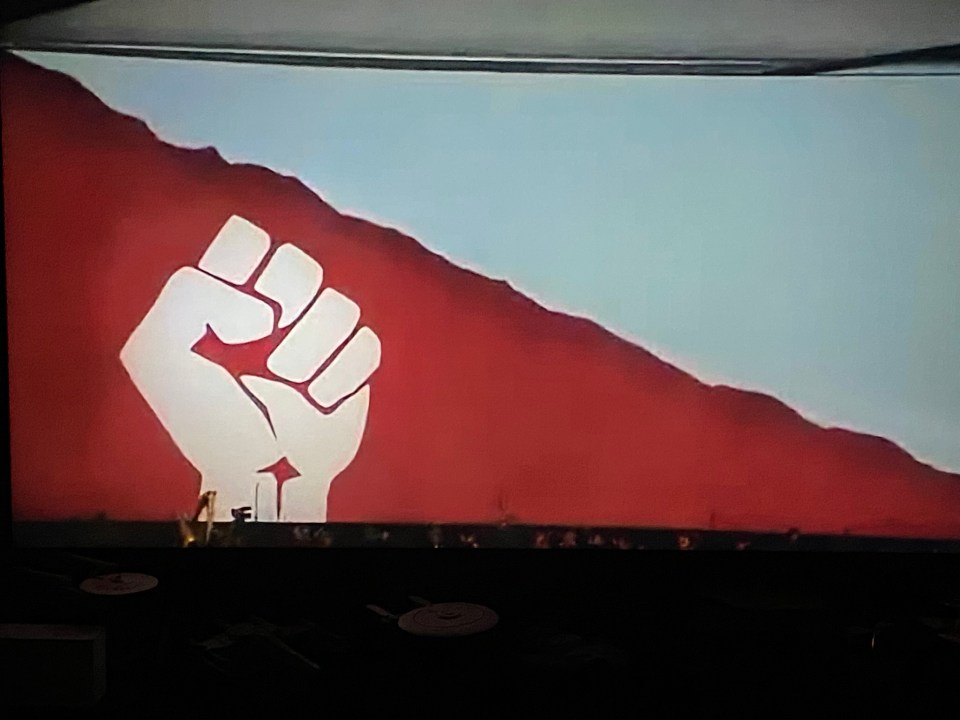
I’m just turning 75. My life has been formed, and is almost completed, throughout a breathtakingly brief and cataclysmic era in global history. In future accounts it may be referred to as ‘The Neoliberal Era’, ‘The Era Of American Hegemony’, ‘The Age Of Economic Globalization’, or perhaps, as the cataclysm intensifies toward its resolution, ‘Capitalism’s Final Crisis’. There will be a few references to something called ‘The American Empire’. It will appear as a flicker between the centuries, and one of the shortest lived empires that ever endured.

We are at the beginning of a 2nd American Revolution, one that is long due. Whatever the outcome, it will radically reshape the outcomes for global civilization. The age of the nation state is gradually going out of phase with the needs of the physical world. There will be times of breakdown and struggle. We must reintegrate with the workd. This will take some time and will never be at an end. I believe that in the next phase there will still be nations, and languages and cultural boundaries. The dimensions of power will be altered in structure and better managed, through education and the cultivation of respect. The flows of the twin rivers will be, at least until the next glacial scale disruption, in better harmony, as each distinctive part realizes its necessity to the whole.

Technology presents new perceptual models of the world much faster than anything we can control or even keep up with. We are continually confused. The time has arrived for us all to take a deep dive into questioning who we are and who we want to be, and what are the ultimate stakes. Complacency is deadly. We’d been so long buried in our own work, forgetting our reasons for working, or what makes up the whole mechanism of our survival.

We generally see and enterpret the word ’revolution’ to refer to specific cataclysmic changes in the procession of historical events. To understand what moves these events it’s necessary to go beyond specific dates and times and logistical patterns, and embrace the flowing evolutionary trends, ever constant, ever shifting, beneath the surface of what we see.

There are two constant revolutions/evolutions going on at any given historical moment. One is economic, and the other is cultural. They are woven together in close procession, at times in harmony, and at other times they appear to flow in opposing directions. The economic evolution is by nature conservative, its primary focus to preserve stability. Economics is a measure of the river of things, the movement of necessities and the produce of our desires.

Cultural evolution is something broader and more ephemeral, and yet central to our sense of well being. Something within us is driven by an impulse to break the rules, to advance, and to enter new territories. We are curious and inspired. Culture is the river of our perceptions. They are sometimes clear and accurate, and at other times only marginally connected to the world beneath the fog.

These twin streams never stop moving, never stop changing. They are inseparably linked, either energizing or obstructing each other, acting over and through us like the ancient gods in Greek tales about siblings and rivals.

It’s becoming abundantly and existentially clear to much of humanity that survival depends on a true understanding of the role we play as part of a bigger organism. Globalization is the political term for an economic transition. We go from centralized industrial production to widely distributed supply chains stretching across oceans and continents. At its essence, this is like the early evolution of the cell. A number of independent organisms come together as a cooperative community and eventually merge into a single complex organism. A process called symbioses.

Along with economic revolutions, cultural revolutions advance at an unprecedented rate, driven by the tides of information that flow through the system, reshaping at every instance our perception of the world.

We are currently engaged in a third world war, which is a new kind of war, fought with numbers and ideas and conceptual systems playing across screens. The handheld weapon in this war is the smartphone in our pockets.

Things are moving very fast, worldwide…one event or action leads to others. People find out who their allies are. They’re encouraged to become more boldly resistant. A major university resists a government takeover. Prominent financial managers begin speaking out. Republican Town Meetings get rowdy. People, in general, are educating themselves. All of this builds toward an ultimate breakdown of life as usual.

Kilmer Abrego Garcia, like George Floyd before him, like Alfred Dreyfus long before all of this (see ‘Dreyfus Affair), is an unfortunate victim of history. On April 19th, demonstrations, even more enormous than on the 5th, will expand the focus beyond Musk and Trump to embrace and defend Garcia, and his young family, and ourselves, against the fascist brutality that landed him in a living hell.

Trump and company are waiting for an opportunity to gin up excuses to go after dissenters, with fierce repression, just as they did during the George Floyd era. Just like then, only more so, there’s an international reaction to their policies and cruelties, and they now feel cornered.

The American economy is now riding in the back of a cybertruck, under the control of the madman we gave the wheel, heading toward a Thelma and Louise denouement. I fully expect that we will go over that cliff, taking a good chunk of the world with us.

There is, at present, a very thin line standing between democracy and fascism in America, and the next few weeks will determine whether that line is holding. I’m talking about the Law, the Courts and the the Universities.

The 5th Estate, the Press and the Media are barely functional, not even willing, for the most part (except comedians), to call out fascism by its real name (they use the academic term, ‘authoritarianism’ – it’s elite and vague and sounds less threatening).

Social Media has taken up the slack of what remains of democracy and free speech, performing the role that pamphleteering did between the first American Revolution and the Civil War. I find myself no longer getting my news and analysis directly from newspapers or television, and the marketplace of ideas is boundless and international. This is a completely different realm of media, with a whole new set of rules, evolving constantly, that govern behavior and trust.

The vessel of our freedom is still encapsulated in words and institutions inspired and put into action more than two centuries past. If these barriers are breached, we will be in a new state of civil war. At that point another line of defense comes into play. There’s the police, the national guard, the military, led by educated commanders who’ve taken pledges to defend the Constitution and the law. These are forces composed of people from communities most affected by the actions of this administration. We will be in unknown territory.

We are in a Squeeze.

America will survive. The world will survive. The relationships between us all will be radically altered. We will have been through a deep process of self examination. Perhaps for the first time since the last World War, since FDR and long after, we will be forced into revisioning our entire political and economic culture.

My generation won’t be around to witness the conclusion of that process. But we will have been privileged to see its beginning, and to have learned much on the ride along the way.
Where Are We?

Where Are We?

By, Ralph E. Melcher

”It cannot be repeated too often: nothing is more fertile in marvels than the art of being free, but nothing is harder than freedom’s apprenticeship. The same is not true of despotism. Despotism often presents itself as the repairer of all the ills suffered, the support of just rights, defenders of the oppressed, and founder of order. People are lulled to sleep by the temporary prosperity it engenders, and when they do wake up, they are wretched. But Liberty is generally born in stormy weather, growing with difficulty amid civil discords, and only when it is already old does one see the blessings it has brought.”

  • Alexis de Tocqueville, ‘Democracy In America’

I spoke to my son the other day, about the current state of his world. I say his world because I’m old, and this world is barely mine anymore, while he’s not yet middle-aged. He’ll be dealing with the consequences of a world I’ll sooner than later leave behind. I said to him that I thought these times were the worst I’ve ever seen. But then I think, ‘Is this true?’ Has my memory of the pain and the rage my generation lived through merely faded? Perhaps it’s just a shock that so much we fought for is being once again challenged. Perhaps, I’m like my father, who rarely told us stories of his days fighting the last Great War. The stories he told were often laced with humor and self-effacing jest. Perhaps those times I lived through have been so thoroughly buried in satire and revision that they’re barely real in my memory anymore. But I know they were real, and the challenges we faced were no less perilous, although we had less perception at the time of the stakes and dangers we faced.

These times are a shadow of what it must have felt like to be in London during the Blitz in World War Two. Every evening of every day the bombs rained down, some of them intercepted, but a good many getting through. At any time, you might be the next to get hit, and the quality of life you’ve taken for granted could be ended. If you don’t get hit, the next day you have to face going forth to survey the damage. Everywhere is pain and fear, deliberately and with malice, inflicted by one set of human beings against another.

I’ve been reading an analysis of the American character, Democracy In America, written early in the 19th century by a Frenchman, Alexis de Tocqueville. Also, I’ve read accounts and biographies of the lives and struggles of the founders and leaders over these two and a half centuries of America’s existence. I’ve begun to realize that American democracy has always been a rather precarious proposition. It’s been challenged by this and that faction, and defended by those who are courageous and have been willing to stand up in its defense. My life, as was my father’s, was shaped by this battle. He fought against authoritarian dreamers who ruthlessly laid waste to a large part of the world. My cohorts and me, living under the constant threat of nuclear holocaust, stood up against morally corrupt administrations and our nation’s misguided imperialistic obsessions.

My son’s first encounter with political realities was the attack on the World Trade Center on September 11, 2001. He was 10 years old at the time. Since then, he’s been witness to a succession of futile conflicts, begun with great hubris and ending in humiliation and defeat. While these wars were fought, our nation had to face its limitations and question its priorities. At the same time as new freedoms emerged out of our ongoing self-examination, restraints against the power of unlimited wealth were being set aside. Along with the emergence of new forms of media that connected people across every boundary of culture distance, a reaction born out of economic stagnation and the failures of religion began to grow. A succession of demagogues, mostly concerned with the accumulation of power and wealth and the promotion of ideologies, began to thrive upon the inchoate frustrations of the populace. Democracy, as defined in our Constitution, was relegated as an afterthought.

Now we find ourselves in danger once again. Just as in all the wars and civil conflicts of the past, the power of factions has risen to challenge the rights of those who won’t consent to the rule of the minority. We are once again asked to question our basic commitments to diversity, equity, and inclusion which, after all, is at the foundation of our democracy, the core principle which actually defines it.

In my short lifetime I’ve watched dozens of our greatest leaders assassinated, along with many who raised their voices, murdered or suppressed, sometimes by criminals, sometimes by police. I’ve watched the cities burn, and I’ve seen blood in the streets. Many have fallen, standing up to those who would be king. During these dark days of ignorance and cowardice in the world of Trump, there are increasing signs of courage and commitment to the principles that have led and defined us. Every day, the actions of this administration and its sycophants feel like a deliberately inflicted gut-punch. Nevertheless, I see everywhere signs of new life in a population resisting the temptation to surrender to collective despair.

As a nation, having been overnight overcome by its worst tendencies, we’re now seen by many in the rest of the world as an adversary. We aren’t used to being seen as the bad guy, the neighborhood bully, the untrustworthy tyrant, no different from any in a long parade of fallen empires. We’re forced as a nation to awaken from our complacent sleep and become aware of a stark dissonance between our elevated self-image and our present actions as seen by others. At the same time, there are many in this world who carry for us the hope and faith that we will rise once again to our better nature and promise.

(If you are not convinced that we are in a war for democracy, then you may be asleep at the wheel. If there is any doubt, I recommend you look up ‘Foreign Affairs’ on your favorite podcast app, or listen here to an interview with Fiona Hill. It gives the most comprehensive view into the present state of the world that I’ve heard anywhere. You may remember Fiona Hill from when she gave the clearest and most devastating testimony as a witness during the Trump impeachment inquiry. She’s one of our most accomplished diplomats.)

February 22, 2025 at 6:09 AM

We aren’t helpless. All of what’s against us is part of what Naomi Klein calls ‘The Shock Doctrine’, and others call ‘Flooding The Zone’. The object is to bombard people with a sense of constant crisis, so that we become numbed, disoriented, confused and discouraged, and ultimately we loose focus and give in to despair.

A counter to this is embracing a wider vision, one that no longer perceives the world as if our particular national perspective is the only lens available. The world is changing rapidly and far too quickly for anyone to exert enduring dominance and control. We are watching the diminishing of outmoded institutions like the nation state and moving gradually (and painfully) toward a different alignment of the global order. Rather than hurling bombs and nukes back and forth, the economic and political universe, under the pressures of climate change and new technologies is rapidly reorganizing itself.

Resistance to the domination of any religion, ideology, or so-called ‘superpower’ is arising everywhere. In every nation and in every person, all of the old boundaries and alliances are being daily challenged.

We don’t have to be overwhelmed. The whole world is rapidly being forced awake. We must become attuned and direct our attention toward helpful and healing efforts going on in the world. Human beings are endlessly creative. Although we often struggle to open our vision to new worlds and a new order, we’ve never failed to see our way through.

We are no longer isolated. No one is. The world is one interwoven economic organism. Like the Internet, a vast and excellent living protoplasm, woven in networks, designed to reorganize and reroute itself around anything that blocks its way, anything that wounds or damages. Designed to defy apocalypse and to survive.

It has started. We’ve been attacked from within. Blood will be shed. Blood must be shed. That’s the price…the sacrifice. It will be the young on the streets and the old in their homes. The center will not hold, because we all dwell in the periphery. A new center will arise in each of us. The center and the whole will be the same.

Welcome to the Revolution. Welcome to the World.

Direct Cinema

‘Essential’, ‘Unforgettable’, ‘Body Horror Classic’, ‘Feminist Cult Classic’, ‘Dark Comedy’, are some of the quotes being thrown around about ‘The Substance’, a new film by Coralie Fargeat, starring Demi Moore. The best description I’ve seen is the line in the teaser from New York Magazine, “An enraged scream in cinematic form”. Having been released during the season of America’s self immolating election, ‘The Substance’ is a testament to society’s desire to go backwards into thin fantasy worlds created to protect us from looking at ourselves.

The film is relentless and brutal and without compromise. Many viewers may be repulsed, or even traumatized, although I question if anything on the screen matches the daily horror displayed on the evening news. The film juxtaposes the sleazy spectacle of Donald Trump style beauty pageants with explosions of rage that reminded me of the movie ‘Carrie’, as well as the tortured physical metaphors often portrayed in the films of David Cronenberg.

Blending horror and comedy in a surrealistic mix of ‘pumped up’ visual extremes we see in television commercials and popular magazines, ‘The Substance’ pushes up against cinema’s most powerful operatic limits. The intent is to forcibly shock the viewer awake. Its images are grotesque and direct, and anyone not altered in their presence is either unconscious or braindead.

In the face of extremes of hate and violence pushed by those who wish to rule and profit, the floodgates of truly political art have opened in the mainstream. Films like ‘Barbie’, ‘Women Talking’ and ‘Poor Things’ speak directly to the atrocities of female oppression. ‘The Substance’ is one of those, and it isn’t trying to be reasonable or gentle in a world where the spectacle of politics has taken us to the edges of absolute chaos.

During the drawn out, horrifying and over-the top final cataclysm in ‘The Substance’ there’s a close up shot of a terrified little girl covered in blood. She’s been dressed up to echo the exotic sexual fantasies paraded before her on the stage, and her face displays the full horror children witness everyday in a world trapped in its fantasies and dominated by its own irrational fears.

“Shut Up and Get Back To Work”

I could only be somewhat amused at U. S. House Speaker Mike Johnson’s performance addressing students and the press at Columbia University, telling them to stop their nonsense and get back to classes. Behind him stood a grinning Elise Stefanik, joining in the act, both performing for stock footage to be used in the upcoming fall campaigns.

It struck me that a major lesson to be taken in a week of escalating campus demonstrations across the world, was the apparent inability of generations in power to learn from history or to avoid repeating the same tactical errors again and again.

For me the events are somewhat nostalgic.

I recall an evening in 1970 when a large part of the student body at Case Western Reserve University gathered in the student union cafeteria to debate a response to the newly launched expansion of the Vietnam War into Cambodia. The meeting was part of an escalation of activity centered that had been building on campuses for many months after events at New York’s Columbia University in March and April of 1968. Partly In response to the war and touched off by resistance to plans for the university to build a segregated gym on the fringes of Harlem, students and ‘outside agitators’ occupied buildings, debated one another, conducted ‘teach-in’ activities and generally obstructed normal college business. Eventually Columbia administrators called in the NYPD, who proceeded to brutally attack the demonstrators, injuring many and arresting over 700 participants. The consequence was an expansion of actions in solidarity driven by organized coordination on campuses all across the country. (Governor Abbot and DeSantis take note)

Listening to the rising militancy of rhetoric in that student union meeting it became obvious to my friend Robert and I that impending action was in he works, and Impatient with all of the talking we headed over to the ROTC building which had emerged as the likely target. Being the first to arrive at the location we took positions seated on both sides of the steps leading to the front doors. Just then a closeted group of middle aged men in suits looking somewhat bewildered and uncertain, apparently summoned from their evening cocktails, approached from across the plaza. Foremost in the group was the University president. He cautiously approached the two of us sitting like quiet Buddha’s on the steps and asked who we were. In a moment of smart ass mutual inspiration we both replied that we were ‘gargoyles’. The president gazed at us blankly for a moment, then turned back to the little group, leading them away into the night. A moment later the large group of students arrived from the irmeeting, marched up to the front door and proceeded to occupy the building for the next few days.

The student movement in those days was responding to an unpopular war and a rising awareness of racial injustice, but it was more than that. We were addressing fundamental questions about the relevance and responsibilities of our educational institutions in addressing inequities in the larger world. In virtually every classroom deep questions were being asked challenging the growing dissonance in times of accelerating change, between what and how we were being taught, and how it related to the outside world. The challenges were made using every conceivable form, from classroom debate to teach-ins and street theater, to poetry and artwork, to obstruction of business as usual. Outside of campus social activism began to explode in the streets. Inmates were taking over the asylums. Before the tide had receded and things returned to a new normal, many changes were made, and in spite of the forces of reaction the social movements of those decades laid foundations for the movements and counter movements we are seeing today.

Societies thrive and advance to the degree that they respond to ever new realities of the present. Intelligent leaders and pioneers must be encouraged to think and to continually question the status quo. Universities are designed to be laboratories for discourse and discussion. Students are ideally trained to be more than receptacles for predigested opinions and established ideologies. The young see the world with fresh eyes that are less tolerant of dogma and hypocrisy, and more willing to take risks and learn from their mistakes. Inexperience and ignorance are to be overcome, but they are not a crime.

When faced with the spectacle of injustice the young are more outspoken and generally feel they have less to loose. Back in the day, when president Richard Nixon held up the ‘silent majority’ of middle America as his standard for patriotism, angry college students were portrayed as irresponsible and out of touch, or else as naive victims of shadowy bands of outside agitators and ‘far left’ college elites. It appears that nothing much has changed in the rhetoric of reaction since those times.

The Mike Johnsons and Elise Stefaniks will always find hooks and divisions upon which to hang their campaigns based on fear and self righteousness. In the sixties the paranoid establishment along with the media exploited tactical squabbles between black and white protestors in order to divide them and pacify dissent. Today the tactic is to label any objections to Israeli military excess and apartheid policies as ‘antisemitic’, even while campus protestors include Jews, Muslims, Christians and people simply appalled at the horrific images seen everyday in the media. In some cases the diversity of participants’ backgrounds and opinions have led to heated disagreement and sharp debate. Irresponsible actors on all sides have at times resorted to harassment and even occasional violence. Some students and teachers have felt alienated and fearful. Never missing an opportunity to fan the passions of a moment, politicians and instigators portray every unfortunate incident as the norm. In fact, the preponderance of violence in nearly every instance has been perpetrated by the forces of law and order.

The gap in life experience between generations raised in the last half of the 20th century and those now coming of age in the 21st is almost unbridgeable. The decades that followed the last World War were characterized by an almost constant state of expansion and innovation. America stood at the center of a global project to build the new world order. Whatever flaws existed in America’s self image were covered over by almost continual economic growth and innovation, low unemployment, low inflation, huge stock dividends and an overlay of conspicuous consumption.

The new century brought an unrelenting succession of national traumas. It began with the dot-com crash and recession in 2001, closely followed by the attack on the World Trade Center. Then followed two decades of war in the Middle East and Afghanistan, a housing crash and the Great Recession of 2007-2009. After brief respite of hope and civility in the Obama years came the daily nightmare of the most ethically challenged presidency in United States history. All of this was interrupted by the worldwide COVID pandemic along with the rapid proliferation of disastrous consequences in the wake of climate change. Finally the Russian invasion of Ukraine and the war in Israel have brought about the most destabilizing global situations since the Cold War.

My generation was the first raised on television and under the threat of nuclear holocaust. Almost from birth we were exposed to images of war and mayhem in foreign lands running counter to the idealization of America’s self-image. The moral pontification propagated in our churches and schools and in the mainstream media became increasingly detached from the reality of people’s lives. We were told that all of the ‘bad’ people and situations were somewhere else. By the time we arrived at college our view of American exceptionalism had changed dramatically from that of our parents. They’d suffered through the horrors and triumphs of a World War, in which the very foundations of democracy had been nearly defeated by the forces of totalitarianism. We were summoned instead to serve and support a futile war against a small foreign nation while watching on our daily screens our cities catching fire, our most admired leaders being assassinated, and our sons and brothers killed in the jungles and brutalized on the streets. We questioned, and then we rebelled.

Not only is the current cohort of college age students much more diverse than it was in the sixties, it’s a generation that’s experienced first hand the cracks in the foundations of the American dream widening almost beyond repair. Our established institutions appear to languish in denial. Justice has been challenged and has failed repeatedly. The truth is continually subverted by lies and fantasies. Freedoms that have been won through centuries of struggle are being discarded while the very survival of civilization is threatened by changes in the weather. Our political institutions appear inadequate or unwilling to address these situations in any meaningful way.

The campus movements of the sixties culminated in the execution of four students by the Ohio National Guard in May of 1970. Although this event didn’t stop the inevitable momentum toward change, it made us take a hard look at the consequences of poking the beast head-on. These days, when I hear the rhetoric of people like Josh Hawley and Tom Cotton and the words and actions of leaders like Greg Abbot and Ron DeSantis I wonder whether their ultimate goal is to provoke violence and fear in order to justify the suppression of all alternative points of view. Are they pushing for another Kent State massacre? Do they imagine that this strategy will work any better than it ever has? I guess if your ‘go to’ strategy is _God, Guns and Trump,_ there isn’t much of an alternaive.

I question whether these purveyors of fantasies of the past can presume to know, evaluate, or judge the motives of young people, whose entire living experience has born witness to the breakdown of those very illusions?

These students are the future, and the future will not be denied. Like we who grew up in the fifties and sixties, they see much more clearly how the world has changed than their parents who cling to the status quo. Ultimately, the young will prevail because they must. Like every human generation they have to grapple with the world as it is, and not as we wish it to be.

The catalyst for the current uprising on campuses is a costly war between nations and peoples who’ve made a long series of unfortunate political and strategic decisions that have lead into a death spiral of almost imprenetable anguish. Both sides in this war have dehumanized their opponents in order to justify horrific violence and the daily spectacle of unchecked slaughter. Both sides are committing violence against the rest of humanity, as the constant stream of images are in fact its extension. In such an ongoing ‘all or nothing’ conflict neither side will achieve the final resolution it desires, while each player appears willing to pull the entire world into the struggle.

Perhaps we can understand motivations on both sides of the war. Both see this as an existential struggle deeply rooted in generations of displacenent, appropriation and vengeance. But more than understanding is required to bring about a pause in the conflict. Concerned nations need to intercede forcefully to bring the violence to a halt. The Land of Palestine has long been a regional proxy for the very powers that both persecuted Jews and colonized the people of the Middle East and Africa, and for the forces that have risen in resistance to empire. All nations in the region and beyond share responsibility for the repercussions. America, as Israel’s ‘unconditional’ ally, has the biggest role to play.

Until the violence stops the protests will not stop, and attacking the institutions of higher education, firing college presidents or advocating military or police interference will most likely backfire. If conservatives have their way this internal conflict could escalate, and increasingly authoritarian measures could fuel even more destructive cycles of resistance and repression. History repeats, but it never goes backwards. The young, who grow frustrated with the refusal of governments to deal realistically with their concerns, will eventually inherit the earth and all of the powers that play upon it.

It was the eve of my 20th birthday. After the occupation we wandered back to the campus radio station, where Robert conducted a late night show playing eclectic music and recordings and where we had access to the Associated Press teletype and got the latest news of the day as it was being generated.

That evening a brand new album by Crosby, Stills, Nash and Young had just arrived, and we ended up playing the first song.’Carry On’ repeatedly, all through the night.

Rejoice, rejoice, we have no choice

But to carry on..

Peter Zeihan As Clickbait

I was recently sent the recent Peter Zeihan book, The End Of The World Is Just The Beginning: Mapping The Collapse Of Globalization. Upon reading it I feel compelled to offer my critique. Aside from the rather dismissive and generally smart-ass style with which the author delivers his doom prophecies, the book is very informative in terms of outlining the complex systems and their interrelationships that currently run the world, and it offers valuable pointers toward highlighting the system’s strengths and weaknesses. At the same time it’s a vivid illustration of the trap of over reliance on statistical data when addressing complex systems. I’ve rarely encountered an argument that rests on so many facts that work against the very case that the book is making. Not only is it full of contradictory and sometimes questionable assumptions, the data that backs the world view the author delivers could equally support the likelihood of continued globalization as it can for its dissolution.

The fulcrum of Ziehan’s argument hangs on two assumptions:

1.) Aging populations and declining birth rates will result in a worldwide demographic collapse that will upset the patterns of production, distribution and consumption that fueled the economic boom times since World War Two.

A 1968 best seller by Paul and Anne Ehrlich,The Population Bomb delivered, in a similarly apocalyptic tone, a revival of the 18th century theory by Thomas Malthus, that the growth of population with the rise of prosperity, particularly among the poor, would inevitably exceed humanity’s ability to grow enough food. While Zeihan’s argument runs exactly in the opposite direction, both prognostications rely on a set of ever-shifting statistics to make their case.1 Food production since the time of Malthus has continually outpaced the growth of population. Problems with global starvation and famine are due less to population increase than to the unplanned consequences of war and the inequitable distribution.

Over the course of my many decades of living on the planet under the constant threat of extinction, I’ve been presented with so many predictions of impending catastrophe that I’ve lost count. From the Rapture to nuclear war to DDT and Y2K and global anarchy, the predictable constant is that in times of anxiety and change these prognostications sell books and provide rich fodder for talk radio. Attempts to reduce enormously complex systems to fit into the terms of one or two basic assumptions invariably fail to meet anyone’s predictive timescales. Demographics are one single factor among countless others that can affect outcomes, leaving aside our ever shifting politics and human resourcefullness, our ever advancing technologies affecting the ways we live and work and talk to one another, and our dawning collective awareness of the effects of climate change, to name a few.

2.) Zeihan’s second assumption is that the American Empire will simply give up on the world ‘Order’ that it has helped establish and maintain since the World Wars. Apparently America will simply conclude that it’s simply too much trouble and expense to continue enforcing the peace and we’ll withdraw into our geopolitical fortress. After all, we’re geographically in a position to grow our own food and make our own shit and let the rest of the world go to hell. Aside from espousing an incredibly arrogant, if not popular view of American exceptionalism, the very fact that our economic prosperity has been fostered by our multicultural ties and the intricate trade and military relationships we’ve constructed over these many decades makes it extremely unlikely that we will or can turn away. Even if we attempted such a thing, undoubtedly other entities or alliances would take our place, and we’d be shuffled a little lower in the deck of international authority.

Which brings us to China2. Having read and listened to a number of accounts from inside China. (I highly recommend the ‘Drum Tower’ podcast from ‘The Economist’ magazine for a more down to earth view of Chinese politics and culture.3) Zeihan spares no opportunity to dump on China, leaving an impression that its the very model of his overall thesis that most of the rest of the world is doomed in economic terms, while the USA and North America will pull through rather nicely. In reality, for anyone that takes a closer look through the paranoid cloud of American propaganda, it appears that China’s problems, both economic and demographic, are practically a mirror image of similar problems being felt in both America and Europe. In many cases the realities in China (the biggest crisis right now is too few opportunities for young people – not too many) are largely distinguished by the fact that, unlike the USA they are actually able to quickly respond in dealing with them. China ain’t going anywhere, and neither is America, or Europe, except perhaps in the fevered ‘click bait’ imagination of people like Zeihan. These major blocks of world power are so inextricably interdependent that the likelihood of any of them being left behind in the foreseeable future is vanishingly small.

For several years I was on the mailing list of ‘STRATFOR’, the organization that Peter Zeihan once worked for. Like Zeihan they have a world view that sticks closely to the ‘geography is fate’ interpretation of world history promoted by conservative scholars like the very prolific Robert Johnson (‘Modern Times’, ‘The Birth Of The Modern’, and histories of America, the Jews, Christianity, Ireland, plus biographies of Churchill, Jesus, Darwin, George Washington and others – a few of which I’ve read and been impressed by.). I agree that, so far, global history has been largely determined by access to the oceans. From the conquest of the great ‘pirate’ empires of the 15th – 16th centuries right up to the rise of ‘globalization’, this view has been accurate. However, we are all now swimming in a different ocean, one that’s linked by the instantaneous communication and management of economics and resources through the ubiquitous ocean of digital media. This is now where business is driven, wars are made, alliances are formed and broken.

I remember Stratfor’s frequent skepticism that Europe could ever manage to hold together. Virtually none of their predictions have held true over the years. The recent Soviet invasion has catalyzed an opposite movement toward increased solidarity rather than further fragmentation. America, meanwhile, is showing increasing signs of weakness as it breaks into regional conflicts and rising paranoia. It has made it almost impossible for the nation to deal substantially with basic problems like poverty, endemic racism and rising political violence. Meanwhile China not only holds together, it exerts increasing global influence as it steps into the weakening breach of American influence in Africa, South America and the Middle East.

Every nation is an ongoing experiment in how to manage growth and change in an increasingly complex web of global relations. Not one gots it completely right or completely wrong, and every error is an opportunity to learn. Peter Zeihan grossly underestimates, in my opinion, the capabilities, creativity and ingenuity of people in general, especially anyone who isn’t living in North America. Unfortunately, in much of his writing I hear echoes of the Trump crowd, mindlessly shouting USA!!!USA!!!USA!!!

The proposition that America will withdraw from the world in some form of neo-isolationism is one that nearly every fact and trend sighted in Zeihan’s book actually makes less, rather than more likely. His theory of collapse, requires a kind of bunker mentality in which every nation stands essentially on its own and only the strongest will thrive or even survive.

History doesn’t tend to move backwards, and the sort of decivilization that Zeihan predicts, in a world as interdependent as the world he describes, no nation, especially one as central to the function of the whole intricate mechanism as the United States, can afford to go its separate way. America’s economy, as much as China’s or England’s or Argentina’s or the Philippines’ or Russia’s, is a ‘global’ economy. Oceans and hemispheres that once divided the world into separate kingdoms and empires are no longer effective barriers against the changes that affect us all.

No one can deny that there will be profound disruptions that will reshape the political, military and economic landscapes in the coming decades. To anyone paying attention, it’s evident that our modes of consumption and governance will be forced to adapt and evolve in ways that we only dimly imagine. We will face wars, famine, pandemics, climate events, natural disasters and shortages of things we’ve taken for granted. Every political entity will be confronted with its own contradictions. In the long run the question is whether these changes and challenges drive us, as global citizens, further apart or force us to recognize our absolute interdependence. Zeihan’s book assumes the former. I don’t necessarily disagree with his statement, “Shortage forces people – forces countries – to look after their own needs.” I would add that history also shows that in the face of shortages and disasters people, and perhaps nations, also awaken to their common needs.

(I have to add that Zeihan’s understanding of global agriculture is particularly weak. Statements like “You can have organic farming or environmentally friendly foods. You cannot have both”, are simply absurd. It’s been demonstrated again and again, in China and America and all over the globe, that the per hectare production of food grown using intensive sustainable methods on smaller scale farms generally exceeds that of the industrialized monoculture farming promoted worldwide and dominated by corporate culture, while leading to much less long term environmental devastation.)

The kind of hair-on-fire apocalyptic messaging delivered by Zeihan and others certainly sells books. Apocalyptic visions have aleways had an appeal in the popular imagination, and are guaranteed to gather attention from Joe Rogan audiences, talk radio hosts, and down various YouTube rabbit holes. The ‘paranoid style of American politics’ 4 has always had particular appeal in uncertain times, when folks are stirred up by the direction things are going.

As for American exceptionalism, that’s so much a refrain in Peter Zeihan’s view of the world, I’m reminded of the Sergio Leone quote:

“I began to understand that ‘America’ in reality belonged to the whole world and not just to Americans. The idea of America had already been invented by the philosophers, the vagabonds, the dispersed of this earth, long before the Spanish ships got there. Those whom we call Americans have only rented it for a time. If they behave badly, we can discover another ‘America’. The contract can be canceled at any time.”

  1. https://worldaffairs.blog/2022/07/09/debunking-peter-zeihans-shocking-and-popular-china-predictions/
  2. https://www.nextbigfuture.com/2023/01/here-is-what-peter-zeihan-got-wrong-on-the-joe-rogan-show.html
  3. Linkhttps://pca.st/podcast/21f082b0-377d-013b-efb0-0acc26574db2
  4. https://harpers.org/archive/1964/11/the-paranoid-style-in-american-politics/

Doing ‘Research’ On The Internet

Whenever someone tells me that they’ve arrived at a certain conclusion after doing research on the internet, I feel a certain skepticism arise. What I’ve encountered, too often, is that what people mean by ‘research’ is that they plunged into the endless astral abyss of the online world in search of confirmation for something they already believed, discarding anything that pointed in another direction. This style of journey very easily draws a person into one or another of the countless maelstroms that crowd the vast oceans of ideation and imagery. These are popularly known as ‘rabbit holes’, implying a maze of subterranean tunnels that lead nowhere else but in circles.

In an age of growing animosity and paranoia born out of divergent views of reality, this approach is rarely reliable. Too often it leads to delusion and at worst it can be deadly. When a person is online they’ve essentially parted from this physical plane and entered a bardo state, where every kind of illusion, every spirit, every angel and every demon abides in their own pocket universes, and every separate pocket at some level is connected to every other.

These days there’s a great deal of imaginative speculation around the concept of multiverses. For anyone who has even casually investigated the lore connected with the occult or magical worlds this is certainly nothing new. Neither is it strange territory for anyone familiar with the hallucinatory frontiers revealed by mind altering substances. For the experienced explorer the pitfalls and dangers inherent in crossing the boundaries between worlds are quite familiar.

Actually, we cross those boundaries whenever we open a book, go to the movies, listen to music, turn on television or the radio, or look at a painting or photograph. We do it when we meditate, when we daydream, when we tell each other stories. If we are truly present and open we immerse ourselves in parallel dimensions when in church or temple. Everyone living in the universe of electronic media is used to migrating between radically different realms from second to second as they are bombarded by narratives and counter narratives continually interrupted by commercials and trips to the refrigerator.

We’ve come to consider all of these journeys to be safe and well contained, but this wasn’t always the case. We had to learn how to receive and to navigate as well as to comprehend what we encounter through these myriad windows and doors. Mostly it’s been a matter of submiting to the conscious intent of the authors or composers who guide us through worlds they’ve created. This is an act of trust and surrender, taken more or less with conscious and specific intent and the assumption we’ll be let off the bus more or less at the place from where we embarked.

When the photograph was invented the linear dimensions of time and space were irrevocably breached. The four dimensions of spacetime are reduced to two through an entirely mechanical and alchemical process, independent of the impressionistic intercession of a painting or a drawing. A photograph is more than a mere impression, it’s an actual artifact, in which a particular moment continues to exist, and can be endlessly reproduced and experienced in succeeding moments.

The internet as we know it today didn’t really emerge until the graphic image took its place beside the display of text, along with the innovation of hyperlinks that could connect any image or text or sequence to any other. At that point the dimensional breach first created by the photograph became an explosion that began to tear our world into countlessly proliferating fragments, challenging all of our existing conceptions of civilization and order.

I entered the virtual world in 1984 when I purchased my first Macintosh computer and connected the dial up modem to explore various discussion groups and communities springing up all around the world. Very early on I began to learn about the power and potential toxicity of the words and images I encountered and expressed online. In those days conversation dominated commerce. There were no smartphones. I felt like an explorer on an island newly forming and expanding under my feet. Most of us who were there have some nostalgia for those times gone by.

Two or three generations later not only content and delivery have evolved but whole new languages are being invented online almost daily. The whole world is being absorbed and transformed in its encounter with virtual dimensions. I sometimes wonder if there’s anything of value an old timer can contribute as the tides sweep us all along.

Be careful. Question everything. Beware of obsessive or reactive behavior. Notice how your online activity effects your relationship with the offline world. Have other people in your life. Try to be kind.

It’s all too easy to get lost in an ocean of chaos. We become desperate for a coherent line or narrative that can make sense of it all. There are as many lifelines as there are points of attraction. They are all hard to resist and not all lead in healthy directions. We’ve spent centuries learning the tools of reason, science and intuition, in order to navigate our way through an increasingly complex and conflicted environment. We will need all of these tools to survive. The choices we make in the virtual world are no different from the choices we make in the physical one. Each affects our friendships, our affiliations and our very survival.

Research tip: Don’t get lost in the library.

Can’t Get You Out Of My Head

Reflections On The Work Of Adam Curtis

Adam Curtis considers his films to be strictly journalism. 

Having unlimited access to the vast archives of the BBC library, Curtis snips and cuts the myriad fragments of visual history to arrange them around themes guided by his own narrative and analysis. To relegate these works to the narrow field of conventional reporting would be to entirely miss their import and effect. The subjects of his films dive deeply into the wilderness of inherent contradictions between reality and the artificial reproductions of reality, between fact and imagination, between linear narrative and memory, and the many ways we rearrange our perceptions of reality to serve our own agendas. His most recent work, the six part series titled Can’t Get You Out Of My Head focuses on the dialectic between historical and psychological forces that drive individuals into increased feelings of isolation and helplessness and the barriers to effective collective action.

The emotional power of well selected images poised in sharp juxtaposition has been  explored as long ago as in the montage techniques pioneered by early filmmakers like Sergei Eisenstein. The use of montage takes us out of the illusory realms of objectivity and well into the territory of ideological expression. Directors like Jean Luc Godard and the ‘underground’ filmmakers of the sixties made radical use of the technique to purposely challenge the conventions of narrative film. While their work was perceived at the time as radical, our immersion in the frenetic medium of television makes them appear prophetic. The rapid disorienting shift between scenarios, the intrusion of seemingly unrelated sequences in commercials and the use of sound as compliment and contrast has increased our ability to shift attention rapidly from one image to another without loosing the narrative thread. Adam Curtis takes advantage of the growing sophistication of our visual language while pushing the form further with each successive work, encouraging us to take larger leaps along with him.

(My favorite film makers of the sixties were the French New Wave’director Jean Luc Goddard and the English director, Nicholas Roeg. Being a contrarian by nature I was always thrilled at the premier of a Godard film on my college campus and particularly pleased when a third to half of the audience walked out in bewilderment or disgust. This I deemed an indication of the film’s success. Both Godard and Roeg used techniques of radical montage to pit direct and sometimes disjointed, emotionally charged images against the linear revelations of plot. Godard went the farthest, often rejecting the very structure of ‘beginning, middle and end’ in films like 2 Or 3 Things I Know About Her, Sympathy For The Devil and See You At Mao. Nicholas Roeg managed to corral these techniques into challenging narratives interrupted by out of synch and out of time sequences taking the viewer out of the linear present into realms of memory, imagination and pure emotion. His use of popular musical icons as actors in films like Performance and The Man Who Fell To Earth became immensely popular with the psychedelic generation. 

At least since 1992 with Pandora’s Box, followed by the more ambitious Century Of The Self and into the present Adam Curtis has employed montage with increasing ambition to deliver films that offer historical analysis along with imagery that comes across with devastating emotional impact. To Curtis the purpose of journalism is not merely to report, but to explain. His method is to distill and arrange out of the many sounds and images of a given historical period a presentation of coherent themes that persuade the viewer that his interpretation matches the reality. Journalism in this sense is the art of persuasion. 

Human beings are addicted to narrative. If presented with a random set of images our minds will eventually assemble them into stories. If we stare at a wall long enough our minds will weave narratives out of the imperfections in the paint. This is a key to the methods of psychological testing that is critiqued in much of Curtis’ work. Ironically perhaps, it’s the key to his own art and his approach to journalism. When the reporter in a war zone decides to point the lens of their camera they are continually selecting the elements of their own narrative. When Adam Curtis wades through the BBC archives the images he selects are made to fit the preconceived patterns of a story he wishes to tell. 

Episode four of his most recent work is titled ‘But what if the people are stupid.’ It’s primary theme is how our disillusionment with institutions born out of the emphasis on individualism in the sixties and seventies morphed into a retreat into nationalism in the eighties and nineties. Curtis pulls together accounts that range widely across the period, from the unsuccessful coup of the Gang Of Four in China to the somewhat tragic life of a transexual pioneer in England, the rise of Al Queda in Iraq, disappointment in the wake of the Live Aid effort and events that led to the crushing of protests in Tiananmen Square. All of these events are bracketed by accounts of psychological experiments carried on by Daniel Kahneman in the seventies leading to the thesis that people’s choices aren’t made primarily on a rational basis but are determined by their previous experiences and how they effect the deeper, mostly subconscious structures in the brain. By focusing on the personal dilemmas and contradictions faced by particular individuals against a backdrop of massive social movements Curtis dramatizes a specific and worldwide shift in our collective experience serving to frustrate our ability to organize coherent resistance to the growing power of elites. This sets us up for the next episode, ‘The Lordly Ones’, which explores the comforting national myths we construct to justify the blunders and atrocities carried out to maintain the rule of dominant capitalist elites over the rest of the world.

On the surface Curtis’ approach resembles that of an historian or archaeologist as much as that of a journalist. All are storytellers and agents of artifice, weaving our perceptions into coherent streams of interpretation and all deal with data fragments from moments gone by. The stories Adam Curtis chooses to tell center on the influence that modern psychology has  had on the manipulative techniques of advertising, the growth and dominance of consumerism, and most importantly the isolation of the individual in the shadow of the capitalist state, rendering concepts such as personal freedom and choice almost entirely irrelevant.

We’ve become helpless as collective societies to effectively act to change our circumstances. Instead, our every activity is measured, tabulated and arranged in predictive models that serve to anticipate and then to manipulate our behaviors. Human behavior has been programmed into machinery that uses algorithms to further the power and wealth of economic elites. Only by breaking free of the conceptual prison of the techno-capitalist state can we even begin to imagine a future that meets actual human needs.

Perhaps we expect that journalism and documentary gives us a more accurate glimpse of the real and the true. What we should have learned in an age of propaganda, ‘fake news’ and the Internet is that in the selection and manipulation of images just about any version of ‘reality’ can be made to appear as truth. In the view of Adam Curtis the true value of journalism is to ‘make sense’ of the world in new and original ways that evolve continually with our continual appetite for the new. This is the only way that we can cast off the oppressive chains of the past. We might do well to make his revolution our own.


Thoughtmaybe.com for access to a full catalogue of Adam Curtis Documentaries and many other worthwhile films.


An outstanding interview with Adam Curtis at: Jacobin.com

The Ministry For The Future – A Review

The Ministry For The Future
by Kim Stanley Robinson

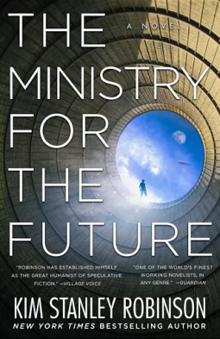
Kim Stanley Robinson’s ‘The Ministry For The Future’ is much more than a novel. It’s a book on Revolution, the closest thing to an ecological manifesto I’ve ever read. As a work of fiction it’s even more ambitious than his much acclaimed ‘Mars’ trilogy, which could be seen as an early preparation for this book. Like the Mars books it unveils a complex weave of systems embracing every aspect from molecular biology and atmospheric science to human psychology to political and economic philosophy.

But ‘Ministry’ has no interplanetary or futuristic disguise. This is a book about the present and the immediate future of our civilization, specifically projected over the next 30 years. There are chapters on ecology, economics, geology, political philosophy, environmental devastation, human exploitation, mass extinction and geoengineering. There are chapters addressing all forms of resistance and revolution and the inevitable dismantling of capitalism through systemic collapse, civil disobedience, sabotage and assassination. Central to everything is informed speculation on the likely consequences of climate change and the forces that have already been set in motion.

The future is a puzzle and we need a framework in order to make coherent sense of our daily diet of news in the present. The philosopher Slavoj Zizek once said, “It is easier for us to imagine the end of the world than to imagine the end of capitalism.” At a time when such visioning becomes increasingly urgent, Robinson’s novel is a bold attempt to see our way to the other side of disaster.

Perhaps not since Karl Marx has there been such a bold and compressed dissection and set of proposals for the total reorganization of society toward a sustainable future.

The Ministry For The Future

A Conversation with KIM STANLEY ROBINSON:

AN INVITATION

My Publishing Career

When I was in elementary school I was given for Christmas a small printing press  that could make stuff the size of business cards or raffle tickets. I started a number of membership organizations among my classmates that could be activated simply by asking for a card: ‘The Hoppity Hooper” Fan Club,’ ‘The Rocky and Bullwinkle Fan Club,’ and our final, three color masterpiece, a membership in ‘Camp Palumbo’ along with a small certificate of the official currency, the ‘Pazzuza.’ 

Later on my neighborhood friends and I, all bing in the same Boy Scout Troop, would take each issue of the Official Boy Scout Magazine paste in alternative headlines and captions cut out of other publications and turn Boys Life into what we thought was a hysterically funny parody inspired by Mad Magazine, a publication we really took seriously.   

In high school, myself and my high-minded friends published and repeatedly got in trouble for a series of independent journals printed via mimeograph machine and silk screen press at our local Peace Movement Offices. I continued this though college and after, until moving to Santa Fe, when I got a bit more seriously embedded in the writer’s world. 

In 1984, after attempting to convert reams of handwritten notes, poetry, short stories and essays into a publishable form into typewritten documents (a frustrating process) I took a class in the new Word Processing technology at the local community college. About midway through the course the teach came into class entranced by the release of the first Apple Macintosh computer. I don’t remember what he said but his trance was somehow infectious, and before the end of the year I’d acquired my own machine and the accompanying laser printer.

For a number of years I published articles and reviews in ‘The Journal for Humanistic Psychology,’ ‘Annals of The Earth’ and ‘Shaman’s Drum’ magazine. 911 happened. I was not particularly surprised that it happened but that didn’t make me less angry. So, I started a blog, called ‘The Arclist,’ which continued view email and website for the next 20 years. After the 2016 election the list pretty much was reduced with short headline introductions to various news and resistance links and very little else. Meanwhile the host site and software became contaminated and obsolete and harder to manage, until a couple of weeks ago I decided to abandon the list in email form and rethink the whole thing. 

I was diagnosed with cancer. This marked an opportunity to rethink everything. I went though my existing contact list and entered them into another email client service that I’d learned to navigate through as a business application. More up to date and flexible and easier to manage in creative ways, I’d like to take advantage of this by setting up a new version of the Arclist, more in the tradition of a Journal that accommodates creative ideas, creative projects and creative discussions between interested folks. I think we are all somewhat anxious to move beyond obsessive focus on the disasters of this past year and turn our attention to future possibilities. Perhaps this could provide an opportunity.

I have a list of names that I’ve gleaned from my contact list. Many of you were part of the previous mailing list or were listed as a ‘friend’ on my Facebook page. Some of you might have gone away for any number of reasons. Some of you may not wish to hear from me ever again. Before engaging the new list I want to send a formal invitation for you to respond, either positively of negatively, and I will then formally activate or delete your membership. If your answer is ‘YES,’ and I hope it is, I will begin sending out my creations, or forwarding others, on some semi-regular basis.

Meanwhile, I’ve attached to this invitation a sampling of the sort of stuff you might expect to receive on the New ARCLIST. Should you wish to subscribe and get the material on this site in our email just send a reply to remelcher@arclist.com, or leave a Reply at the bottom of this page.    


My Favorite Podcasts (Current) 12/13/20

Not included are podcasts I’ve favored In the past but I’m no longer following regularly (this American Life, Masters of Scale) or podcasts that were short form or serialized or no longer being produced (‘Studio 360,’ ‘The Ballad of Billy Balls’). By ‘current’ I only mean current, and this list will continue to shift from day to day as I get turned on to new podcasts.

History

Throughline

One of NPR’s Most Popular Daytime Shows, this hour long documentary style delves into all of the corners of history we are never/rarely taught in school. To fully understand the present events in the context of historical realities the show is unmatched. The two hosts are from first and second generation Iranian and Palestinian families, which may give a clue  to the unique depth of their approach to telling stories.

The United States of Anxiety

A little scary but enlightening as it focuses on the areas in American history that indicate the conflicts that have split the body politic from the beginnings of the USA.

This Day in Esoteric Political History

Somewhat oddly named, focusing each day on a single event (many of which I’d never heard of) at a particular moment in American History, a lively and educated discussion of the event’s historical environment and its influence and indications in the present.

Politics

Hacks On Tap

Political strategists from both sides of the ‘aisle’ toss around their critiques and projections about both parties. Anchored by David Axelrod (Democrat) and Mike Murphy (very ‘anti-Trump’ Republican), with a variety of chummy guests, the analysis is delivered with a good deal of humor and real ‘insider’ knowledge of how political campaigns actually work.

FiveThirtyEight

I’ve been listening to these guys since 2015. A relief from the general alarmist nature of political news and analysis. Sometimes a bit over-the-top ‘wonky,’ I favor 538 for a strictly data-based view of political realities balanced by a crew of mostly contrarians in one form or another. I simply like these guys. As I was about to write this review, unfortunately the departure of Clare Malone is a great loss. Relative newcomer Harry Bacon Junior has brought a similar contrarian sensibility and a much needed black perspective to the panel, Malone brought an equally important feminist and Midwestern (Ohio) perspective. 

The Ticket

One of the better interview shows from The Atlantic. Host Isaac Dovere chooses subjects that are generally slightly out of the mainstream news but closer to actual events. Always new information and insights.

The Axe Files

Long form, one hour interviews of a range of public figures, illuminating their biographies and focusing on their positions in regards to contemporary politics. David Axelrod, currently head of The U. Of Chicago School of Politics and once Obama’s chief campaign adviser, is relentless in his ability to get beyond easy rhetoric to the true nature and personality of his guests.

Amicus

A bit alarmist in the ‘Slate’ style this is the best way to keep up with the arguments, decisions and implications for the future of the Judicial branch of government.

Intelligence Squared

Both sides of every question, thoroughly and respectfully debated. Particularly helpful to those in the habit of considering the ‘other side’ to be totally without brains or merit. (Note: This applies only to arguments that actually apply when a et of common facts are agreed upon.) 

Reporting

The Daily

The New York Times, in its breadth and depth of coverage is still at the top of the media heap. This podcast offers a sampling every morning, with a single news story or interview and a short headline summary. On Sunday an archived ‘feature story’ is read in entirety. I highly recommend checking out the Dec. 6th edition: “The Social Life of Trees.” 

Global News Podcast – BBC

I start the day with this one, as the focus isn’t obsessively on America and it’s ridiculous politics, it’s coverage is delivered with an almost universally cheerful, or at least less apocalyptic stance. Given all of the ‘Brexit’ angst in Briton these days, I suppose several hundred years more of living history kind of levels out ones perspective on the present.

The New Yorker Radio Hour

I wasn’t sure just where to place this since the coverage is as much news as it is cultural commentary. I decided that since the coverage is essentially ‘journalistic’ in approach, this fits.

Business/Journalism

Pivot

Two of the most knowledgeable people on the fringes of Big Tech, Kara Swisher and Scott Galloway make a ‘perfect couple’ with their insights into current and future trends in business, investing and the politics around technical innovation and culture. Punctuated by personal banter and good natured kidding these two have been going at it for a couple of years of successful and popular podcasting. Swisher, the journalist, keeps things on track while almost cagily draws out brilliant insights from Scott, the NYU business professor and investor. Guests are featured with back and forth interviews by both Kara and Scott.

The Professor G Show

Scott Galloway’s own podcast (see above), where he calms down while proving himself a capable interviewer, while giving himself some time to deliver, John Oliver style, some incredibly insightful, critical, and sometimes inspiring ranting about ethics in politics and business.

Sway

Kara Swisher’s new interview show from The New York Times where she is featured as a regular Opinion columnist. The NYT is managing a very successful and profitable switch into the digital medium. Swisher is a digital candidate for the Maureen Dowd chair of journalism. Her interviews so far have included a diversity of subjects (from Dowd herself to Hillary Clinton to Jane Goodall).

Science

New Scientist Weekly

Friendly, British, delivered with a touch of humor, the most up-to-date international coverage of the scientific progress on Covid-19, and the latest questions and discoveries in scientific research.

Philosophy

Hi-Phi Nation

Philosophy revealed through contemporary storytelling and interviews that reveal in our present dilemmas their deep roots in philosophical discourse. A uniquely illuminating approach and my ‘great discovery’ of the month.

Into the Zone

An original approach to ideas and storytelling from novelist Haru Kunzru, who focuses on how ‘opposites’ shape our world. While founded in stories from the ‘real’ world Kunzru’s approach is delightfully filled with literary twists and turns and metaphor. I was turned on to him in an interview with ‘The Book Review’ podcast (see below).

Storytelling/Literature

The New Yorker Fiction

I’ve been listening to this podcast for more than 10 years. It’s one of my main links to the world of short fiction. A writer each month gets to choose one of their favorite stories from another writer in the archive and to read it out loud. Afterwards the author/reader discusses the story with Fiction Editor Deborah Treisman, focusing on how the story inspired and influenced them.

Imaginary Worlds

Being a heavily invested fantasy, sci-fi and comic book geek, how could I miss this one. ‘How we create Imaginary World and why we suspend our disbelief.  ‘Nuff said!

The Book Review

From the New York Times Book Review, but less intimidating. It features author interviews plus short discussions and reviews of some of the latest books out on the shelf.

Poetry Off The Shelf

A refreshing break into the dimensions of pure sound and word. Poems are read, interviews and analysis are delivered. A little Poetry Magazine online.

Humor

Beef and Dairy Podcast Network

I cannot really desgribe this to you. It’s British and hllarious. Every episode begins nearthe absurd nand then carries one beyond…

Mission To Zyxx

By now an old stand-by for fans of imprvisational humor, sci-fi and those with a need to fill the void between space-based intergalactic blockbusters.