Where Are We?

Where Are We?

By, Ralph E. Melcher

”It cannot be repeated too often: nothing is more fertile in marvels than the art of being free, but nothing is harder than freedom’s apprenticeship. The same is not true of despotism. Despotism often presents itself as the repairer of all the ills suffered, the support of just rights, defenders of the oppressed, and founder of order. People are lulled to sleep by the temporary prosperity it engenders, and when they do wake up, they are wretched. But Liberty is generally born in stormy weather, growing with difficulty amid civil discords, and only when it is already old does one see the blessings it has brought.”

  • Alexis de Tocqueville, ‘Democracy In America’

I spoke to my son the other day, about the current state of his world. I say his world because I’m old, and this world is barely mine anymore, while he’s not yet middle-aged. He’ll be dealing with the consequences of a world I’ll sooner than later leave behind. I said to him that I thought these times were the worst I’ve ever seen. But then I think, ‘Is this true?’ Has my memory of the pain and the rage my generation lived through merely faded? Perhaps it’s just a shock that so much we fought for is being once again challenged. Perhaps, I’m like my father, who rarely told us stories of his days fighting the last Great War. The stories he told were often laced with humor and self-effacing jest. Perhaps those times I lived through have been so thoroughly buried in satire and revision that they’re barely real in my memory anymore. But I know they were real, and the challenges we faced were no less perilous, although we had less perception at the time of the stakes and dangers we faced.

These times are a shadow of what it must have felt like to be in London during the Blitz in World War Two. Every evening of every day the bombs rained down, some of them intercepted, but a good many getting through. At any time, you might be the next to get hit, and the quality of life you’ve taken for granted could be ended. If you don’t get hit, the next day you have to face going forth to survey the damage. Everywhere is pain and fear, deliberately and with malice, inflicted by one set of human beings against another.

I’ve been reading an analysis of the American character, Democracy In America, written early in the 19th century by a Frenchman, Alexis de Tocqueville. Also, I’ve read accounts and biographies of the lives and struggles of the founders and leaders over these two and a half centuries of America’s existence. I’ve begun to realize that American democracy has always been a rather precarious proposition. It’s been challenged by this and that faction, and defended by those who are courageous and have been willing to stand up in its defense. My life, as was my father’s, was shaped by this battle. He fought against authoritarian dreamers who ruthlessly laid waste to a large part of the world. My cohorts and me, living under the constant threat of nuclear holocaust, stood up against morally corrupt administrations and our nation’s misguided imperialistic obsessions.

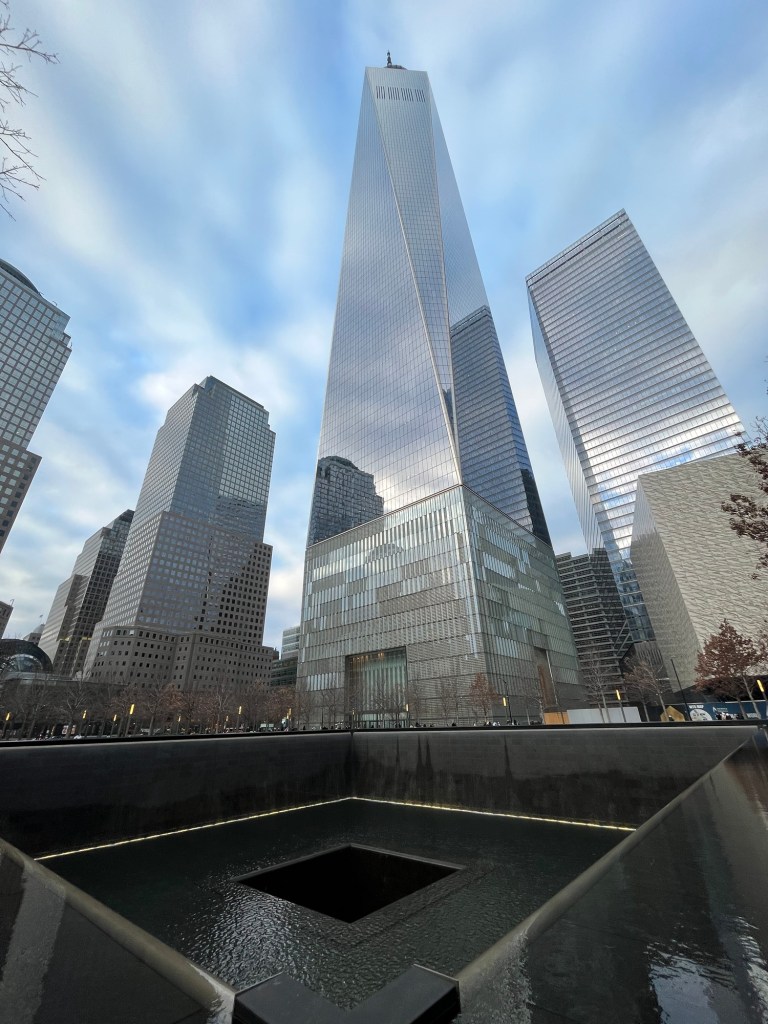
My son’s first encounter with political realities was the attack on the World Trade Center on September 11, 2001. He was 10 years old at the time. Since then, he’s been witness to a succession of futile conflicts, begun with great hubris and ending in humiliation and defeat. While these wars were fought, our nation had to face its limitations and question its priorities. At the same time as new freedoms emerged out of our ongoing self-examination, restraints against the power of unlimited wealth were being set aside. Along with the emergence of new forms of media that connected people across every boundary of culture distance, a reaction born out of economic stagnation and the failures of religion began to grow. A succession of demagogues, mostly concerned with the accumulation of power and wealth and the promotion of ideologies, began to thrive upon the inchoate frustrations of the populace. Democracy, as defined in our Constitution, was relegated as an afterthought.

Now we find ourselves in danger once again. Just as in all the wars and civil conflicts of the past, the power of factions has risen to challenge the rights of those who won’t consent to the rule of the minority. We are once again asked to question our basic commitments to diversity, equity, and inclusion which, after all, is at the foundation of our democracy, the core principle which actually defines it.

In my short lifetime I’ve watched dozens of our greatest leaders assassinated, along with many who raised their voices, murdered or suppressed, sometimes by criminals, sometimes by police. I’ve watched the cities burn, and I’ve seen blood in the streets. Many have fallen, standing up to those who would be king. During these dark days of ignorance and cowardice in the world of Trump, there are increasing signs of courage and commitment to the principles that have led and defined us. Every day, the actions of this administration and its sycophants feel like a deliberately inflicted gut-punch. Nevertheless, I see everywhere signs of new life in a population resisting the temptation to surrender to collective despair.

As a nation, having been overnight overcome by its worst tendencies, we’re now seen by many in the rest of the world as an adversary. We aren’t used to being seen as the bad guy, the neighborhood bully, the untrustworthy tyrant, no different from any in a long parade of fallen empires. We’re forced as a nation to awaken from our complacent sleep and become aware of a stark dissonance between our elevated self-image and our present actions as seen by others. At the same time, there are many in this world who carry for us the hope and faith that we will rise once again to our better nature and promise.

(If you are not convinced that we are in a war for democracy, then you may be asleep at the wheel. If there is any doubt, I recommend you look up ‘Foreign Affairs’ on your favorite podcast app, or listen here to an interview with Fiona Hill. It gives the most comprehensive view into the present state of the world that I’ve heard anywhere. You may remember Fiona Hill from when she gave the clearest and most devastating testimony as a witness during the Trump impeachment inquiry. She’s one of our most accomplished diplomats.)

Barbie and Bella

It’s interesting that two of the most prominent films in the same year carry themes as ‘similar as ‘Barbie’ and ‘Poor Things’, while offering radically different and original approaches. Both are comedic fairytales that confront our common fantasies about female autonomy, while being directed toward different audiences and leaving us in different places.

Both films center on the theme of following a single character from a more or less one-dimensional state to the development of a self possessed personality. Both Bella and Barbie begin their journeys by learning how to walk. By the end one has achieved a state of dominance and autonomy, while the other is left more or less still at the beginning of the path.

‘Poor Things’ centers itself in the remarkable performances of its cast. (I was thrilled to see Hanna Schygulla as the elderly dowager that Bella encounters on the ship. I confess that she was my greatest screen crush in my younger years, and I’d recognize her smile anywhere.) This film dwells in an imaginary Victorian dreamworld, while dealing more forthrightly with intimate issues of control through sexual dominance and submission. The denouement is definitive and satisfying, while being entirely fanciful.

The central characters in ‘Barbie’ are actually the contemporary images and fantasies to which we’re exposed in consumer culture. Every scene saturates us with references to movies and television and advertising. Homages abound, from old MGM musicals to ‘The Matrix’. We move back and forth from imaginary ‘Barbieland’ to corporate and middle class Los Angeles, ensuring that even the most obtuse viewer is aware that it’s our own world being challenged. At the end of this movie the central character has only begun to face the real world, and we the audience are left exactly where we are.

It’s an opportunity to watch two stylistically different and excellent films approaching similar themes in the same year. ‘Poor Things’ reminds me of Terry Gillian’s ‘Brazil’, while ‘Barbie’ dwells more in the realm of Jean Luc Godard (if he were capable of doing a popular musical comedy).

Things Fall Apart

‘The Morning Show’ on Apple TV is the best and most pertinent political drama I’ve watched since Aaron Sorkin’s ‘The West Wing’. Both deal with power in the hands of people presented as ordinary human beings. Sorkin’s drama was of a different time and climate. It expressed the lingering idealism of the baby boomer generation. In a later show, ‘The Newsroom’, Sorkin explored the confluence of politics and media. As in ‘The West Wing there’s the sense of an omniscient moral order, watched over by benign patriarchal authorities, represented by Jeff Daniels and Sam Waterston, that invariably delivers on the side of truth and Justice (Law and Order).

‘The Morning Show’ is a product of another century, when that very authority is under question and uncertainty reigns in the shadows of every institution. Its political and interpersonal machinations are at least as complex as those in another show of the era, ‘Succession’. Both deal with issues of power and authority, but ‘Succession’ takes a more comedic approach, while ‘The Morning Show’ more aggressively and tragically addresses the real world.

In ‘Succession’ the patriarch and his entourage are portrayed as fools, inhabiting an environment of almost cartoonishly excessive wealth and power. This is not a place where people have jobs, it’s where they have ‘positions’ somewhere within the arcane mazes of control. It’s a world drenched in male ego, where both men and women thrive and survive only by ruthlessly manipulating each other to gain the approval of the king. It’s ultimately a game of abject surrender, in which a gaggle of fools gambol just at the boundaries where comedy and tragedy meet. In the end nothing in that world has substantially changed, and we go home satisfied that everyone pretty much got served what they deserve.

Inspired by the real life sexual abuse scandals that emerged during the MeToo scandals that lead to the fall of power brokers at Fox News, ‘The Morning Show’ doesn’t hold back in aggressively challenging the power of the king and the patriarchy. It takes the path of tragedy, in which the hubris and foolishness of each player is met with individual consequences.

‘The Morning Show’ is about struggle and a heroic journey toward redemption. Every character is brought to the edge of a precipitous fall, and is severely tested with the choice between pure survival and risking everything for the pursuit of clarity. As in classic tragedy a sacrifice of innocence is required in order to bring down the king. No one emerges unscathed.

At the end of the first season we’ve witnessed the inevitable fall, and are left with a little grief mixed with a sense of possibilities. The show leaves us with a hopeful motto, ‘sic semper tyrannies’, which translates, ‘thus always to tyrants’.

photo by Gabriel Melcher

Halas

In the afternoons, following a day grappling with my high school insecurities, I’d stroll down the street from school to visit my friend Bill Halas at his home. Sometimes I’d bike over there in the evenings. Bill’s mother accepted me as an addition to a household that once included a husband and five older siblings. She and Bill, the latecomer, were both avid cooks and gardeners and active readers, sharing sophisticated tastes in music and art. Bill’s father passed away when he was very young, and when I met him his older siblings had long departed the household. Having an extraordinarily precocious and active mind his life had taken a rather solitary trajectory, his mother being the most reliable companion and sometimes his intellectual adversary. My own teenaged life was made unusual by the experience of being recruited for a special government program that took poor kids with high IQ’s out of their normal milieu and sent them to spend the summer living on college campuses. Our friendship flourished. Together we navigated the complexities of a rapidly changing world in the late 60’s, our bond growing from a shared sense of alienation and a drive for mutual discovery.

We met amidst a shifting cultural landscape with war, race riots, and assassinations unfolding in real time on our television screens. Popular culture was shifting radically from the segregated milieu of radio and the movies. Grasping for alternatives, we immersed ourselves in diverse music genres, from jazz to classical to experimental, and engaged in earnest discussions on philosophy and politics. We wandered the city smoking cigarettes rolled with pipe tobacco. We agreed and disagreed on everything. Sometimes we took his mother’s little Honda on road trips across the northern Ohio countryside, making up poetry inspired by highway signs (‘Pass With Care’).

I was the idealist and Bill was the purist, who took everything down to its roots. When I first met him he was experimenting with hydroponics. When he became interested in weaving he built his own loom and wove his own cloth and made his own hats. When he took up photography he began by studying its history, then building his own pinhole camera. Finally, he took up his brother’s old Nikon and developed the photos in his dad’s basement darkroom. My own nature was less grounded, tending toward the pursuit of imaginative utopian speculation and obscure strains of idealistic thinking. I felt compelled to understand the whole of everything, and very path I took led me down side roads, making it difficult to pursue a single course or become a model student.

Bill’s political awareness was way ahead of my own. He travelled to Chicago with his brother in 1968 to demonstrate at the Democratic convention and brought back photos and first hand accounts from the fringes of the police riot that we’d all watched on television. Later in our high school career we conspired with like minded friends to create an alternative journal that we mimeographed at the local anti-war office. We passed out leaflets and marched in circles chanting slogans in downtown Cleveland and attended meetings of a small radical organization led by a retired teacher and veteran of the Lincoln Brigade who fought in the Spanish Civil War.

888

Our friendship endured beyond high school as we pursued separate paths in college, delving into alternative communities and exploring the back-to-the-land movement. Bill’s quest for self-sufficiency and my search for spiritual revelation led us on distinct journeys. During those years in the early seventies everything everywhere was in flux and was being questioned, and for both of us the quest took us out of the proscribed path of college and career.

After we’d both left school we got together for a road trip east, tracking down old classmates and exploring alternative possibilities. We proceeded to Boston, where we met a friend of Bill on a sidewalk near Harvard Square. A large expansive figure closely resembling the British actor Peter Ustinov (with a beard), he sold carnations on the street, playing a concertina and disarming prospective customers with a performance that came right out of magical fairytales. We spent that evening at his lodgings in the attic of an unheated and condemned three story house in Roxbury. The next morning we crawled out of our sleeping bags to get breakfast at a nearby cafe. Our appetite for squalor satiated, we made our way out of the city and headed back to the Midwest.

Eventually, after making a long pilgrimage to the West I moved to Denver. Occasionally, while visiting my family back east I’d get together with Bill and he’d demonstrate for me whatever new endeavor had absorbed his interest. Over time these became increasingly esoteric even for my taste, involving dowsing and ley lines evidence for antedeluvian alien carvings left behind in rocks and boulders. He poured over old maps illustrating the mysterious energetic pathways determining the placing of streets and structures in small towns all over Ohio.

Our contacts dwindled over the years, and the last I heard from Bill was through letters filled with further interpretations of ancient artifacts and faces found in the rocks. I’d heard he was in contact with the Edgar Cayce people in Virginia and intended to build his own private settlement on a plot of land that his brother owned in Vermont. After at a year of hearing nothing I found out from his mother that he’d fallen out of communication with everyone. In a last message to his older brother, Bill had mentioned spotting a brown bear on the plot of land. After months of trying to track down his whereabouts the family concluded that he’d disappeared without a trace. For the sake of closure they accepted that he’d probably been eaten by the bear.

I don’t know what really happened to Bill Halas. All I’m sure of is that

All I know is that we shared a moment in time, embarking on uncompromising journeys, determined to face the mysteries of the world, whether in the rocks, the forest, or the primal currents beneath.”

Kerouac Mourns His Cat

I remember the oceans

the waters

the women

the moments filled with friends

every sin

I remember too much

I remember everything

mind twists the moments

Into tales

truth is no companion

no more room left here

for those left behind

loneliness rises like the tides

Trial

I just imbibed two healthy pints of Scotch Ale, a small handful of psychedelic mushrooms and a chunk of potent marijuana brownie…while printing 32 greeting cards so that I can replenish my rack at the grocery store and contribute to my gasoline fund for future trips into the present.

I’m hoping that some combination of the above will somehow blast me out of a sense of helplessness in the face of all the craziness and suffering, although I know it’s not really my responsibility and that I’ve done my part to advance this whole contraption…

I’ve been watching VICE NEWS documentaries looking into the darkest corners of the world, watching ‘Severance’ and ‘The Man Who Fell To Earth’, reading a Jonathan Franzen novel about a Christian youth group and reliving so many moments in the deep past in order to write about them, and writing about them, and wondering if this voluntary isolation from all the world matters anything at all.

I can only bear witness:

“This happened…this is what I felt.”

There are moments

There are moments

Hough – 1966

I stand on the corner of Euclid and Liberty, the University at my back, the edges of the ghetto across the street and about a block away, the rotating flashes of cop cars at a blockaded intersection. It’s a little past the curfew, but I’d been pulled by some compulsion to come this way and have a look.

I participate in a summer college prep program that’s part of the president’s ‘War On Poverty’. Two nights ago, returning from a concert in the suburbs with a small group of students and counselors, we found the lights around the dormitories and in the courtyards mysteriously dark. The dorm entrances were locked, and everything was weirdly quiet. When we banged on the doors to be let in, a counselor furtively appeared and breathlessly asked us where we’d been. Someone earlier had heard gunfire at the edges of the campus and everyone had gotten quiet and had hunkered down in their rooms. Coming inside, we found the lights inside the hallways and in the stairwells also extinguished. So we hustled into the elevator and took it up to the second floor. When I started down the hallway toward the open door of my corner room, I saw that a couple of people were sitting on the desk and gazing out through the wide window. As I approached, I realized that the whole horizon of the city appeared to be on fire. The people in my room, friends of mine, had families living in those neighborhoods that were on fire.

The next few days were strange, as if we were living in a war zone. One evening we sat on a balcony, watching National Guard convoys streaming out from the college into the neighborhoods. Earlier in the day they’d descended from the armory up the heights and set up camp in the sports field next to the dorms. As darkness fell they proceeded, guns at the ready, from the wealthy halls of learning out into communities seen as epicenters of unrest. I’d begun to look at the architecture and arrangement of University buildings as a literal fortress against the poor. Troops and supplies were channelled down a wide highway into the campus. The university was like an island of higher learning, with the upper middle class heights at it’s back, surrounded on three sides by the ghetto.

Earlier today I watched a Guardsman playing Gershwin on a grand piano, in the student Union.

Tonight I have to be a witness, so I walk right up to the borders of a frontier, where the stores are closed and everything is tense, but quiet, in the aftermath of a receding wave of explosive anger. I can sense that there’ll be more waves, perhaps many more, to come. Given our history, maybe in 50 years the geography will have shifted, but we may still be under siege. At this moment, I stand in the shadows, on a quiet corner, watching a scene of roadblocks and paranoia, wondering whether its safe to cross the street.

Cleveland

Robert, campus shaman, student of medicine and law, late night DJ, always scruffy and aromatic, with lank and greasy looking hair and patchy beard, wears like a primitive vest the fuzzy unzipped liner of his trench coat. He stands behind me, holding a pair of wooden shoe trees, one in each hand, occasionally rattling them imperiously. We are thirteen stories up, on the roof of Robert’s dormitory, surveying a landscape of lit up buildings and the strange activity below. A group of our friends are wandering in a group that gathers to sit in a circle on a concrete plaza between the fountain and the lights. They’ve taken to howling like a pack of wolves.

A week ago we sat down during rush hour in the middle of the busy street that bisected the University, protesting the war. More than a hundred students joined us. Traffic stopped, the police arrived, and we spent hours being chased across the campus lawns, dodging cops on horses and clouds of tear gas. That evening Robert and I ran ahead of a mass gathering of demonstrators at the Student Union, to post ourselves on either side of a stairway leading into the ROTC building. As we sat awaiting the impending march, the president of the University and a coterie of deans and professors, having been roused from their evening cocktails, approached the stairs and asked us who we were. We dutifully replied that we were “Gargoyles”. The bewildered clique of administrators and elite instructors retreated, just ahead of the mob of students that soon arrived to occupy the building. As the excitement subsided and the party began, Robert and I walked over to his gig in the basement of the student radio station. All night we played ‘Carry On’, the first song on a new release by Crosby, Stills and Nash…”Carry On, Love Is Coming To Us All…”

This week ‘Students for a Democratic Society’ are in town for a national conference, organizing against the Vietnam war. A slew of delegates have arrived to share space in the dorms and make use of various classrooms and student facilities for councils and teach-ins. In advance of and perhaps in preparation for their arrival, the campus is awash with a plentiful supply and variety of cannabis and psychedelic product. When evening arrives, for the first time ever a general state of paranoia has vanished, towels as smoke barriers are removed from under doors, all doors are thrown open, music and parties flourish everywhere. Thus a great anti-war gala and political convention is launched.

Withdrawing from the celebrations, I retreat to my dormitory room, having ingested a quantity of LSD. I feel the need to be apart from the company of others while being launching into this chemically triggered revery. When I enter the dark room, all is quiet and empty and reassuring. Before I can take another step, the calm and familiar voice of Timothy Leary breaks the silence. It issues from the speakers on my stereo that I’d earlier left tuned to the campus ‘underground’ FM station. The voice sad, “Sit down Ralph”.

Frozen in motion and completely astounded, I obediently sit on the edge of the bed near the door, and listen.

The good ‘Doctor Tim’ takes me on an amazing guided tour of my own nervous system, the surrounding universe and the whole history of evolution that leads to the miracle of my human DNA. As he speaks my mind is gently and relentlessly forced to open, in stages. I hitch a ride, from the perspective of our amoebic ancestors, through the unwinding narrative of the evolution of my brain, on to a transcendent vision of a common destiny that’s beyond all space and time. The whole time, out of time, I hardly move a muscle, sitting on the edge of the bed as the story unfolds. Finally I’m talked gently into a safe landing, back in the room I’ve never left, and in the present dimension.

I carried the puzzled surprise and synchronicity of that evening in my imagination for many years. At times I questioned whether the experience was just an elaborately constructed hallucination. Otherwise I viewed it as some kind of unexplainable and secret initiation. Decades later I came across the account of an early psychedelic session, guided and taped by Timothy Leary with one of his grad students at Harvard. The student’s name happened to be Ralph Metzner. Mystery solved?

Colorado

Hitchhiking across the deserts and plains of the southwest, between California and Utah, I’m stranded in a small town with a growing band of fellow travelers. We’ve stood around for hours, having left Salt Lake City going east, descending on the other side of the Wasatch Mountains into a community at a crossroad for tourist and trailer park families. As our numbers keep growing it becomes increasingly unlikely that anyone in middle America will stop for a scary looking gaggle of long-haired young people.

Fortunately there’s a U-Haul agency in town. Someone has the inspiration to pass a hat, in which is collected enough cash to rent a truck, big enough to hold us all, pay for gas, and pick up a few stragglers along the way. We load up and cruise through the night, across the sage covered flats of western Colorado. We finally arrive in the early morning at Granby Reservoir, near the base of the high Rocky Mountains, where a growing campsite of wanderers gather for their walk up mountain trails to the site of the first Rainbow Gathering.

Negotiations have commenced with nervous ranchers and farmers that have set up a roadblock on the road between this camp and our destination. With the help of a sympathetic rancher the barrier is dismantled and we’re able to complete this last short stretch in our pilgrimage. We’re ferried by school bus up a dirt road, from the outskirts of the small town of Granby to the borders of national parkland. A steep winding trail leads us up to a wide meadow that borders a small alpine lake, surrounded by pine forests and overlooked by snow covered peaks. Strawberry Lake. A banner stretched across the final leg of the trail welcomes us “Home”, to this temporary collective refuge in the wilderness. Pilgrims arrive from all directions, most of them escaping the cities in this crazy nation with its crazy politics and prejudices, after years of frustrating struggle in the political trenches. We were looking for some better way forward, or maybe some kind of magic to manifest in the natural world.

I take off along a narrow trail that skirts the edge of the valley, hauling my rucksack and heavy sleeping bag, looking for the perfect spot to set down. In my pack are copies of the first Whole Earth Catalog and the Oxford Annotated Edition of the Bible. I walk beneath pine forests swaying in summer breezes, listening to the soft whisper that carries the sound of not so distant drumming, and the scent of community cooking fires. Finally I come upon an inviting patch of level earth beneath a sheltering tree. The ground is flat and covered with a carpet of pine needles, a little elevated from the path. I decide this is my place, and lay out my sleeping bag and pack. Carefully collecting small pine cones, I place them in a border around the space and outline a welcoming path to enter for anyone who might pass by. I’ve claimed the spot as my own magical circle in the wilderness. All are invited to share.

For hours I sit, listening to the constant sound of drums that come from clearings around the meadow, were people gather for food, conversation and rest. Through the treetops I can see distant snowfields just below the mountain peaks that loom above. Where I come from there aren’t any mountains, except in movies and fairytales. After absorbing the awesome landscape for a bit, I walk down a path that continues to the center of the meadow and the shore of the lake. A council, made up of whoever chooses to attend, gathers continually to tell stories of their journeys, to relate prophecies and mystical visions, and to discuss plans for the days and the ceremonies ahead.

We are dreamers who grew up in the shadow of violence, wishing for a better future. Many like me, had been to the Woodstock Festival or something like it. We’d witnessed the sheer power of our collective will, for better and worse. We hoped that here in the wild, away from the electricity and the crowds and the dependent delusions of civilization, we might encounter some revelation to guide us forward on a path toward some sort of universal peace.

On the last day we gathered in wide prayer circles on top of a high plateau that had been sacred to the displaced people who once lived here. I stood in a wide circle, surrounded by all of these mountains, and hundreds of people praying or chanting or being silent. We were all are waiting for a sign. In the middle of a moment of collective silence, the voice of a single person interrupts. The voice comes from a tall dark man with a shaved head and an incredibly open smile. He’s wearing saffron colored robes, his accent is rather thick, and his presence suggests simultaneously calm wisdom and innocence. For many, the voice is a rude interruption. For others it’s a guide.

For me, I came to realize in the years that followed, it was the sign.

Orlando

We arrive on a special flight from Denver to Orlando to attend the event, on a plot surrounded by Florida forest, a couple of miles from Disneyworld. We work in a community grocery store run by Divine Light Mission, an organization built to spread the words of our teacher and master. To keep the store running during the week long celebration, a skeleton crew is left behind during the first half of the event. We tend the shelves and counters and listen in the evening to the talks and music broadcast across a short wave connection in a downstairs office. For the final days we’re brought across the country to fully take part in the festivities.

The first morning after arrival I’m assigned the duty of porta-potty supervision and sanitation. By late afternoon I’m switched to service in the darshan tunnel, where I attach gardenia blossoms to the silky blue fabric of the walls. Through this fragrant space each one of the thousands of devotees will walk, to receive a moment of attention at the feet of the teacher. From toilets to tunnel is a journey of a few yards that feels like a journey between dimensions.

The Florida weather is clear and immaculate, an occasional bird or butterfly drifting overhead in light warm currents that carry the scent of ocean air. I sit in a grassy field next to a row of my traveling companions, at the front of an audience of several thousand people. On stage before us is a colorful throne surrounded by flowers and framed by cascades of cloth drapery. Just below the front of the platform a small band of amplified musicians sings and plays a mixture of devotional tunes, interweaving elements of American folk and rock with Indian themes. Everything harmonizes in this soundtrack for a large summer celebration.

The music weaves a rapturous spell over the crowd. A vacant field is transformed into a village, in a corner of heaven. From nothing we built a small community in a matter of days, with campsites, showers, latrines and international kitchens. A multicultured army of people that spoke every language on earth, shared a common will, to celebrate life and love together and have an opportunity to be with the one who brought us together.

In the afternoon we sit, entranced in a state of near ecstasy and expectation, until the teacher, dressed in a ceremonial costume evoking a Hindu deity, steps from behind the drapes and takes his seat upon the throne. As the band launches into an electric version of an ancient hymn, he beams down at his audience, like a rock star overseeing adoring fans. Suddenly, a young woman, dressed in a colorful sari, stands up from our row at front and center, and begins to dance. As she gracefully sways to the music, her arms in the air above her head, the colors she wears swirling around her, the teacher stands in resplendent grace, and begins himself to dance.

In that moment for me the time stops, the birds and butterflies for an instant are frozen in flight, and the sunlight and breezes pause in expectant silence. All of my attention is carried by the dance, and all of time and space stops as witness, and there is no separation between anything that exists in the world.

Idaho

The child held her hand as they cross the road in the middle of the valley. Where I stand, at the edge of a forest where the highway begins to climb on its way toward more distant heights, the wide alpine valley is in full view. In its center is a row of buildings along the strip, tiny in the distance. There are the resort cabins where we sleep, beside them a restaurant and convenience store, all perched above a meadow bordering a meandering creek. Across the asphalt what passes for a village includes a widely scattered collection of residences, a real estate office and a clinic. Behind the town and clinic is a small lake bordered by wide pastures, that eventually ascend to the edges of forests which sweep in graceful steps upward toward the distant Sawtooth Mountains, arrayed in sharp display against an endless sky.

The woman and child below are my wife and four year old son. They cross the road to climb a short path toward the clinic. Having come down with a mild but persistent cough that afternoon, and having a history of asthma, my wife decided to take him to the doctor for a cautionary checkup. Meanwhile, I take this short walk in the hour before dinner.

Before I come to the edge of the tall trees on the top of the ridge, while I watch my young family below, so exposed amid this enormous vista of primitive majesty, when my sense of time and space is suspended. Beneath these vast mountain skies, in the shadow of these mountains, I feel something within me expanding far beyond the usual boundaries of affection. For a moment my feelings embrace it all; people, mountains, valley, stream and village. More than at any previous moment in my life, everything I witness is enveloped within a boundless atmosphere of love.

Then I turn again toward the trail, and that feeling is lost to the winds.

Black

Living in the middle of a White Sea
I apologize to John Mike Thom Daryl Sonia Jamal Ken
Nicolle Tameka Jolene Diane Erika Barclay
Malcolm Shirley Joshua Sergia Nathaniel
so many more

To all those who succeeded
Who got to their goal
Because they were brilliant and creative
and got lucky
And those who didn’t
And those who died going under
While I didn’t do anything special
floating in a world of white dreams
white luck white privilege
without trying
Because I could
Because I am
Because I’m lucky
I am sorry so sorry
You were my friends
I allowed myself to be pulled away
and lost you
I forgot your names
but remember your faces
Now I live on a mostly white Island
Far away from you
Your streets your beautiful homes
Your inviting arms and spaces
I don’t know how to return

The night I drank too much ‘Orange Flip’
and threw up in your basement
on your mothers dress
You drove me back
To my house on the West Side
The white side
Where it was dangerous
for black boys to be seen
we were boys
so brave
You left me on the front lawn
Because it was after dark
Now I know that you were afraid

The women used to run their hands
through my hair
amazed at how light and fine it was
I would offer it now
toward reparations

Endless Grief

Grief is an ocean. It comes to us in waves, every wave possessing a different character and momentum. This is an ocean we all live in from the moment of our birth. The grief of a child is easy to see; in growing up we learn to hide our grief beneath an endless variety of disguises. We weep, we are depressed, we stare at the walls or create art. Some of us learn to project our grief on others in the form of hatred and prejudice. Some of us seek redemption through power and influence. Some become saints and some become monsters.

We’re often told that we can ‘get through it,’ and once we manage to do so the grief will no longer dominate our lives.

I can locate two points in my life where the waves peaked. I was torn between total numbing withdrawal and the painful and cathartic release of the deepest pain. My freedom from the struggle came in the act of unrestrained weeping. Both events were in response to the loss of someone very close and dear to me, one was mostly due to my own regrettable choices and one was a suicide.

This past year I spent mostly in bed or on the couch fighting the onset of cancer (if ‘fighting’ is the proper word). My main occupation, besides taking drugs for sleep and pain, finding new ways to eat, and showing up for chemo, was reading esoteric fiction and Doctor Strange comic books going back to the early sixties. I watched old Star Trek episodes on Netflix and made cannabis tea. My strategy in dealing with the loss of function was partly nostalgic and partly a form of pure escape. It stifled the sense of passing time that was leading me toward some mysterious ending.

I was given a reprieve. Time returned me from a state of suspended possibilities, bringing me new opportunities for choices and a chance to reflect upon my interrupted journey. Release from work and the need to meet schedules set by others put me on a bridge between regret and hopefulness. I’d survived for now but had lost a degree of functionality. It left me with no certainty about where I was headed or where I wanted to land.

It left me reeling between feelings of almost absolute freedom and a deep conviction of failure and incompetence. When I finally arose from my time upon the couch, I faced an altered world. The peak of the worldwide pandemic coincided with the height of my own illness. Everything was changed. The undercurrents of grief and anger had risen to the surface. Everyone appeared to be traumatized in some way. Businesses were closed; streets were full of the homeless and hospitals full of the dying. Nearly everyone now is masked in public, while hidden emotions and collective resentments force their way toward the surface. Politics have split the nation into warring factions, to a degree that the basis of trust that makes a functioning society possible is seriously, and perhaps irrevocably, frayed.

Grief appears to be everywhere.

In spite of all of this I forced myself to climb out of the hole of indecision and aimlessness that had ruled my existence through a year of trauma. I resumed the discipline of sitting every morning in meditation, observing my mind in a mirror. I witnessed the ghosts and demons of repetitive patterns that carry me through both hope and despair. Gradually my life regained a sense of direction and purpose that informed my daily routine of waking, sitting, reading, listening to podcasts while making breakfast, then making the time to write or to practice photography. A feeling of freedom began to ascend over thoughts of self-hatred and despair.

In the ocean in which we swim only change is certain.

A couple of weeks ago I opened a series of doorways into computer hell. I automatically upgraded my computer to the latest operating system software without thinking very much about it. After the upgrade the application in which I did the organizing, processing and printing of my photographs simply ceased to function. Nothing I tried solved the problem. No help was available from either the software provider or the computer maker. The advice of these massive corporations was to wait a month or two until they managed to coordinate with one another.

My forward motion was brought fully to a halt as I spent many hours desperately seeking help online. Instructions provided by people having similar problems not only didn’t work, but their results forced me to take the whole mess to a professional technician. He first encountered the same problems I did, but eventually a workaround was found that not only cost me a lot of cash, but also led to the irrecoverable loss of a good chunk of historical data.

I found myself once again floundering in the waves. I felt incompetent and helpless, angry and depressed in turn. I couldn’t find the inspiration to write while obsessing on the problem. My feelings began to bleed into my relationship with the world of other people. Friends who could see my distress offered well-meaning advice, and the advice was angrily rejected. I felt that I was on my own, that there was no help to be had, that every choice I made led to worse problems. My anger was petty and mean and an expression of accumulated grief for the loss of relationships, the community of work, my bodily functions, and as much as anything the loss of the world I’d grown accustomed to living in.

I’m now in recovery mode, sorting through this relatively minor wreckage, and yet I feel some kinship with those who experience the aftermath of flooding, fires, earthquakes and economic collapse and have to rebuild their lives from the ground up. Although small in comparison, my problems evoke reactions based on far more than the event in itself. I carry with me the sense of everything I’ve personally lost and gained, as well as the victories and losses experienced by people all around me.

In the West we worship our individuality as if it were a Holy Grail, but it’s mostly a fiction. As much as we isolate ourselves and our feelings from others, we are inescapably social beings who share together both joy and pain, immersed in the currents that surround us.

Here I stew alone in my ‘laboratory’, surrounded by computers, camera, iPhone and streaming television, struggling to find my own voice through all of this. The place is small, two rooms with a kitchen alcove and a tiny bathroom. Every move in the past decade has seen me downsizing, sorting through every object that has a story, deciding which to let go. There’s little room in here to live in the past, so I’m forced to live somewhat ruthlessly in the present. Although I stay up on the affairs of my country and of the world, I’m growing more of a protective shell to separate my feelings from the emotional maelstroms provoked by our collective struggles. I often fail. The struggles continue and will never end, but their weight is never mine to carry alone.

Loss is a given, grief is forever, and I swim in the same ocean as all of you. We can’t stop the storms that are coming, but maybe we can learn to swim with the tides.

Apologia

IMG_Storyteller

Ralph E. Melcher

For more than three years I haven’t known what to say.

It wasn’t that I was altogether silent or unengaged. I was in turn angry, hopeful, apprehensive, and disgusted as much as anyone. I passed along other people’s notes, wrote headlines for postings on Facebook and Twitter. What else could I add to the conversation? I’ve been part of a nation undergoing daily shock treatment by a madman who rivals any villain in any James Bond film. It feels to me like a battle to the death between my own hopes and visions and a parallel world of absolute insanity.

On top of this, since a month or two before the beginning of my 70th year and just in time for the pandemic, I became afflicted with a double carpal tunnel condition that would require the kind of ‘elective’ surgery that couldn’t be done until the plague emergency lifted a bit and which was a related precursor to the more serious cancer with which I’d be later diagnosed and which eventually brought my work life to a halt. Over time the condition worsened from mild to severe, and the numbness and pain in my fingers became continuous and exhausting, not to mention distracting.

The overall effect of chronic pain isn’t dissimilar to that of a pandemic. It compels me to turn inward. As the pain increased I found myself withdrawing somewhat from less than intimate relationships and from the outside world in general. As virtually every activity in mind and body became more of a labor I spent more of my time alone. I caught up on books I’d been reading, listened to podcasts and Zen lectures, contemplated my daily Tarot card and read Doctor Strange comic books (a source of strength and endurance).

It occurs to me that this is an incubation period. In mathematical terms it could be a ‘bifurcation point’ where our collective evolution takes an unexpected turn toward some new level of organization. This inescapably leads to some kind of world and life that’s clearly different from the one left behind. In times like these when forces accumulate against our forward momentum, and we’ve forgotten where and how to move, we have to learn to think sideways, around corners and into the curves.

Almost all of the conversations I hear in this time of restrictions and forced contemplation are voices yearning for movement in a new direction. We feel the need for damage repair as well as total renewal. We are faced with a world that finds itself in the rapids of a stream, having strayed past safe boundaries in our sleep. Now we face civilization’s apparent rush toward oblivion. Still the dream and our sleep hang on. We want to awake into some sort of normalcy, but normalcy eludes us every minute.

We are compelled to construct a new world.

___________________________________________________________________

For now I offer these brief reflections and recollections for your entertainment or edification or perhaps even a seed of inspiration. More importantly, I invite you, who are staring into your screens, an opportunity to respond, connect, and maybe experience the seeds of whatever grows out of all this compost.

Join the Arclist.com mailing list by responding to this email with the word ‘Subscribe’ in the Subject Line or in the Text.

If you would rather not receive further posts do the same with ‘Unsubscribe’ in the subject line or text.

You can also send emails directly to me at remelcher@arclist.com.

You can also post comments on the Website or Facebook or via Messenger. NOTE: If you wish to be included on the email list you must send an separate email at remelcher@arclist.com or reply to this mail
(NOTE: If you have already done this in reply to my INVITATION mailing YOU NEED NOT REPEAT – sorry for the inconvenience – still sorting out the software);-.

Best yet, create something out of words or graphics or random speculations or discoveries and send them along. I’d rather envision this space as a collective and creative conversation, not another space in which I talk only to myself.

AN INVITATION

My Publishing Career

When I was in elementary school I was given for Christmas a small printing press  that could make stuff the size of business cards or raffle tickets. I started a number of membership organizations among my classmates that could be activated simply by asking for a card: ‘The Hoppity Hooper” Fan Club,’ ‘The Rocky and Bullwinkle Fan Club,’ and our final, three color masterpiece, a membership in ‘Camp Palumbo’ along with a small certificate of the official currency, the ‘Pazzuza.’ 

Later on my neighborhood friends and I, all bing in the same Boy Scout Troop, would take each issue of the Official Boy Scout Magazine paste in alternative headlines and captions cut out of other publications and turn Boys Life into what we thought was a hysterically funny parody inspired by Mad Magazine, a publication we really took seriously.   

In high school, myself and my high-minded friends published and repeatedly got in trouble for a series of independent journals printed via mimeograph machine and silk screen press at our local Peace Movement Offices. I continued this though college and after, until moving to Santa Fe, when I got a bit more seriously embedded in the writer’s world. 

In 1984, after attempting to convert reams of handwritten notes, poetry, short stories and essays into a publishable form into typewritten documents (a frustrating process) I took a class in the new Word Processing technology at the local community college. About midway through the course the teach came into class entranced by the release of the first Apple Macintosh computer. I don’t remember what he said but his trance was somehow infectious, and before the end of the year I’d acquired my own machine and the accompanying laser printer.

For a number of years I published articles and reviews in ‘The Journal for Humanistic Psychology,’ ‘Annals of The Earth’ and ‘Shaman’s Drum’ magazine. 911 happened. I was not particularly surprised that it happened but that didn’t make me less angry. So, I started a blog, called ‘The Arclist,’ which continued view email and website for the next 20 years. After the 2016 election the list pretty much was reduced with short headline introductions to various news and resistance links and very little else. Meanwhile the host site and software became contaminated and obsolete and harder to manage, until a couple of weeks ago I decided to abandon the list in email form and rethink the whole thing. 

I was diagnosed with cancer. This marked an opportunity to rethink everything. I went though my existing contact list and entered them into another email client service that I’d learned to navigate through as a business application. More up to date and flexible and easier to manage in creative ways, I’d like to take advantage of this by setting up a new version of the Arclist, more in the tradition of a Journal that accommodates creative ideas, creative projects and creative discussions between interested folks. I think we are all somewhat anxious to move beyond obsessive focus on the disasters of this past year and turn our attention to future possibilities. Perhaps this could provide an opportunity.

I have a list of names that I’ve gleaned from my contact list. Many of you were part of the previous mailing list or were listed as a ‘friend’ on my Facebook page. Some of you might have gone away for any number of reasons. Some of you may not wish to hear from me ever again. Before engaging the new list I want to send a formal invitation for you to respond, either positively of negatively, and I will then formally activate or delete your membership. If your answer is ‘YES,’ and I hope it is, I will begin sending out my creations, or forwarding others, on some semi-regular basis.

Meanwhile, I’ve attached to this invitation a sampling of the sort of stuff you might expect to receive on the New ARCLIST. Should you wish to subscribe and get the material on this site in our email just send a reply to remelcher@arclist.com, or leave a Reply at the bottom of this page.    


My Favorite Podcasts (Current) 12/13/20

Not included are podcasts I’ve favored In the past but I’m no longer following regularly (this American Life, Masters of Scale) or podcasts that were short form or serialized or no longer being produced (‘Studio 360,’ ‘The Ballad of Billy Balls’). By ‘current’ I only mean current, and this list will continue to shift from day to day as I get turned on to new podcasts.

History

Throughline

One of NPR’s Most Popular Daytime Shows, this hour long documentary style delves into all of the corners of history we are never/rarely taught in school. To fully understand the present events in the context of historical realities the show is unmatched. The two hosts are from first and second generation Iranian and Palestinian families, which may give a clue  to the unique depth of their approach to telling stories.

The United States of Anxiety

A little scary but enlightening as it focuses on the areas in American history that indicate the conflicts that have split the body politic from the beginnings of the USA.

This Day in Esoteric Political History

Somewhat oddly named, focusing each day on a single event (many of which I’d never heard of) at a particular moment in American History, a lively and educated discussion of the event’s historical environment and its influence and indications in the present.

Politics

Hacks On Tap

Political strategists from both sides of the ‘aisle’ toss around their critiques and projections about both parties. Anchored by David Axelrod (Democrat) and Mike Murphy (very ‘anti-Trump’ Republican), with a variety of chummy guests, the analysis is delivered with a good deal of humor and real ‘insider’ knowledge of how political campaigns actually work.

FiveThirtyEight

I’ve been listening to these guys since 2015. A relief from the general alarmist nature of political news and analysis. Sometimes a bit over-the-top ‘wonky,’ I favor 538 for a strictly data-based view of political realities balanced by a crew of mostly contrarians in one form or another. I simply like these guys. As I was about to write this review, unfortunately the departure of Clare Malone is a great loss. Relative newcomer Harry Bacon Junior has brought a similar contrarian sensibility and a much needed black perspective to the panel, Malone brought an equally important feminist and Midwestern (Ohio) perspective. 

The Ticket

One of the better interview shows from The Atlantic. Host Isaac Dovere chooses subjects that are generally slightly out of the mainstream news but closer to actual events. Always new information and insights.

The Axe Files

Long form, one hour interviews of a range of public figures, illuminating their biographies and focusing on their positions in regards to contemporary politics. David Axelrod, currently head of The U. Of Chicago School of Politics and once Obama’s chief campaign adviser, is relentless in his ability to get beyond easy rhetoric to the true nature and personality of his guests.

Amicus

A bit alarmist in the ‘Slate’ style this is the best way to keep up with the arguments, decisions and implications for the future of the Judicial branch of government.

Intelligence Squared

Both sides of every question, thoroughly and respectfully debated. Particularly helpful to those in the habit of considering the ‘other side’ to be totally without brains or merit. (Note: This applies only to arguments that actually apply when a et of common facts are agreed upon.) 

Reporting

The Daily

The New York Times, in its breadth and depth of coverage is still at the top of the media heap. This podcast offers a sampling every morning, with a single news story or interview and a short headline summary. On Sunday an archived ‘feature story’ is read in entirety. I highly recommend checking out the Dec. 6th edition: “The Social Life of Trees.” 

Global News Podcast – BBC

I start the day with this one, as the focus isn’t obsessively on America and it’s ridiculous politics, it’s coverage is delivered with an almost universally cheerful, or at least less apocalyptic stance. Given all of the ‘Brexit’ angst in Briton these days, I suppose several hundred years more of living history kind of levels out ones perspective on the present.

The New Yorker Radio Hour

I wasn’t sure just where to place this since the coverage is as much news as it is cultural commentary. I decided that since the coverage is essentially ‘journalistic’ in approach, this fits.

Business/Journalism

Pivot

Two of the most knowledgeable people on the fringes of Big Tech, Kara Swisher and Scott Galloway make a ‘perfect couple’ with their insights into current and future trends in business, investing and the politics around technical innovation and culture. Punctuated by personal banter and good natured kidding these two have been going at it for a couple of years of successful and popular podcasting. Swisher, the journalist, keeps things on track while almost cagily draws out brilliant insights from Scott, the NYU business professor and investor. Guests are featured with back and forth interviews by both Kara and Scott.

The Professor G Show

Scott Galloway’s own podcast (see above), where he calms down while proving himself a capable interviewer, while giving himself some time to deliver, John Oliver style, some incredibly insightful, critical, and sometimes inspiring ranting about ethics in politics and business.

Sway

Kara Swisher’s new interview show from The New York Times where she is featured as a regular Opinion columnist. The NYT is managing a very successful and profitable switch into the digital medium. Swisher is a digital candidate for the Maureen Dowd chair of journalism. Her interviews so far have included a diversity of subjects (from Dowd herself to Hillary Clinton to Jane Goodall).

Science

New Scientist Weekly

Friendly, British, delivered with a touch of humor, the most up-to-date international coverage of the scientific progress on Covid-19, and the latest questions and discoveries in scientific research.

Philosophy

Hi-Phi Nation

Philosophy revealed through contemporary storytelling and interviews that reveal in our present dilemmas their deep roots in philosophical discourse. A uniquely illuminating approach and my ‘great discovery’ of the month.

Into the Zone

An original approach to ideas and storytelling from novelist Haru Kunzru, who focuses on how ‘opposites’ shape our world. While founded in stories from the ‘real’ world Kunzru’s approach is delightfully filled with literary twists and turns and metaphor. I was turned on to him in an interview with ‘The Book Review’ podcast (see below).

Storytelling/Literature

The New Yorker Fiction

I’ve been listening to this podcast for more than 10 years. It’s one of my main links to the world of short fiction. A writer each month gets to choose one of their favorite stories from another writer in the archive and to read it out loud. Afterwards the author/reader discusses the story with Fiction Editor Deborah Treisman, focusing on how the story inspired and influenced them.

Imaginary Worlds

Being a heavily invested fantasy, sci-fi and comic book geek, how could I miss this one. ‘How we create Imaginary World and why we suspend our disbelief.  ‘Nuff said!

The Book Review

From the New York Times Book Review, but less intimidating. It features author interviews plus short discussions and reviews of some of the latest books out on the shelf.

Poetry Off The Shelf

A refreshing break into the dimensions of pure sound and word. Poems are read, interviews and analysis are delivered. A little Poetry Magazine online.

Humor

Beef and Dairy Podcast Network

I cannot really desgribe this to you. It’s British and hllarious. Every episode begins nearthe absurd nand then carries one beyond…

Mission To Zyxx

By now an old stand-by for fans of imprvisational humor, sci-fi and those with a need to fill the void between space-based intergalactic blockbusters.