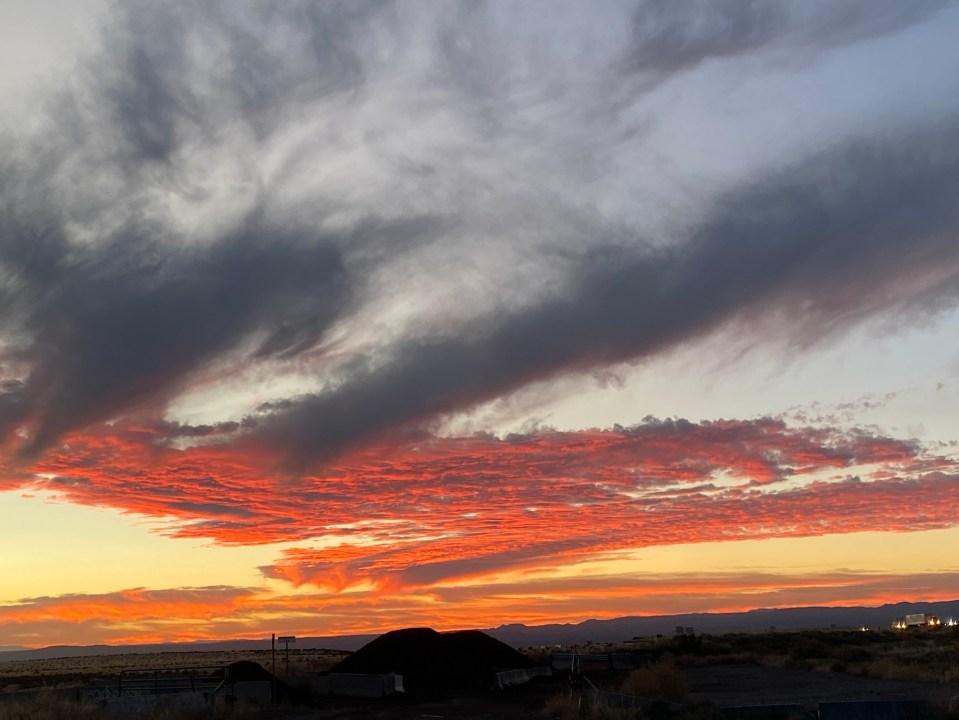
I sit in this cafe in Santa Fe drinking my coffee and reading about the approaching hurricane, billed as potentially ‘one of the most destructive hurricanes on record for West-Central Florida.’ I open the MAPS app on my phone and enter St. Petersburg, Florida, zeroing in on the strip of barrier island beaches along the Gulf of Mexico, until I find the section called Treasure Island. I scan the shoreline to see if there’s anything I might recognize from the time I lived there in 1972. Outside of the main road facing the hotels and resorts it’s hard to imagine that any trace remains of what I knew back then.
Most of Treasure Island at that time was made up of slightly run down motels and beach cottages inhabited by seasonal vacationers, boat people and retirees. In the middle of this were two structures that remained from a previous complex mostly washed away in a previous hurricane. Separated from neighbors by wide strips of beach sand they were inhabited by an odd population standing well apart from the surrounding social fauna. I shared one half of a duplex shack with a high school friend from Cleveland who’d attended college in St. Pete and had taken up with a community of boat builders and maintenance people centered in a nearby boat yard. I was just a year out of college, having dropped out after the Vietnam Draft Lottery missed my number. I’d spent months traveling by thumb all across the western states and through Canada back to the Great Lakes. After working briefly as a dishwasher in the local department store, I left my family in Cleveland, coming to Florida at my friend’s invitation.
A young couple lived on the other side of the duplex. A larger separate dwelling edged closer to the Gulf shore, headquarters for the president of a local motorcycle gang and his occasional guests and associates. ‘Pappy’ is what they called him. His gang, the Pagans, was apparently rather notorious in the region, having carved out territory in competition with a local chapter of the Hell’s Angels. We were young, college educated dropouts that had more in common with Volkswagens than motorcycles. It sounds rather scary, but it worked out quite well all around.
Whenever Pappy’s gang went on extended ‘runs’ to whatever piratical adventures they were engaged in, he asked us to watch over the house and property, and was grateful for our vigilance. When in residence he always treated us respectfully as his neighbors. We assumed his gang’s adventures involved some forms of drug running or other illegal activity, as he appeared to be rather prosperous, if out of place in the neighborhood. He possessed a very nice boat, cars and motorcycles, and had no discernible employment.
The complex appeared to be under regular surveillance by the local cops. Pappy often came out to greet them on their patrols carrying his small pet boa constrictor, the gang’s mascot, around his shoulders. There was often a steady parade of guests in and out of the residence, and when he and other gang members occasionally gathered to drink and party we learned it was wise for us to stay clear. In all other matters, as long haired hippies being also somewhat out of place in the middle of a community of white conservatives, the intimidating presence of Pappy was actually reassuring.
St. Petersburg at the time was divided into distinct social groups. There was the established population of mostly very conservative southern white people. They barely tolerated the presence of a growing insurgent population of young people that orbited various college campuses. A large, mostly segregated black population lived in tightly knit communities along unpaved streets in the semi-rural neighborhoods on the fringes of the city. They worked mostly in municipal service and maintanence jobs, tending the roads and the parks and collecting the trash. On the weekends they gathered in Baptist churches nestled in cozy subtropical tree lined lots.
There was a constant ebb and flow of vacation visitors, spending their money and luxuriating near the beaches or out fishing and sailing on boats and yachts in the Gulf or in the Tampa Bay. Then there were the vagabonds like us, mostly refugees that circulated among all of these groups, taking advantage of the climate and whatever marginal employment that was available.
When I moved south I brought with me a collection of books and articles documenting the decade of political activity that had moved me through high school and then as a college student between 1966 until 1972. Much had come to light in those years for the generation born just after the Second World War. We had been thrown into the first age of television and simultaneously educated through the benefits of the GI Bill and the rough awakening of the Civil Rights and Antiwar movements. The world in those years had been both disorienting and an opening to new possibilities and perspectives.
The so-called progressive environmental movements in those days emerged out of the shock and passions of the sixties toward something more organized and enduring. The seeds had been initially planted by pioneering books like Rachel Carson’s Silent Spring, Scott and Helen Nearing’s Living The Good Life, Paul and Anne Ehrlich’s alarmist The Population Bomb and Stewart Brand’s compilation of alternative resources and philosophies, The Whole Earth Catalog, inspired by the first photographs of the global biosphere taken from space.
I used my time in Florida, while living on the beach, smoking marijuana, listening to music and drinking cheap liquor from the state stores, I reviewed all the currents and options effecting my life. It was sort of a suspended state between the stages of a life as I sought my own path forward in pursuit of a better world.
Sitting beneath the parachute canopy that blew gently in breezes from the Gulf, I watched the sun rise and set over the always restless waters and imagined new possibilities as alternatives to the industrial wilderness I’d grown up in. It seemed possible that humanity would awaken from its nightmare of wasteful conflict and pursue collective survival and the chance for contentment.
I look at the present map of those beaches on my iPhone and see that the roads have all been closed to traffic as the communities have mostly been evacuated. The expected storm surge is predicted to be as high as 15 feet. There have been over 40 tornado warnings so far across the state of Florida, and at least one large tornado has already devastated parts of Fort Myers, south of St. Petersburg, then cut across the Interstate 75. Millions of people are fleeing on roads away from the Gulf and most of the gas stations are out of gas. This has been called a ‘once in a century’ storm, but it follows by barely a week the previous ‘once in a century’ storm. Milton follows Helene, with two more months of hurricane season to go.
When I left Florida I moved to the West with the thought of devoting my life to pursuing possible alternatives in a world drowning in waste and ignorance. Having grasped and accepted a new understanding of history and what we are responsible for, I found it impossible to turn away. Since those times, for more than 60 years, many of us struggled and hoped and achieved a greater clarity of our options. We went from dreaming to innovating. We constructed new technologies to harness our visions. At the same time we watched as the fear of change grew into the fierce backlash of denial that now threatens to throw us backward into the destructive cycles of the past.
I remember the innocent days when the most extreme harshness of the backlash kept us out of bars along the beach because our hair was too long. We were young and arrogant and resilient and we flaunted our sense of pride and indifference. The petty prejudice we encountered we saw as a relic of the past. If at times we felt like strangers in a strange land, we mostly shrugged it off as we faced the future with what we thought was a clear sense of its possibilities.
I remember sailing free over the clear waters that could be both gentle and sometimes overwhelming in its sense of awesome scope and majesty. I remember the fear inspired by lightening and thunder over the distant waves in the night, and the warm currents that caressed my body as I floated beyond the breakers beneath an endless sky. The world moves in crazy currents, just like the wind and the oceans, and we are only human. We navigate the waves and sometimes get caught in the backwash and sometimes we get swept away.
We were so young, and we thought we could reshape the world, just because we believed we could. We threw ourselves on the currents and trusted them to take us to where we needed to be. Hippies, motorcycle gangs, college students, even Christians and communists, believed we could push the whole world toward the good as we released our imaginations and accomplished miracles. But we forgot in our pride that advancing our vision required that we leave no one behind.
I now look at the map and see images of the storm’s advance, I know that the world I remember will be changed beyond recognition, and feel some pity for those forced to flee the wrath of the waters and the wind.
I no longer live near the sea. Where I live these desert heights often seem like a calm island floating above rough weather and the waves upsetting the rest of the world. Looking at my screens with their views of the storm, amid the world’s violence, ignorance and misery, my heart sometimes threatens to turn to stone. I know that, unlike the ocean, stone eventually gets worn away and vanishes to nothing. Once totally open and filled with hope, now I often feel almost empty and ready to blow away in the wind.
Neither time nor history flows backward. The tides and cycles repeat, the days and years pass through darkness and light. Whenever we grow complacent we’re jolted awake. The world and human civilization has passed through many fevers. We’ve survived cataclysms, ice ages, plagues and world wars. Through each cycle the lessons have become more obvious and the stakes have become greater. We learn again and again the lesson that we all share the same small planet and the borders between us are mostly illusions.
 Arclist