I’m just turning 75. My life has been formed, and is almost completed, throughout a breathtakingly brief and cataclysmic era in global history. In future accounts it may be referred to as ‘The Neoliberal Era’, ‘The Era Of American Hegemony’, ‘The Age Of Economic Globalization’, or perhaps, as the cataclysm intensifies toward its resolution, ‘Capitalism’s Final Crisis’. There will be a few references to something called ‘The American Empire’. It will appear as a flicker between the centuries, and one of the shortest lived empires that ever endured.
We are at the beginning of a 2nd American Revolution, one that is long due. Whatever the outcome, it will radically reshape the outcomes for global civilization. The age of the nation state is gradually going out of phase with the needs of the physical world. There will be times of breakdown and struggle. We must reintegrate with the workd. This will take some time and will never be at an end. I believe that in the next phase there will still be nations, and languages and cultural boundaries. The dimensions of power will be altered in structure and better managed, through education and the cultivation of respect. The flows of the twin rivers will be, at least until the next glacial scale disruption, in better harmony, as each distinctive part realizes its necessity to the whole.
Technology presents new perceptual models of the world much faster than anything we can control or even keep up with. We are continually confused. The time has arrived for us all to take a deep dive into questioning who we are and who we want to be, and what are the ultimate stakes. Complacency is deadly. We’d been so long buried in our own work, forgetting our reasons for working, or what makes up the whole mechanism of our survival.
We generally see and enterpret the word ’revolution’ to refer to specific cataclysmic changes in the procession of historical events. To understand what moves these events it’s necessary to go beyond specific dates and times and logistical patterns, and embrace the flowing evolutionary trends, ever constant, ever shifting, beneath the surface of what we see.
There are two constant revolutions/evolutions going on at any given historical moment. One is economic, and the other is cultural. They are woven together in close procession, at times in harmony, and at other times they appear to flow in opposing directions. The economic evolution is by nature conservative, its primary focus to preserve stability. Economics is a measure of the river of things, the movement of necessities and the produce of our desires.
Cultural evolution is something broader and more ephemeral, and yet central to our sense of well being. Something within us is driven by an impulse to break the rules, to advance, and to enter new territories. We are curious and inspired. Culture is the river of our perceptions. They are sometimes clear and accurate, and at other times only marginally connected to the world beneath the fog.
These twin streams never stop moving, never stop changing. They are inseparably linked, either energizing or obstructing each other, acting over and through us like the ancient gods in Greek tales about siblings and rivals.
It’s becoming abundantly and existentially clear to much of humanity that survival depends on a true understanding of the role we play as part of a bigger organism. Globalization is the political term for an economic transition. We go from centralized industrial production to widely distributed supply chains stretching across oceans and continents. At its essence, this is like the early evolution of the cell. A number of independent organisms come together as a cooperative community and eventually merge into a single complex organism. A process called symbioses.
Along with economic revolutions, cultural revolutions advance at an unprecedented rate, driven by the tides of information that flow through the system, reshaping at every instance our perception of the world.
We are currently engaged in a third world war, which is a new kind of war, fought with numbers and ideas and conceptual systems playing across screens. The handheld weapon in this war is the smartphone in our pockets.
Things are moving very fast, worldwide…one event or action leads to others. People find out who their allies are. They’re encouraged to become more boldly resistant. A major university resists a government takeover. Prominent financial managers begin speaking out. Republican Town Meetings get rowdy. People, in general, are educating themselves. All of this builds toward an ultimate breakdown of life as usual.
Kilmer Abrego Garcia, like George Floyd before him, like Alfred Dreyfus long before all of this (see ‘Dreyfus Affair), is an unfortunate victim of history. On April 19th, demonstrations, even more enormous than on the 5th, will expand the focus beyond Musk and Trump to embrace and defend Garcia, and his young family, and ourselves, against the fascist brutality that landed him in a living hell.
Trump and company are waiting for an opportunity to gin up excuses to go after dissenters, with fierce repression, just as they did during the George Floyd era. Just like then, only more so, there’s an international reaction to their policies and cruelties, and they now feel cornered.
The American economy is now riding in the back of a cybertruck, under the control of the madman we gave the wheel, heading toward a Thelma and Louise denouement. I fully expect that we will go over that cliff, taking a good chunk of the world with us.
There is, at present, a very thin line standing between democracy and fascism in America, and the next few weeks will determine whether that line is holding. I’m talking about the Law, the Courts and the the Universities.
The 5th Estate, the Press and the Media are barely functional, not even willing, for the most part (except comedians), to call out fascism by its real name (they use the academic term, ‘authoritarianism’ – it’s elite and vague and sounds less threatening).
Social Media has taken up the slack of what remains of democracy and free speech, performing the role that pamphleteering did between the first American Revolution and the Civil War. I find myself no longer getting my news and analysis directly from newspapers or television, and the marketplace of ideas is boundless and international. This is a completely different realm of media, with a whole new set of rules, evolving constantly, that govern behavior and trust.
The vessel of our freedom is still encapsulated in words and institutions inspired and put into action more than two centuries past. If these barriers are breached, we will be in a new state of civil war. At that point another line of defense comes into play. There’s the police, the national guard, the military, led by educated commanders who’ve taken pledges to defend the Constitution and the law. These are forces composed of people from communities most affected by the actions of this administration. We will be in unknown territory.
We are in a Squeeze.
America will survive. The world will survive. The relationships between us all will be radically altered. We will have been through a deep process of self examination. Perhaps for the first time since the last World War, since FDR and long after, we will be forced into revisioning our entire political and economic culture.
My generation won’t be around to witness the conclusion of that process. But we will have been privileged to see its beginning, and to have learned much on the ride along the way.
”It cannot be repeated too often: nothing is more fertile in marvels than the art of being free, but nothing is harder than freedom’s apprenticeship. The same is not true of despotism. Despotism often presents itself as the repairer of all the ills suffered, the support of just rights, defenders of the oppressed, and founder of order. People are lulled to sleep by the temporary prosperity it engenders, and when they do wake up, they are wretched. But Liberty is generally born in stormy weather, growing with difficulty amid civil discords, and only when it is already old does one see the blessings it has brought.”
Alexis de Tocqueville, ‘Democracy In America’
I spoke to my son the other day, about the current state of his world. I say his world because I’m old, and this world is barely mine anymore, while he’s not yet middle-aged. He’ll be dealing with the consequences of a world I’ll sooner than later leave behind. I said to him that I thought these times were the worst I’ve ever seen. But then I think, ‘Is this true?’ Has my memory of the pain and the rage my generation lived through merely faded? Perhaps it’s just a shock that so much we fought for is being once again challenged. Perhaps, I’m like my father, who rarely told us stories of his days fighting the last Great War. The stories he told were often laced with humor and self-effacing jest. Perhaps those times I lived through have been so thoroughly buried in satire and revision that they’re barely real in my memory anymore. But I know they were real, and the challenges we faced were no less perilous, although we had less perception at the time of the stakes and dangers we faced.
These times are a shadow of what it must have felt like to be in London during the Blitz in World War Two. Every evening of every day the bombs rained down, some of them intercepted, but a good many getting through. At any time, you might be the next to get hit, and the quality of life you’ve taken for granted could be ended. If you don’t get hit, the next day you have to face going forth to survey the damage. Everywhere is pain and fear, deliberately and with malice, inflicted by one set of human beings against another.
I’ve been reading an analysis of the American character, Democracy In America, written early in the 19th century by a Frenchman, Alexis de Tocqueville. Also, I’ve read accounts and biographies of the lives and struggles of the founders and leaders over these two and a half centuries of America’s existence. I’ve begun to realize that American democracy has always been a rather precarious proposition. It’s been challenged by this and that faction, and defended by those who are courageous and have been willing to stand up in its defense. My life, as was my father’s, was shaped by this battle. He fought against authoritarian dreamers who ruthlessly laid waste to a large part of the world. My cohorts and me, living under the constant threat of nuclear holocaust, stood up against morally corrupt administrations and our nation’s misguided imperialistic obsessions.
My son’s first encounter with political realities was the attack on the World Trade Center on September 11, 2001. He was 10 years old at the time. Since then, he’s been witness to a succession of futile conflicts, begun with great hubris and ending in humiliation and defeat. While these wars were fought, our nation had to face its limitations and question its priorities. At the same time as new freedoms emerged out of our ongoing self-examination, restraints against the power of unlimited wealth were being set aside. Along with the emergence of new forms of media that connected people across every boundary of culture distance, a reaction born out of economic stagnation and the failures of religion began to grow. A succession of demagogues, mostly concerned with the accumulation of power and wealth and the promotion of ideologies, began to thrive upon the inchoate frustrations of the populace. Democracy, as defined in our Constitution, was relegated as an afterthought.
Now we find ourselves in danger once again. Just as in all the wars and civil conflicts of the past, the power of factions has risen to challenge the rights of those who won’t consent to the rule of the minority. We are once again asked to question our basic commitments to diversity, equity, and inclusion which, after all, is at the foundation of our democracy, the core principle which actually defines it.
In my short lifetime I’ve watched dozens of our greatest leaders assassinated, along with many who raised their voices, murdered or suppressed, sometimes by criminals, sometimes by police. I’ve watched the cities burn, and I’ve seen blood in the streets. Many have fallen, standing up to those who would be king. During these dark days of ignorance and cowardice in the world of Trump, there are increasing signs of courage and commitment to the principles that have led and defined us. Every day, the actions of this administration and its sycophants feel like a deliberately inflicted gut-punch. Nevertheless, I see everywhere signs of new life in a population resisting the temptation to surrender to collective despair.
As a nation, having been overnight overcome by its worst tendencies, we’re now seen by many in the rest of the world as an adversary. We aren’t used to being seen as the bad guy, the neighborhood bully, the untrustworthy tyrant, no different from any in a long parade of fallen empires. We’re forced as a nation to awaken from our complacent sleep and become aware of a stark dissonance between our elevated self-image and our present actions as seen by others. At the same time, there are many in this world who carry for us the hope and faith that we will rise once again to our better nature and promise.
(If you are not convinced that we are in a war for democracy, then you may be asleep at the wheel. If there is any doubt, I recommend you look up ‘Foreign Affairs’ on your favorite podcast app, or listen here to an interview with Fiona Hill. It gives the most comprehensive view into the present state of the world that I’ve heard anywhere. You may remember Fiona Hill from when she gave the clearest and most devastating testimony as a witness during the Trump impeachment inquiry. She’s one of our most accomplished diplomats.)
We aren’t helpless. All of what’s against us is part of what Naomi Klein calls ‘The Shock Doctrine’, and others call ‘Flooding The Zone’. The object is to bombard people with a sense of constant crisis, so that we become numbed, disoriented, confused and discouraged, and ultimately we loose focus and give in to despair.
A counter to this is embracing a wider vision, one that no longer perceives the world as if our particular national perspective is the only lens available. The world is changing rapidly and far too quickly for anyone to exert enduring dominance and control. We are watching the diminishing of outmoded institutions like the nation state and moving gradually (and painfully) toward a different alignment of the global order. Rather than hurling bombs and nukes back and forth, the economic and political universe, under the pressures of climate change and new technologies is rapidly reorganizing itself.
Resistance to the domination of any religion, ideology, or so-called ‘superpower’ is arising everywhere. In every nation and in every person, all of the old boundaries and alliances are being daily challenged.
We don’t have to be overwhelmed. The whole world is rapidly being forced awake. We must become attuned and direct our attention toward helpful and healing efforts going on in the world. Human beings are endlessly creative. Although we often struggle to open our vision to new worlds and a new order, we’ve never failed to see our way through.
We are no longer isolated. No one is. The world is one interwoven economic organism. Like the Internet, a vast and excellent living protoplasm, woven in networks, designed to reorganize and reroute itself around anything that blocks its way, anything that wounds or damages. Designed to defy apocalypse and to survive.
It has started. We’ve been attacked from within. Blood will be shed. Blood must be shed. That’s the price…the sacrifice. It will be the young on the streets and the old in their homes. The center will not hold, because we all dwell in the periphery. A new center will arise in each of us. The center and the whole will be the same.
Last night felt to me like a religious ritual and a call to final battle. Watching an aged Bill Clinton was to me like listening to the incantation of a high priest who, more than anyone, represented for me the political aspirations of my generation. Through all of the struggles with Newt Gingrich and all the scandals and persecutions I remember Clinton saying that his only real enemy was the Christian Right. In this we are the same.
I’ve watched the darkness in the soul of America growing ever since I was a teenager, and it’s always been the same darkness, based in the foul stench of religious intolerance. For me, having been a dedicated Christian in my youth, this has always felt like the deepest form of betrayal. With The Party Of Trump it’s reached its ultimate embodiment. To contemplate its victory is to consider the collapse of everything in this world I believe worthwhile.
I was ready to give up. Whatever this is, it is reviving my spirit. Like Bill Clinton, I’ve grown old and I’m dying and this feels to me like my final battle. The stakes couldn’t be higher.
I just finished a science fiction novel called ‘The Player Of Games’ by Iain M. Banks. It depicts an encounter between an enlightened culture and a decadent empire that’s based on war and domination. After last night I woke up at 2:00 in the morning and was compelled to finish the book, in which an existential clash between civilizations is resolved through the playing of an intricate game from which only one culture emerges intact.
I don’t believe in coincidences. The stakes of the game we are in are way beyond the usual politics. As Buttigieg put it, we are facing the ‘politics of darkness’. This is a religious war, and this convention is nothing less than an act of exorcism.
Whatever the outcome, I don’t expect to live through another administration. I’ve pretty much lost my voice and my health is fading, so I’ve become almost useless in this fight. All that remains is my attention and whatever rituals I can maintain to keep me sane. My whole life has been wrapped up in this war, and I know that no wars are final, but I’m resolved to keep in the game until the end.
In the afternoons, following a day grappling with my high school insecurities, I’d stroll down the street from school to visit my friend Bill Halas at his home. Sometimes I’d bike over there in the evenings. Bill’s mother accepted me as an addition to a household that once included a husband and five older siblings. She and Bill, the latecomer, were both avid cooks and gardeners and active readers, sharing sophisticated tastes in music and art. Bill’s father passed away when he was very young, and when I met him his older siblings had long departed the household. Having an extraordinarily precocious and active mind his life had taken a rather solitary trajectory, his mother being the most reliable companion and sometimes his intellectual adversary. My own teenaged life was made unusual by the experience of being recruited for a special government program that took poor kids with high IQ’s out of their normal milieu and sent them to spend the summer living on college campuses. Our friendship flourished. Together we navigated the complexities of a rapidly changing world in the late 60’s, our bond growing from a shared sense of alienation and a drive for mutual discovery.
We met amidst a shifting cultural landscape with war, race riots, and assassinations unfolding in real time on our television screens. Popular culture was shifting radically from the segregated milieu of radio and the movies. Grasping for alternatives, we immersed ourselves in diverse music genres, from jazz to classical to experimental, and engaged in earnest discussions on philosophy and politics. We wandered the city smoking cigarettes rolled with pipe tobacco. We agreed and disagreed on everything. Sometimes we took his mother’s little Honda on road trips across the northern Ohio countryside, making up poetry inspired by highway signs (‘Pass With Care’).
I was the idealist and Bill was the purist, who took everything down to its roots. When I first met him he was experimenting with hydroponics. When he became interested in weaving he built his own loom and wove his own cloth and made his own hats. When he took up photography he began by studying its history, then building his own pinhole camera. Finally, he took up his brother’s old Nikon and developed the photos in his dad’s basement darkroom. My own nature was less grounded, tending toward the pursuit of imaginative utopian speculation and obscure strains of idealistic thinking. I felt compelled to understand the whole of everything, and very path I took led me down side roads, making it difficult to pursue a single course or become a model student.
Bill’s political awareness was way ahead of my own. He travelled to Chicago with his brother in 1968 to demonstrate at the Democratic convention and brought back photos and first hand accounts from the fringes of the police riot that we’d all watched on television. Later in our high school career we conspired with like minded friends to create an alternative journal that we mimeographed at the local anti-war office. We passed out leaflets and marched in circles chanting slogans in downtown Cleveland and attended meetings of a small radical organization led by a retired teacher and veteran of the Lincoln Brigade who fought in the Spanish Civil War.
888
Our friendship endured beyond high school as we pursued separate paths in college, delving into alternative communities and exploring the back-to-the-land movement. Bill’s quest for self-sufficiency and my search for spiritual revelation led us on distinct journeys. During those years in the early seventies everything everywhere was in flux and was being questioned, and for both of us the quest took us out of the proscribed path of college and career.
After we’d both left school we got together for a road trip east, tracking down old classmates and exploring alternative possibilities. We proceeded to Boston, where we met a friend of Bill on a sidewalk near Harvard Square. A large expansive figure closely resembling the British actor Peter Ustinov (with a beard), he sold carnations on the street, playing a concertina and disarming prospective customers with a performance that came right out of magical fairytales. We spent that evening at his lodgings in the attic of an unheated and condemned three story house in Roxbury. The next morning we crawled out of our sleeping bags to get breakfast at a nearby cafe. Our appetite for squalor satiated, we made our way out of the city and headed back to the Midwest.
Eventually, after making a long pilgrimage to the West I moved to Denver. Occasionally, while visiting my family back east I’d get together with Bill and he’d demonstrate for me whatever new endeavor had absorbed his interest. Over time these became increasingly esoteric even for my taste, involving dowsing and ley lines evidence for antedeluvian alien carvings left behind in rocks and boulders. He poured over old maps illustrating the mysterious energetic pathways determining the placing of streets and structures in small towns all over Ohio.
Our contacts dwindled over the years, and the last I heard from Bill was through letters filled with further interpretations of ancient artifacts and faces found in the rocks. I’d heard he was in contact with the Edgar Cayce people in Virginia and intended to build his own private settlement on a plot of land that his brother owned in Vermont. After at a year of hearing nothing I found out from his mother that he’d fallen out of communication with everyone. In a last message to his older brother, Bill had mentioned spotting a brown bear on the plot of land. After months of trying to track down his whereabouts the family concluded that he’d disappeared without a trace. For the sake of closure they accepted that he’d probably been eaten by the bear.
I don’t know what really happened to Bill Halas. All I’m sure of is that
All I know is that we shared a moment in time, embarking on uncompromising journeys, determined to face the mysteries of the world, whether in the rocks, the forest, or the primal currents beneath.”
I just imbibed two healthy pints of Scotch Ale, a small handful of psychedelic mushrooms and a chunk of potent marijuana brownie…while printing 32 greeting cards so that I can replenish my rack at the grocery store and contribute to my gasoline fund for future trips into the present.
I’m hoping that some combination of the above will somehow blast me out of a sense of helplessness in the face of all the craziness and suffering, although I know it’s not really my responsibility and that I’ve done my part to advance this whole contraption…
I’ve been watching VICE NEWS documentaries looking into the darkest corners of the world, watching ‘Severance’ and ‘The Man Who Fell To Earth’, reading a Jonathan Franzen novel about a Christian youth group and reliving so many moments in the deep past in order to write about them, and writing about them, and wondering if this voluntary isolation from all the world matters anything at all.
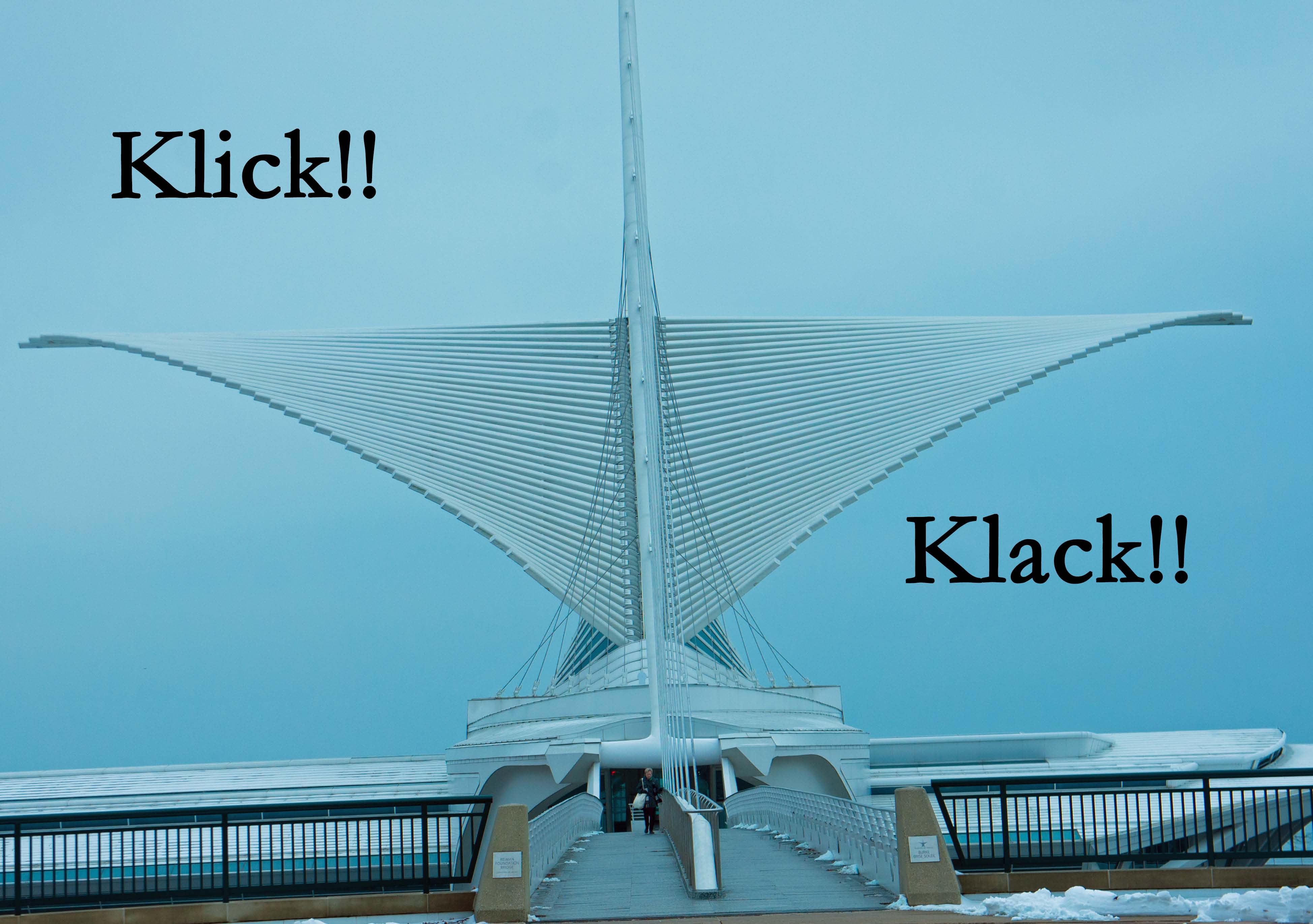
Listen to the sound of tree limbs clashing deep in the primeval forest. ‘Klick!’ – It’s Doctor Strange on the offense, striving – ‘Klack!’ – to drive off the nefarious mystical spell castings of Baron von Mordo. My brother and me among the giant virgin pines in a Pennsylvania forest in 1963, acting out our favorite comic book fantasies as our parents set up our overnight camp. In those days we played at adventure and wandered magical worlds that are always open to imaginative travelers and children. Our family roamed the highways from Cleveland and the Midwest, circling the Great Lakes into Canada and driving south to Florida and east to Maine and the coast and along Appalachian ridges. We stopped at ocean beaches, floated in ‘glass bottom boats’ among the Everglades, gazed across rural landscapes from high mountain perches, peered up at the tall canyons of Manhattan and took in the futuristic wonders of the New York World’s Fair in 1965.
Growing up in the shadow of World War, I remember military aircraft flying in formation over the neighborhood when I was very young. Every Sunday we drove past an enormous parking lot filled with surplus tanks parked in the General Motors lot on our way to church. The weeks were punctuated by air raid sirens and school was interrupted by ‘duck and cover’ drills designed to stimulate the vivid nightmares of those of us who could contemplate the final fate of humankind.
An older boy who lived down the block kept pigeons in a coop on his upstairs back porch. The pigeons would circle over our houses every day. We kept a turtle in the back yard that our grandparents brought back from the road on one of their exotic yearly trips to California. This was before the Interstates were built, and the turtles were found crossing the two lane highways that made America interesting. In the winter the turtle would dig a hole in its little enclosure in which to hibernate. Every spring we anxiously awaited the resurfacing, coaxing the displaced beast with offerings of earthworms. Sometimes the turtle wouldn’t appear and that year our grandparents would bring us another.
My mother told me stories late in life about my very early childhood as an infant caught in the midst of a rivalry for attention between her and my grandmother, her mother-in-law. I carry almost no conscious recollections from those very early days when my parents shared a house with my grandparents. I have one dim memory of being pushed in a baby carriage by a very nice young woman who was my babysitter. She died of leukemia when still a teenager. Perhaps this was my first taste of grief. It could be that my mother only told me these stories in dreams. Maybe I’ve mixed up her stories with those of other relatives who are long gone.
The house I remember growing up in was located in an older part of town across the street from my great grandmother’s large corner dwelling. I spent hours upstairs in her kitchen, drinking coffee tempered with evaporated milk, listening to her tales of coming to America from the old country with her brothers early in the century. They opened a butcher shop in the neighborhood, when that part of the city was still mostly rural, the streets mostly dirt, yet to be covered in red bricks and later with asphalt when I was a teenager. There was still a butcher shop on the corner downstairs in the front of the large house, run by another family at the time. The large back yard was full of fruit trees and flower beds that my family would help her maintain. Just outside of the second story kitchen windows was a cherry tree that became the centerpiece of every summer when we climbed and picked the ripe and sour cherries. My younger brother fell from it one year and broke his leg, spending the remainder of that summer as an invalid perched in a bed that was set in our narrow downstairs dining room.
When I’ve gone back recently to visit the old neighborhood our old house still stands, in the very center of the block, slightly raised above the neighbors, and incredibly small. It’s hard to believe that four kids and two adults occupied that space for so many years, while my mother dreamed of the suburbs and argued with my father, who always hesitated, not one to take chances risks. Only after I had moved on into my independent life and my father died of lung cancer did my mother finally make the move that she dreamed of.
An Oldsmobile Vista Cruiser careens through the night along the rural roads of northern Ohio carrying three boys, almost men, probably stoned or drunk on something, composing poems out of the romantic words on road signs; “Pass With Care”, “Soft Shoulders”, “Narrow Curves.” The car was borrowed from someone’s parents. With the windows wide open and the moist breezes of northern forests wafting over us, we exulted in our futures and the promising scents of freedom and all things that grow.
I left home with a cloth sleeping bag slung by a rope over my shoulders, on my back my uncle’s old Korean War rucksack, the ‘Whole Earth Catalog’ and an ‘Oxford Annotated Bible’ from my college years, a change of clothes and a few sandwiches and provisions stuffed inside. I’d spent three and a half years at a prestigious institution (Case Western Reserve University), learning much and experiencing much during years of upheaval (1968-1972) and finally left after my number came up late in the lottery for the draft. The experiences I had were mostly outside of classes that were interesting but appeared rather irrelevant at the time.
I said farewell to my mother (my father was at work) and walked down to the embankment alongside the brand new interstate. (As a teenager I’d watched it tear through my neighborhood several years before. We’d watched the bulldozers turn my best friend’s house into a pile of broken pieces, set fires to excavated piles of discarded brush, fought snow battles in abandoned dwellings, stalked and vandalized the huge road builders in the middle of the night.) I put out my thumb and was subsequently propelled across the whole wide land, to Colorado and California and up the West Coast through to Oregon and Washington to Canada, across the Rockies and the great wide flat northern plains and along the pebble beaches of Lake Michigan and back toward Cleveland. (My dad drove out from Cleveland to meet me and we had a glass of wine together in Ann Arbor. Between that meeting and my later departure toward the beaches of Florida I felt our connection deepen as we had grown beyond our frequent ideological conflicts over the war and he had come to acknowledge me as an adult.) I was young during my travels and learned very little, but I took it all in with a feeling of constant awe, collecting inside of me a map of memories, of North America and so many of the people that drift within it.
After all of these travels and all of these adventures, where have I arrived? Who and what am I exactly? Where do I live in relation to the boundaries between order and chaos? Am I descended from the sweet young boy that I see in an old picture feeding the gentle deer at a petting zoo? Am I the instigator of plots to vandalize the enormous machines that cut their way through my neighborhood to build the Interstate? Am I the respectful Zen practitioner bowing before his teacher, or the smartass student telling the President of the University approaching a student occupied ROTC building that I was a ‘gargoyle’ guarding the doors? Do I prefer to wander along the edges of civilization where artists and pirates, nomads, shamans and assassins are created?
I passionately defend what I believe in but hold all beliefs lightly. I welcome the challenge of argument. I’ve always been a terrible student, unable to stick with a specific teacher or any specialized program for very long. My mind is both expansive and contrarian, drawn to whatever knowledge threatens to challenge the prevailing view. Learning for me is a labor to fit what is novel into the larger pattern of what is known. Having found an accommodation between them my intellect has to move on. I’m open to all possibilities and apply equal amounts of skepticism and belief to anything that opens the doors to new encounters. I absolutely won’t tolerate the tunnel vision that substitutes repetitive memes of ideology for actual thinking and I avoid such as I would a reeking mound of decaying garbage.
I’ve been called ‘narcissistic.’ Perhaps anyone who parades their thoughts in public is a bit narcissistic, presuming to believe that anyone else would be interested in them. In a world of so much diversity and argument one has to be a bit narcissistic in order to call attention to oneself.
I’ve also been accused of being terribly judgmental and even intolerant. I believe that the good of the whole transcends the good of the few, but that the few have the absolute right to speak and I have the absolute right not to listen. I can’t decide for others the difference between right and wrong, true and false, sense and nonsense, but I reserve the right to exclude from my presence those who insist on unquestionable absolutes.
Also true is that I possess an undercurrent of terrible anger, passed down to me through generations of injustice, unkindness and the undercurrents of loving abuse. My primary struggle in this life is against being governed by the rage, instead using it as a barometer that fuels a kind of hypersensitivity and compulsion to expose the undercurrents of lies and tension encountered in the environment around me. This has lead to the most profound progress and the deepest damages in my life. It’s a catalyst that moves me from states of stasis to states of movement and change. For those around me and the collectives and organizations in which I participate it uncovers the cauldron, and my passion provides some of the fire and the heat.
My most influential teachers have been the cities I’ve lived in. Cleveland taught me that I could swim against the strongest tides of family, of religious and societal expectations, of powerful and destructive establishments, of accepted reality itself. In Cleveland I first walked through the doors of perception to glimpse the hidden schematics of the brain and its relation to the universe. Denver taught me about the irrefutable strength of collective will and how it can be activated, directed and abused by effective and charismatic voices. In Denver I learned about the secrets of leadership and it’s ability to channel the collective will. Since coming to Santa Fe I’ve learned to approach the world with a larger degree of skepticism and to examine every belief carefully before confusing it with ‘truth’.
In Santa Fe I’ve lived for 35 years, longer than anywhere else. Here all the previous lessons and teachings have coalesced, as I’ve been brought repeatedly face to face with myself and my shadows. Through two marriages, the raising of a child, my interaction with organizational structures both large and small, and in my most recent confrontations with cancer, disunity and extended solitude, I’ve come to view myself more clearly in all of my urgent creative and destructive glory. In the process I’ve gained and lost friends, loved and tormented myself and others, tasted the mechanics and powers of leadership and the dynamics of failure, and come to understand and accept the role I’m here to play.
Through all of this I’ve learned the deepest lesson of real magic; that it’s primary fuel is the human will. How, like the mysterious force of gravity it can bend and reshape the contours of the universe in strange and subtle ways. I’ve arrived after all these years at the boundaries of a world of perception that my comic book hero would find familiar.
Klick! Klack!>
In these days there’s a growing atmosphere that breeds bad mojo – bad magic born out of magical thinking, along with an army of con artists who thrive on fear and fantasy. It feels increasingly like the universe of Doctor Strange, where delusions and demonic forces constantly seek to break through and disrupt all sense of order, enslaving the populace to chaotic forces by encouraging their worst tendencies. In the process those whose greed for power compels them to pull the strings strive to gather more influence to themselves, using the maze of politics to entrap our best collective intentions.
I’ve long observed that the rules of our politics are almost identical to those of magic, both being forms of a somewhat occult practice of weaving spells of language intended to influence and manipulate perception and reality. The tools and technologies are the same, revolving around the language of signs and symbols, fueled by elements of human desire, collective will and the necessity of belief. Neither practice is inherently good or evil, although both magic and politics are concerned with an accumulation of power, and there are inherent dangers in such pursuit. The division between our intentions toward compassionate and self serving ends can become very cloudy when certain rules and cautions aren’t respected.
When battling demons or conjuring new possibilities it’s important to remember that no matter what we do or what we intend, the rule is that any consequences, intended or not, will inevitably come back to us. (This is the rule of karma.) It’s also important to realize that those around us, even our ‘enemies’, are mirrors, and we must strive to show them the same compassion we have for ourselves. It’s most important when exercising power to stay awake, to remember where we are and what is our intention. Aside from these three, all other rules are subject to change at any time and it’s a wild and utterly changeable reality out there.
Ultimately the barriers to our imagination and our creativity will continue to be thrown open. The more they open the faster we must collectively adapt to the changes entailed by new technologies and new ways of thinking and perceiving. I’m optimistic that we will ultimately succeed and survive, only because we always have up to this point.
Meanwhile we drift, moving across worlds of fantasy through the outer space of our imaginations, with David Bowie’s song ‘Life On Mars’ rising behind us, the cold star-flecked blue screen backgrounds making us feel contained within a dark velvet sparkling blanket of the infinite. We travel through imaginary light-years, our sense of security wrapped and belted within capsuled contraptions, religions, ideologies and conspiracy theories, breathing through failing apparatus, imagining new colors and new planets in the dark. At this point we require more than a destination. We need redemption and forgiveness for one another. I know there’s better light far ahead, but I don’t know what remains to be seen. When truth has been abandoned to illusion its anyone’s guess what will survive when daylight comes.
Evolution never passes at a familiarly comfortable rate. The entire world can leap forward in an instant, or else changes take decades and centuries longer than human memory can track. If my great grandmother, who told me stories over the kitchen table, were transported to the present a good part of her sensory apparatus would no doubt go into shock, able only to process small quantities of totally unfamiliar data at a time.
Evolution doesn’t stop for us or for any other part of this ever changing universe, or for anything on this infinitesimal pebble we call the earth. Energy becomes matter, matter becomes atoms and atoms molecules. Molecules evolve to become the elements and elements combine to become life. Life goes through billions of years of creation and extinction, followed by resurrection, and so it goes, over and again. Evolution in matter becomes evolution in biology, plants and creatures emerge out of the earth and perish in amazing spectacles of life, struggling through extremes of hot and cold and countless changes.
Various proposals have been made for the start date of a geological epoch called the Anthropocene, which marks the significant impact of human culture on geologic ecosystems. Some proposals date this as far back as 12 – 16,000 years and the birth of agriculture, and others to the rise of the industrial revolution in the last century. I believe both of these views to be extremely short sighted.
About six million years ago, at the end of the Miocene, heading toward the ice ages, appear the hominins, our most ancient biological tribe, largely defined by the length of our legs being greater than that of our arms as we began to walk upright. While the biosphere was coming to resemble what exists today our ancestors struggled to come to terms with their expanding brains until, age after age, we arrived in our present form of homo sapien around 315,000 years ago, and evolution at long last crossed a critical threshold. While biological evolution proceeded in obscure niches and mostly through extinction, life entered a new phase, one that can no longer be adequately comprehended outside of the mental space of the self-reflective human mind.
Human beings have taken evolution in a new direction, possibly beginning with the emergence of the first tribes and the creation of the first cultural artifacts. When we began to shape the objects around us to reflect the images that appeared in our minds, we moved beyond the instinctive collectivity of the insect colony, the herd and the protective hunting community and began to consciously and deliberately reshape the world around us in our own image. Human evolution can’t be understood in strictly biological terms, for it occurs within the complex interface between the self-conscious individual and the ever changing forms of the collective. Humans are artisans of culture.
What’s become evident in our time is the pervasive effect of our evolutionary process on the atmospheric and geologic environment that surrounds us. It’s becoming obvious that human culture is now the dominant influence in the ecosphere, as our collective decision making largely determines what will perish and what will survive on our world. We are the caretakers and the destroyers. The dialogue between the individual and the collective has come to fully govern the dialogue between human civilization and the natural world. In the end, nature itself becomes, in effect, a human artifact.
Evolution is generally depicted in visual models as a vertical structure, where simplicity advances through complexity, leading to ‘higher’ developments along a continuum of molecules, organisms, species, etc. The focus of evolutionary theory in biology is on the structure and development viewed through the lens of individual organisms or species. Human evolution is no longer determined by individual divergence and biological mutation, but by collective structures and behaviors in which the uniqueness of the individual can’t be separated from the circumstances and influences of the social construct of which they are a part. The visual depiction of this structure could be more appropriately horizontal, characterized by recurring themes that arise periodically along a timeline, then disappear, only to arise again and again amid novel historical contexts, their ‘permanent’ influence determined by the qualities of the interchange and the impressions left in a particular time and place.
There is a quality of ‘eternal return’ in the unfolding of human societies. It’s as if the species is on a quest to replicate externally hidden structures already present in human consciousness in order to perfect them within the contexts of ever new levels of social organization. In light of this I recommend pulling back from the insanities of the present to take a long view toward the possible future.
I became dismayed and extremely frustrated the other day when somebody for which I carry a lot of respect and affection parroted to me the same right wing propaganda that constantly proliferates on You Tube and Facebook. Both sources are essentially ‘Rabbit Holes,’ programmed to drive gossip, controversy and sensationalism while selling ads.
Between the paranoia and the propaganda, much of it not even generated in this country, our adversaries have gotten America’s number. We are a society that appears to be coming apart at the seams. Only the slightest encouragement is required to cause us to turn on one another like frightened dogs. Since Americans tend to trust our screens more than our actual experience we are VERY ripe for programming and manipulation. Tell a good yarn and it’s certain you’ll create a following. Provide a cliffhanger or sense of constant crisis and you can, like Trump, create a cult.
A cult functions like a cancer on the collective consciousness. Ideology is substituted for facts, programming takes the place of thinking, Individuals begin to function like robots. People once regarded as intelligent humans begin repeating the currently circulating memes and claims in a kind of science fiction nightmare that features suffocating hordes of mindless clones.
When a sufficient number are pulled into the myriad belief systems and ideologies that offer alternatives to the actual processing and evaluation of information, collective decision making becomes almost impossible. There can be no accord, because every position becomes an absolute. The quest for solutions becomes a battle between religions.
So, here we are America, trapped in our own tar pits of misinformation and increasingly obsessive fanaticism. As a nation we appear to be suffering various forms of mass psychosis, shouting at one another from totally different perceptions of reality.
The anxiety of the final days and weeks leading us toward our fate is that we don’t really know how bad is the disease. We know it’s pretty bad, and it’s spreading in waves, mostly driven by social media and those who profit from chaos. Everyday the stories and rumors get more imaginative and ridiculous, while people huddle in groups formed mainly to reinforce their own fears and premeditations.
Perhaps there are still enough Americans out there who are capable of rational decision making, who aren’t afraid of facts and data, who can make the mental leap to figure out that voting out of fear and insecurity will only lead to more of the same.
It’s hard to tell. Rational people find themselves trying to be heard above the noise, and the noise is everywhere. In the year 2020, with pandemic, racial tensions, climate change and election fever all appearing to peak at once, we will be forced to see more clearly, once the dust settles, just who and what peers back at us in the mirror.
This week I approach my seventieth birthday. It’s the same as Thomas Jefferson’s, with whose passions and contradictions I can totally relate, particularly the fact that his vision so far exceeded his grasp. As a privileged and prosperous inheritor of great wealth in an economy based on slavery, as an obssesive tabulator of facts and figures and an elevated member of a race and culture that considered itself inherently superior to all others, Jefferson’s restless mind would not allow him to reside in any fixed station. Instead he imagined an ideal world, nonexistent at the time, where every human being had, by virtue of being, inherent and inalienable rights to pursue satisfaction in whatever way they could. The nation he helped to get off the ground has yet to achieve those ideals, having been saddled, as was Jefferson, with the contradictions between commerce and equality.
Today I took a walk into the center of my city to find a public mailbox and to appreciate the beauty of an early spring day in Santa Fe. The streets were mostly quiet, except for occasional cruisers in huge pickup trucks and a flotilla of motorcycles that wove themselves around the Plaza. A few couples and isolated characters wandered like me past the close galleries and restaurants, museums and churches, appreciating the blossoming trees and the opportunity to pull down our face masks to appreciate their scents in the open air. As I walked I listened to Zen talks given from Mount Tremper in New York via podcasts on my iphone. I contemplated my own conflicts and contradictions and my own position in regards to the present and the future.
In contemplating the inner struggles of the past three years it occurred to me that I could turn things, so to speak, on their head. Instead of seeing only chaos and obstacles culminating in the crashing and devastating halt of the pandemic, I could see all of this as an opportunity. Perhaps, as we each approach a sense of possible and impending mortality, we can sort out the the wheat from the chaff both in our individual natures and in the world at large.
The basic contradiction in American culture, it seems to me, is where the cult of individual freedom clashes with the common welfare, and by extension where the demands of a capitalist system clash with the aspirations of democratic institutions. Perhaps, with the ascendency of the present administration, these contradictions have been put before us in as plain a vision as could be possible. As a nation addicted to celebrity culture and to the pursuit of personal wealth we’ve managed to elevate to the highest level the perfect embodiment of pure ego and self interest, devoid of empathy or of compassion or of any consideration that transcends the possession of pure power and an illusion of control. Some of us have done this out of avarice and some out of fear and pure desperation.
For those of us who have conceived of a different world, governed by the notion that the welfare of one is inseparable from the welfare of the whole, these three years plus have been both a travesty and a challenge. Most importantly, it has daily shown, in our responses and reactions who we really are, at our best and at our worst.
For me, it has fully exposed a current of rage and resentment that I’ve lived with for most of my life, and which I’ve strived to suppress or which has been the engine of my own self judgement. Where does it come from? Perhaps some is inherited through family dynamics or early childhood disappointments and frustrations. Not a little has emerged out of the pure disillusionment of having been raised with the highest ideals only to see them continually subverted within the world I’m forced to navigate. Some of it is a product of an empathic reaction to gross injustice done to others. Whatever it’s origin, this steady undercurrent of rage has in many ways made my life and the experience of those around me more difficult, rather than less.
For this I am deeply aggrieved.
Yet, on the other side of rage is compassion. I’ve long considered his to be my greatest failing. On the one hand, I’ve always experienced an acute sense of empathy with those who suffer in this world. On the other hand I’ve allowed those feelings to feed my sense of outrage against those whom I perceive to be the propagators of that suffering. In my mind and in my emotions I’ve separated those who I perceive as the victims from those I’ve perceived as the victimizers. As our culture has become more and more polarized, between the rich and the poor, the white and the non-white, the powerful and the weak, this has metastasized into what amounts to an internal ‘civil war’ that I find myself fighting on a daily and hourly basis. There are the ‘good’ guys and the ‘bad’ guys, and my vision doesn’t allow for anything between total victory or total defeat.
What has become increasingly clear to me, in this cultural moment when the rug has been pulled out from under both the perpetrators and their victims, is that we are all relatively helpless in the face of forces that are so much larger than our petty struggles over greed and ego. So, now the question becomes whether I can overcome my feelings of rage and resentment, and join once again the collective experience of the human race in a manner that goes beyond ego and ideology, and is nothing more than a reflection of the forces that I perceive as the enemy.
* * *
In the last couple of months the vicissitudes of age have finally caught up with me. The work I do for a living has taken a deep toll on my body. My shoulders are a tight mess, the tips of my fingers have grown numb with the carpel tunnel effects of the former, yesterday when I took out my bike for the first time since the Fall, I had trouble lifting my leg high enough to mount up. My plans for the future and for retirement are, as a consequence, all in serious question. On top of this is the virus and a question about how my previously strong immune system has stood the vicissitudes of age. In short, the question of mortality stands before me as never before.
The lesson that I believe needs to be learned is that the outcomes are out of my hands, and that my responsibility to myself is to live this life as much as I can in a state of acceptance rather than one of eternal conflict. This is admittedly very difficult for someone who feels both like a warrior and a disillusioned idealist. I will always be a warrior. What I need to let go of is the disillusionment. Then I can begin to address the problems and situations in front of me without having to view them through the destructive discoloring of rage.
Who knows, perhaps the possibility of compassion is not even out of reach. Perhaps even that possibility can extend to an America still caught between dream and reality and having to face its own collective demons.