America In The Squeeze

Guns versus smartphones

I’m just turning 75. My life has been formed, and is almost completed, throughout a breathtakingly brief and cataclysmic era in global history. In future accounts it may be referred to as ‘The Neoliberal Era’, ‘The Era Of American Hegemony’, ‘The Age Of Economic Globalization’, or perhaps, as the cataclysm intensifies toward its resolution, ‘Capitalism’s Final Crisis’. There will be a few references to something called ‘The American Empire’. It will appear as a flicker between the centuries, and one of the shortest lived empires that ever endured.

We are at the beginning of a 2nd American Revolution, one that is long due. Whatever the outcome, it will radically reshape the outcomes for global civilization. The age of the nation state is gradually going out of phase with the needs of the physical world. There will be times of breakdown and struggle. We must reintegrate with the workd. This will take some time and will never be at an end. I believe that in the next phase there will still be nations, and languages and cultural boundaries. The dimensions of power will be altered in structure and better managed, through education and the cultivation of respect. The flows of the twin rivers will be, at least until the next glacial scale disruption, in better harmony, as each distinctive part realizes its necessity to the whole.

Technology presents new perceptual models of the world much faster than anything we can control or even keep up with. We are continually confused. The time has arrived for us all to take a deep dive into questioning who we are and who we want to be, and what are the ultimate stakes. Complacency is deadly. We’d been so long buried in our own work, forgetting our reasons for working, or what makes up the whole mechanism of our survival.

We generally see and enterpret the word ’revolution’ to refer to specific cataclysmic changes in the procession of historical events. To understand what moves these events it’s necessary to go beyond specific dates and times and logistical patterns, and embrace the flowing evolutionary trends, ever constant, ever shifting, beneath the surface of what we see.

There are two constant revolutions/evolutions going on at any given historical moment. One is economic, and the other is cultural. They are woven together in close procession, at times in harmony, and at other times they appear to flow in opposing directions. The economic evolution is by nature conservative, its primary focus to preserve stability. Economics is a measure of the river of things, the movement of necessities and the produce of our desires.

Cultural evolution is something broader and more ephemeral, and yet central to our sense of well being. Something within us is driven by an impulse to break the rules, to advance, and to enter new territories. We are curious and inspired. Culture is the river of our perceptions. They are sometimes clear and accurate, and at other times only marginally connected to the world beneath the fog.

These twin streams never stop moving, never stop changing. They are inseparably linked, either energizing or obstructing each other, acting over and through us like the ancient gods in Greek tales about siblings and rivals.

It’s becoming abundantly and existentially clear to much of humanity that survival depends on a true understanding of the role we play as part of a bigger organism. Globalization is the political term for an economic transition. We go from centralized industrial production to widely distributed supply chains stretching across oceans and continents. At its essence, this is like the early evolution of the cell. A number of independent organisms come together as a cooperative community and eventually merge into a single complex organism. A process called symbioses.

Along with economic revolutions, cultural revolutions advance at an unprecedented rate, driven by the tides of information that flow through the system, reshaping at every instance our perception of the world.

We are currently engaged in a third world war, which is a new kind of war, fought with numbers and ideas and conceptual systems playing across screens. The handheld weapon in this war is the smartphone in our pockets.

Things are moving very fast, worldwide…one event or action leads to others. People find out who their allies are. They’re encouraged to become more boldly resistant. A major university resists a government takeover. Prominent financial managers begin speaking out. Republican Town Meetings get rowdy. People, in general, are educating themselves. All of this builds toward an ultimate breakdown of life as usual.

Kilmer Abrego Garcia, like George Floyd before him, like Alfred Dreyfus long before all of this (see ‘Dreyfus Affair), is an unfortunate victim of history. On April 19th, demonstrations, even more enormous than on the 5th, will expand the focus beyond Musk and Trump to embrace and defend Garcia, and his young family, and ourselves, against the fascist brutality that landed him in a living hell.

Trump and company are waiting for an opportunity to gin up excuses to go after dissenters, with fierce repression, just as they did during the George Floyd era. Just like then, only more so, there’s an international reaction to their policies and cruelties, and they now feel cornered.

The American economy is now riding in the back of a cybertruck, under the control of the madman we gave the wheel, heading toward a Thelma and Louise denouement. I fully expect that we will go over that cliff, taking a good chunk of the world with us.

There is, at present, a very thin line standing between democracy and fascism in America, and the next few weeks will determine whether that line is holding. I’m talking about the Law, the Courts and the the Universities.

The 5th Estate, the Press and the Media are barely functional, not even willing, for the most part (except comedians), to call out fascism by its real name (they use the academic term, ‘authoritarianism’ – it’s elite and vague and sounds less threatening).

Social Media has taken up the slack of what remains of democracy and free speech, performing the role that pamphleteering did between the first American Revolution and the Civil War. I find myself no longer getting my news and analysis directly from newspapers or television, and the marketplace of ideas is boundless and international. This is a completely different realm of media, with a whole new set of rules, evolving constantly, that govern behavior and trust.

The vessel of our freedom is still encapsulated in words and institutions inspired and put into action more than two centuries past. If these barriers are breached, we will be in a new state of civil war. At that point another line of defense comes into play. There’s the police, the national guard, the military, led by educated commanders who’ve taken pledges to defend the Constitution and the law. These are forces composed of people from communities most affected by the actions of this administration. We will be in unknown territory.

We are in a Squeeze.

America will survive. The world will survive. The relationships between us all will be radically altered. We will have been through a deep process of self examination. Perhaps for the first time since the last World War, since FDR and long after, we will be forced into revisioning our entire political and economic culture.

My generation won’t be around to witness the conclusion of that process. But we will have been privileged to see its beginning, and to have learned much on the ride along the way.
February 22, 2025 at 6:09 AM

We aren’t helpless. All of what’s against us is part of what Naomi Klein calls ‘The Shock Doctrine’, and others call ‘Flooding The Zone’. The object is to bombard people with a sense of constant crisis, so that we become numbed, disoriented, confused and discouraged, and ultimately we loose focus and give in to despair.

A counter to this is embracing a wider vision, one that no longer perceives the world as if our particular national perspective is the only lens available. The world is changing rapidly and far too quickly for anyone to exert enduring dominance and control. We are watching the diminishing of outmoded institutions like the nation state and moving gradually (and painfully) toward a different alignment of the global order. Rather than hurling bombs and nukes back and forth, the economic and political universe, under the pressures of climate change and new technologies is rapidly reorganizing itself.

Resistance to the domination of any religion, ideology, or so-called ‘superpower’ is arising everywhere. In every nation and in every person, all of the old boundaries and alliances are being daily challenged.

We don’t have to be overwhelmed. The whole world is rapidly being forced awake. We must become attuned and direct our attention toward helpful and healing efforts going on in the world. Human beings are endlessly creative. Although we often struggle to open our vision to new worlds and a new order, we’ve never failed to see our way through.

We are no longer isolated. No one is. The world is one interwoven economic organism. Like the Internet, a vast and excellent living protoplasm, woven in networks, designed to reorganize and reroute itself around anything that blocks its way, anything that wounds or damages. Designed to defy apocalypse and to survive.

It has started. We’ve been attacked from within. Blood will be shed. Blood must be shed. That’s the price…the sacrifice. It will be the young on the streets and the old in their homes. The center will not hold, because we all dwell in the periphery. A new center will arise in each of us. The center and the whole will be the same.

Welcome to the Revolution. Welcome to the World.

Civil Wars

I just finished the remarkable new book by Nancy Pelosi, The Art Of Power. It was on the one hand an inspiring first hand account of indomitable courage and determination in the face of difficult odds and a history of the major political struggles I’ve witnessed since 1987. On the other hand it’s an account of a time of civility in politics and government that has frayed and all but collapsed since the rise of Trump.

I feel both pessimistic and useless in the face of what’s coming. I now find myself reading books about the lead up to wars; Eric Larson’s The Demon of Unrest, about the five months preceding the first American Civil War, and The Proud Tower, by Barbara’s Tuchman, about Europe and America before World War One. Each marked the necessary transition from one state of civilization to the next. I find that reading history helps me out of a state of helpless depression, perhaps it helps me to accept that what’s likely to happen has happened before.

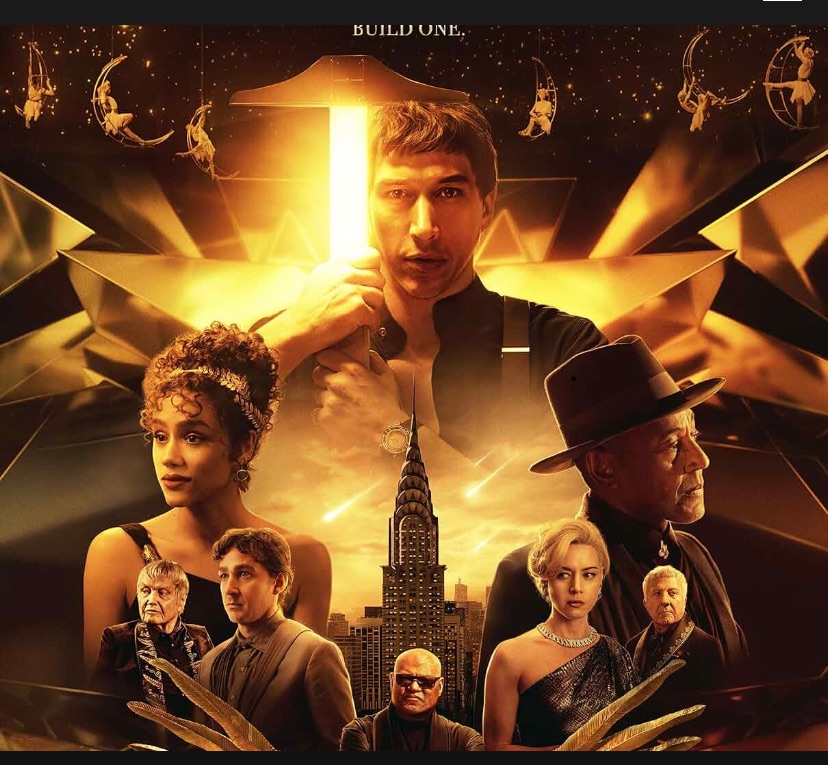
Yesterday I saw Coppola’s new and perhaps final film, Megalopolis, which is a rather surrealistic fable depicting the conflict between creativity and stagnation in a world of decadence and decline. It ends in a rather fanciful and/or hopeful conclusion, where creativity and progress apparently triumphs over our clinging to the past.

I was reminded of the film that has had a strong impact on me this year. Civil War depicts in realistic and down to earth terms a likely scenario should the USA descend once again into bloody conflict. In interviews, both the director and the actress Kirsten Dunst refer to Lee Miller, upon which her character is based, and the subject of the newly released Kate Winslet film, Lee She was a World War Two photographer who bore witness to some of the worst atrocities of that conflict.

I’ve come to believe that the likelihood of an election without violence and a peaceful transition of power is unlikely, no matter who wins, and the only thing you or I can do to alter events is to choose not to participate in the violence in word or deed. We must refuse to spread the hatred and fear being directed by so-called leaders, against the poor, the weak and the ‘others’ in order to advance a bid for supremacy and power. We must recognize the seeds of fascism that are being encouraged everyday, and deny them from taking root within us.

I’ll be driving up to Denver to take a flight to Cleveland to visit family on October 24th and will return to Santa Fe the day before the election. I wonder whether this trip will mark a rise or fall of the world we’ve known. Right now I’m not betting either way.

“Shut Up and Get Back To Work”

I could only be somewhat amused at U. S. House Speaker Mike Johnson’s performance addressing students and the press at Columbia University, telling them to stop their nonsense and get back to classes. Behind him stood a grinning Elise Stefanik, joining in the act, both performing for stock footage to be used in the upcoming fall campaigns.

It struck me that a major lesson to be taken in a week of escalating campus demonstrations across the world, was the apparent inability of generations in power to learn from history or to avoid repeating the same tactical errors again and again.

For me the events are somewhat nostalgic.

I recall an evening in 1970 when a large part of the student body at Case Western Reserve University gathered in the student union cafeteria to debate a response to the newly launched expansion of the Vietnam War into Cambodia. The meeting was part of an escalation of activity centered that had been building on campuses for many months after events at New York’s Columbia University in March and April of 1968. Partly In response to the war and touched off by resistance to plans for the university to build a segregated gym on the fringes of Harlem, students and ‘outside agitators’ occupied buildings, debated one another, conducted ‘teach-in’ activities and generally obstructed normal college business. Eventually Columbia administrators called in the NYPD, who proceeded to brutally attack the demonstrators, injuring many and arresting over 700 participants. The consequence was an expansion of actions in solidarity driven by organized coordination on campuses all across the country. (Governor Abbot and DeSantis take note)

Listening to the rising militancy of rhetoric in that student union meeting it became obvious to my friend Robert and I that impending action was in he works, and Impatient with all of the talking we headed over to the ROTC building which had emerged as the likely target. Being the first to arrive at the location we took positions seated on both sides of the steps leading to the front doors. Just then a closeted group of middle aged men in suits looking somewhat bewildered and uncertain, apparently summoned from their evening cocktails, approached from across the plaza. Foremost in the group was the University president. He cautiously approached the two of us sitting like quiet Buddha’s on the steps and asked who we were. In a moment of smart ass mutual inspiration we both replied that we were ‘gargoyles’. The president gazed at us blankly for a moment, then turned back to the little group, leading them away into the night. A moment later the large group of students arrived from the irmeeting, marched up to the front door and proceeded to occupy the building for the next few days.

The student movement in those days was responding to an unpopular war and a rising awareness of racial injustice, but it was more than that. We were addressing fundamental questions about the relevance and responsibilities of our educational institutions in addressing inequities in the larger world. In virtually every classroom deep questions were being asked challenging the growing dissonance in times of accelerating change, between what and how we were being taught, and how it related to the outside world. The challenges were made using every conceivable form, from classroom debate to teach-ins and street theater, to poetry and artwork, to obstruction of business as usual. Outside of campus social activism began to explode in the streets. Inmates were taking over the asylums. Before the tide had receded and things returned to a new normal, many changes were made, and in spite of the forces of reaction the social movements of those decades laid foundations for the movements and counter movements we are seeing today.

Societies thrive and advance to the degree that they respond to ever new realities of the present. Intelligent leaders and pioneers must be encouraged to think and to continually question the status quo. Universities are designed to be laboratories for discourse and discussion. Students are ideally trained to be more than receptacles for predigested opinions and established ideologies. The young see the world with fresh eyes that are less tolerant of dogma and hypocrisy, and more willing to take risks and learn from their mistakes. Inexperience and ignorance are to be overcome, but they are not a crime.

When faced with the spectacle of injustice the young are more outspoken and generally feel they have less to loose. Back in the day, when president Richard Nixon held up the ‘silent majority’ of middle America as his standard for patriotism, angry college students were portrayed as irresponsible and out of touch, or else as naive victims of shadowy bands of outside agitators and ‘far left’ college elites. It appears that nothing much has changed in the rhetoric of reaction since those times.

The Mike Johnsons and Elise Stefaniks will always find hooks and divisions upon which to hang their campaigns based on fear and self righteousness. In the sixties the paranoid establishment along with the media exploited tactical squabbles between black and white protestors in order to divide them and pacify dissent. Today the tactic is to label any objections to Israeli military excess and apartheid policies as ‘antisemitic’, even while campus protestors include Jews, Muslims, Christians and people simply appalled at the horrific images seen everyday in the media. In some cases the diversity of participants’ backgrounds and opinions have led to heated disagreement and sharp debate. Irresponsible actors on all sides have at times resorted to harassment and even occasional violence. Some students and teachers have felt alienated and fearful. Never missing an opportunity to fan the passions of a moment, politicians and instigators portray every unfortunate incident as the norm. In fact, the preponderance of violence in nearly every instance has been perpetrated by the forces of law and order.

The gap in life experience between generations raised in the last half of the 20th century and those now coming of age in the 21st is almost unbridgeable. The decades that followed the last World War were characterized by an almost constant state of expansion and innovation. America stood at the center of a global project to build the new world order. Whatever flaws existed in America’s self image were covered over by almost continual economic growth and innovation, low unemployment, low inflation, huge stock dividends and an overlay of conspicuous consumption.

The new century brought an unrelenting succession of national traumas. It began with the dot-com crash and recession in 2001, closely followed by the attack on the World Trade Center. Then followed two decades of war in the Middle East and Afghanistan, a housing crash and the Great Recession of 2007-2009. After brief respite of hope and civility in the Obama years came the daily nightmare of the most ethically challenged presidency in United States history. All of this was interrupted by the worldwide COVID pandemic along with the rapid proliferation of disastrous consequences in the wake of climate change. Finally the Russian invasion of Ukraine and the war in Israel have brought about the most destabilizing global situations since the Cold War.

My generation was the first raised on television and under the threat of nuclear holocaust. Almost from birth we were exposed to images of war and mayhem in foreign lands running counter to the idealization of America’s self-image. The moral pontification propagated in our churches and schools and in the mainstream media became increasingly detached from the reality of people’s lives. We were told that all of the ‘bad’ people and situations were somewhere else. By the time we arrived at college our view of American exceptionalism had changed dramatically from that of our parents. They’d suffered through the horrors and triumphs of a World War, in which the very foundations of democracy had been nearly defeated by the forces of totalitarianism. We were summoned instead to serve and support a futile war against a small foreign nation while watching on our daily screens our cities catching fire, our most admired leaders being assassinated, and our sons and brothers killed in the jungles and brutalized on the streets. We questioned, and then we rebelled.

Not only is the current cohort of college age students much more diverse than it was in the sixties, it’s a generation that’s experienced first hand the cracks in the foundations of the American dream widening almost beyond repair. Our established institutions appear to languish in denial. Justice has been challenged and has failed repeatedly. The truth is continually subverted by lies and fantasies. Freedoms that have been won through centuries of struggle are being discarded while the very survival of civilization is threatened by changes in the weather. Our political institutions appear inadequate or unwilling to address these situations in any meaningful way.

The campus movements of the sixties culminated in the execution of four students by the Ohio National Guard in May of 1970. Although this event didn’t stop the inevitable momentum toward change, it made us take a hard look at the consequences of poking the beast head-on. These days, when I hear the rhetoric of people like Josh Hawley and Tom Cotton and the words and actions of leaders like Greg Abbot and Ron DeSantis I wonder whether their ultimate goal is to provoke violence and fear in order to justify the suppression of all alternative points of view. Are they pushing for another Kent State massacre? Do they imagine that this strategy will work any better than it ever has? I guess if your ‘go to’ strategy is _God, Guns and Trump,_ there isn’t much of an alternaive.

I question whether these purveyors of fantasies of the past can presume to know, evaluate, or judge the motives of young people, whose entire living experience has born witness to the breakdown of those very illusions?

These students are the future, and the future will not be denied. Like we who grew up in the fifties and sixties, they see much more clearly how the world has changed than their parents who cling to the status quo. Ultimately, the young will prevail because they must. Like every human generation they have to grapple with the world as it is, and not as we wish it to be.

The catalyst for the current uprising on campuses is a costly war between nations and peoples who’ve made a long series of unfortunate political and strategic decisions that have lead into a death spiral of almost imprenetable anguish. Both sides in this war have dehumanized their opponents in order to justify horrific violence and the daily spectacle of unchecked slaughter. Both sides are committing violence against the rest of humanity, as the constant stream of images are in fact its extension. In such an ongoing ‘all or nothing’ conflict neither side will achieve the final resolution it desires, while each player appears willing to pull the entire world into the struggle.

Perhaps we can understand motivations on both sides of the war. Both see this as an existential struggle deeply rooted in generations of displacenent, appropriation and vengeance. But more than understanding is required to bring about a pause in the conflict. Concerned nations need to intercede forcefully to bring the violence to a halt. The Land of Palestine has long been a regional proxy for the very powers that both persecuted Jews and colonized the people of the Middle East and Africa, and for the forces that have risen in resistance to empire. All nations in the region and beyond share responsibility for the repercussions. America, as Israel’s ‘unconditional’ ally, has the biggest role to play.

Until the violence stops the protests will not stop, and attacking the institutions of higher education, firing college presidents or advocating military or police interference will most likely backfire. If conservatives have their way this internal conflict could escalate, and increasingly authoritarian measures could fuel even more destructive cycles of resistance and repression. History repeats, but it never goes backwards. The young, who grow frustrated with the refusal of governments to deal realistically with their concerns, will eventually inherit the earth and all of the powers that play upon it.

It was the eve of my 20th birthday. After the occupation we wandered back to the campus radio station, where Robert conducted a late night show playing eclectic music and recordings and where we had access to the Associated Press teletype and got the latest news of the day as it was being generated.

That evening a brand new album by Crosby, Stills, Nash and Young had just arrived, and we ended up playing the first song.’Carry On’ repeatedly, all through the night.

Rejoice, rejoice, we have no choice

But to carry on..

Can’t Get You Out Of My Head

Reflections On The Work Of Adam Curtis

Adam Curtis considers his films to be strictly journalism. 

Having unlimited access to the vast archives of the BBC library, Curtis snips and cuts the myriad fragments of visual history to arrange them around themes guided by his own narrative and analysis. To relegate these works to the narrow field of conventional reporting would be to entirely miss their import and effect. The subjects of his films dive deeply into the wilderness of inherent contradictions between reality and the artificial reproductions of reality, between fact and imagination, between linear narrative and memory, and the many ways we rearrange our perceptions of reality to serve our own agendas. His most recent work, the six part series titled Can’t Get You Out Of My Head focuses on the dialectic between historical and psychological forces that drive individuals into increased feelings of isolation and helplessness and the barriers to effective collective action.

The emotional power of well selected images poised in sharp juxtaposition has been  explored as long ago as in the montage techniques pioneered by early filmmakers like Sergei Eisenstein. The use of montage takes us out of the illusory realms of objectivity and well into the territory of ideological expression. Directors like Jean Luc Godard and the ‘underground’ filmmakers of the sixties made radical use of the technique to purposely challenge the conventions of narrative film. While their work was perceived at the time as radical, our immersion in the frenetic medium of television makes them appear prophetic. The rapid disorienting shift between scenarios, the intrusion of seemingly unrelated sequences in commercials and the use of sound as compliment and contrast has increased our ability to shift attention rapidly from one image to another without loosing the narrative thread. Adam Curtis takes advantage of the growing sophistication of our visual language while pushing the form further with each successive work, encouraging us to take larger leaps along with him.

(My favorite film makers of the sixties were the French New Wave’director Jean Luc Goddard and the English director, Nicholas Roeg. Being a contrarian by nature I was always thrilled at the premier of a Godard film on my college campus and particularly pleased when a third to half of the audience walked out in bewilderment or disgust. This I deemed an indication of the film’s success. Both Godard and Roeg used techniques of radical montage to pit direct and sometimes disjointed, emotionally charged images against the linear revelations of plot. Godard went the farthest, often rejecting the very structure of ‘beginning, middle and end’ in films like 2 Or 3 Things I Know About Her, Sympathy For The Devil and See You At Mao. Nicholas Roeg managed to corral these techniques into challenging narratives interrupted by out of synch and out of time sequences taking the viewer out of the linear present into realms of memory, imagination and pure emotion. His use of popular musical icons as actors in films like Performance and The Man Who Fell To Earth became immensely popular with the psychedelic generation. 

At least since 1992 with Pandora’s Box, followed by the more ambitious Century Of The Self and into the present Adam Curtis has employed montage with increasing ambition to deliver films that offer historical analysis along with imagery that comes across with devastating emotional impact. To Curtis the purpose of journalism is not merely to report, but to explain. His method is to distill and arrange out of the many sounds and images of a given historical period a presentation of coherent themes that persuade the viewer that his interpretation matches the reality. Journalism in this sense is the art of persuasion. 

Human beings are addicted to narrative. If presented with a random set of images our minds will eventually assemble them into stories. If we stare at a wall long enough our minds will weave narratives out of the imperfections in the paint. This is a key to the methods of psychological testing that is critiqued in much of Curtis’ work. Ironically perhaps, it’s the key to his own art and his approach to journalism. When the reporter in a war zone decides to point the lens of their camera they are continually selecting the elements of their own narrative. When Adam Curtis wades through the BBC archives the images he selects are made to fit the preconceived patterns of a story he wishes to tell. 

Episode four of his most recent work is titled ‘But what if the people are stupid.’ It’s primary theme is how our disillusionment with institutions born out of the emphasis on individualism in the sixties and seventies morphed into a retreat into nationalism in the eighties and nineties. Curtis pulls together accounts that range widely across the period, from the unsuccessful coup of the Gang Of Four in China to the somewhat tragic life of a transexual pioneer in England, the rise of Al Queda in Iraq, disappointment in the wake of the Live Aid effort and events that led to the crushing of protests in Tiananmen Square. All of these events are bracketed by accounts of psychological experiments carried on by Daniel Kahneman in the seventies leading to the thesis that people’s choices aren’t made primarily on a rational basis but are determined by their previous experiences and how they effect the deeper, mostly subconscious structures in the brain. By focusing on the personal dilemmas and contradictions faced by particular individuals against a backdrop of massive social movements Curtis dramatizes a specific and worldwide shift in our collective experience serving to frustrate our ability to organize coherent resistance to the growing power of elites. This sets us up for the next episode, ‘The Lordly Ones’, which explores the comforting national myths we construct to justify the blunders and atrocities carried out to maintain the rule of dominant capitalist elites over the rest of the world.

On the surface Curtis’ approach resembles that of an historian or archaeologist as much as that of a journalist. All are storytellers and agents of artifice, weaving our perceptions into coherent streams of interpretation and all deal with data fragments from moments gone by. The stories Adam Curtis chooses to tell center on the influence that modern psychology has  had on the manipulative techniques of advertising, the growth and dominance of consumerism, and most importantly the isolation of the individual in the shadow of the capitalist state, rendering concepts such as personal freedom and choice almost entirely irrelevant.

We’ve become helpless as collective societies to effectively act to change our circumstances. Instead, our every activity is measured, tabulated and arranged in predictive models that serve to anticipate and then to manipulate our behaviors. Human behavior has been programmed into machinery that uses algorithms to further the power and wealth of economic elites. Only by breaking free of the conceptual prison of the techno-capitalist state can we even begin to imagine a future that meets actual human needs.

Perhaps we expect that journalism and documentary gives us a more accurate glimpse of the real and the true. What we should have learned in an age of propaganda, ‘fake news’ and the Internet is that in the selection and manipulation of images just about any version of ‘reality’ can be made to appear as truth. In the view of Adam Curtis the true value of journalism is to ‘make sense’ of the world in new and original ways that evolve continually with our continual appetite for the new. This is the only way that we can cast off the oppressive chains of the past. We might do well to make his revolution our own.


Thoughtmaybe.com for access to a full catalogue of Adam Curtis Documentaries and many other worthwhile films.


An outstanding interview with Adam Curtis at: Jacobin.com

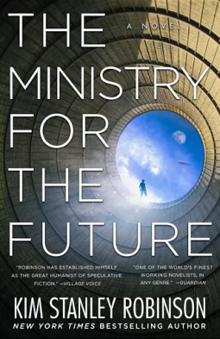
The Ministry For The Future – A Review

The Ministry For The Future
by Kim Stanley Robinson

Kim Stanley Robinson’s ‘The Ministry For The Future’ is much more than a novel. It’s a book on Revolution, the closest thing to an ecological manifesto I’ve ever read. As a work of fiction it’s even more ambitious than his much acclaimed ‘Mars’ trilogy, which could be seen as an early preparation for this book. Like the Mars books it unveils a complex weave of systems embracing every aspect from molecular biology and atmospheric science to human psychology to political and economic philosophy.

But ‘Ministry’ has no interplanetary or futuristic disguise. This is a book about the present and the immediate future of our civilization, specifically projected over the next 30 years. There are chapters on ecology, economics, geology, political philosophy, environmental devastation, human exploitation, mass extinction and geoengineering. There are chapters addressing all forms of resistance and revolution and the inevitable dismantling of capitalism through systemic collapse, civil disobedience, sabotage and assassination. Central to everything is informed speculation on the likely consequences of climate change and the forces that have already been set in motion.

The future is a puzzle and we need a framework in order to make coherent sense of our daily diet of news in the present. The philosopher Slavoj Zizek once said, “It is easier for us to imagine the end of the world than to imagine the end of capitalism.” At a time when such visioning becomes increasingly urgent, Robinson’s novel is a bold attempt to see our way to the other side of disaster.

Perhaps not since Karl Marx has there been such a bold and compressed dissection and set of proposals for the total reorganization of society toward a sustainable future.

The Ministry For The Future

A Conversation with KIM STANLEY ROBINSON:

Weird Tales

I became dismayed and extremely frustrated the other day when somebody for which I carry a lot of respect and affection parroted to me the same right wing propaganda that constantly proliferates on You Tube and Facebook. Both sources are essentially ‘Rabbit Holes,’ programmed to drive gossip, controversy and sensationalism while selling ads.

Between the paranoia and the propaganda, much of it not even generated in this country, our adversaries have gotten America’s number. We are a society that appears to be coming apart at the seams. Only the slightest encouragement is required to cause us to turn on one another like frightened dogs. Since Americans tend to trust our screens more than our actual experience we are VERY ripe for programming and manipulation. Tell a good yarn and it’s certain you’ll create a following. Provide a cliffhanger or sense of constant crisis and you can, like Trump, create a cult.

A cult functions like a cancer on the collective consciousness. Ideology is substituted for facts, programming takes the place of thinking, Individuals begin to function like robots. People once regarded as intelligent humans begin repeating the currently circulating memes and claims in a kind of science fiction nightmare that features suffocating hordes of mindless clones.

When a sufficient number are pulled into the myriad belief systems and ideologies that offer alternatives to the actual processing and evaluation of information, collective decision making becomes almost impossible. There can be no accord, because every position becomes an absolute. The quest for solutions becomes a battle between religions.

So, here we are America, trapped in our own tar pits of misinformation and increasingly obsessive fanaticism. As a nation we appear to be suffering various forms of mass psychosis, shouting at one another from totally different perceptions of reality.

The anxiety of the final days and weeks leading us toward our fate is that we don’t really know how bad is the disease. We know it’s pretty bad, and it’s spreading in waves, mostly driven by social media and those who profit from chaos. Everyday the stories and rumors get more imaginative and ridiculous, while people huddle in groups formed mainly to reinforce their own fears and premeditations.

Perhaps there are still enough Americans out there who are capable of rational decision making, who aren’t afraid of facts and data, who can make the mental leap to figure out that voting out of fear and insecurity will only lead to more of the same.

It’s hard to tell. Rational people find themselves trying to be heard above the noise, and the noise is everywhere. In the year 2020, with pandemic, racial tensions, climate change and election fever all appearing to peak at once, we will be forced to see more clearly, once the dust settles, just who and what peers back at us in the mirror.

Continue reading “Weird Tales”

Seventy

This week I approach my seventieth birthday. It’s the same as Thomas Jefferson’s, with whose passions and contradictions I can totally relate, particularly the fact that his vision so far exceeded his grasp. As a privileged and prosperous inheritor of great wealth in an economy based on slavery, as an obssesive tabulator of facts and figures and an elevated member of a race and culture that considered itself inherently superior to all others, Jefferson’s restless mind would not allow him to reside in any fixed station. Instead he imagined an ideal world, nonexistent at the time, where every human being had, by virtue of being, inherent and inalienable rights to pursue satisfaction in whatever way they could. The nation he helped to get off the ground has yet to achieve those ideals, having been saddled, as was Jefferson, with the contradictions between commerce and equality.

Today I took a walk into the center of my city to find a public mailbox and to appreciate the beauty of an early spring day in Santa Fe. The streets were mostly quiet, except for occasional cruisers in huge pickup trucks and a flotilla of motorcycles that wove themselves around the Plaza. A few couples and isolated characters wandered like me past the close galleries and restaurants, museums and churches, appreciating the blossoming trees and the opportunity to pull down our face masks to appreciate their scents in the open air. As I walked I listened to Zen talks given from Mount Tremper in New York via podcasts on my iphone. I contemplated my own conflicts and contradictions and my own position in regards to the present and the future.

In contemplating the inner struggles of the past three years it occurred to me that I could turn things, so to speak, on their head. Instead of seeing only chaos and obstacles culminating in the crashing and devastating halt of the pandemic, I could see all of this as an opportunity. Perhaps, as we each approach a sense of possible and impending mortality, we can sort out the the wheat from the chaff both in our individual natures and in the world at large.

The basic contradiction in American culture, it seems to me, is where the cult of individual freedom clashes with the common welfare, and by extension where the demands of a capitalist system clash with the aspirations of democratic institutions. Perhaps, with the ascendency of the present administration, these contradictions have been put before us in as plain a vision as could be possible. As a nation addicted to celebrity culture and to the pursuit of personal wealth we’ve managed to elevate to the highest level the perfect embodiment of pure ego and self interest, devoid of empathy or of compassion or of any consideration that transcends the possession of pure power and an illusion of control. Some of us have done this out of avarice and some out of fear and pure desperation.

For those of us who have conceived of a different world, governed by the notion that the welfare of one is inseparable from the welfare of the whole, these three years plus have been both a travesty and a challenge. Most importantly, it has daily shown, in our responses and reactions who we really are, at our best and at our worst.

For me, it has fully exposed a current of rage and resentment that I’ve lived with for most of my life, and which I’ve strived to suppress or which has been the engine of my own self judgement. Where does it come from? Perhaps some is inherited through family dynamics or early childhood disappointments and frustrations. Not a little has emerged out of the pure disillusionment of having been raised with the highest ideals only to see them continually subverted within the world I’m forced to navigate. Some of it is a product of an empathic reaction to gross injustice done to others. Whatever it’s origin, this steady undercurrent of rage has in many ways made my life and the experience of those around me more difficult, rather than less.

For this I am deeply aggrieved.

Yet, on the other side of rage is compassion. I’ve long considered his to be my greatest failing. On the one hand, I’ve always experienced an acute sense of empathy with those who suffer in this world. On the other hand I’ve allowed those feelings to feed my sense of outrage against those whom I perceive to be the propagators of that suffering. In my mind and in my emotions I’ve separated those who I perceive as the victims from those I’ve perceived as the victimizers. As our culture has become more and more polarized, between the rich and the poor, the white and the non-white, the powerful and the weak, this has metastasized into what amounts to an internal ‘civil war’ that I find myself fighting on a daily and hourly basis. There are the ‘good’ guys and the ‘bad’ guys, and my vision doesn’t allow for anything between total victory or total defeat.

What has become increasingly clear to me, in this cultural moment when the rug has been pulled out from under both the perpetrators and their victims, is that we are all relatively helpless in the face of forces that are so much larger than our petty struggles over greed and ego. So, now the question becomes whether I can overcome my feelings of rage and resentment, and join once again the collective experience of the human race in a manner that goes beyond ego and ideology, and is nothing more than a reflection of the forces that I perceive as the enemy.

* * *

In the last couple of months the vicissitudes of age have finally caught up with me. The work I do for a living has taken a deep toll on my body. My shoulders are a tight mess, the tips of my fingers have grown numb with the carpel tunnel effects of the former, yesterday when I took out my bike for the first time since the Fall, I had trouble lifting my leg high enough to mount up. My plans for the future and for retirement are, as a consequence, all in serious question. On top of this is the virus and a question about how my previously strong immune system has stood the vicissitudes of age. In short, the question of mortality stands before me as never before.

The lesson that I believe needs to be learned is that the outcomes are out of my hands, and that my responsibility to myself is to live this life as much as I can in a state of acceptance rather than one of eternal conflict. This is admittedly very difficult for someone who feels both like a warrior and a disillusioned idealist. I will always be a warrior. What I need to let go of is the disillusionment. Then I can begin to address the problems and situations in front of me without having to view them through the destructive discoloring of rage.

Who knows, perhaps the possibility of compassion is not even out of reach. Perhaps even that possibility can extend to an America still caught between dream and reality and having to face its own collective demons.

Stretching

I’ve in the last week picked up a copy of a book composed by Timothy Leary and associates back in 1994, two years before Leary’s death in 1996, and around the time when I was imbedded in the post-psychedelic New Age culture of art and speculation that nested in and around Santa Fe, New Mexico. I’d actually passed by Doctor Tim in person as he toured as guest speaker and celebrity for some sort of exploratory consciousness fair that took place at the city’s main Convention Center.

I am certainly no stranger to Leary’s thought and his writings. From the time when he was advocating from an eminent platform at Harvard for boundary breaking explorations of consciousness via LSD and Psylocibn, to the time when I spent days trying to process my own headlong perceptual journeys out to the boundaries of consciousness and beyond. I travelled along parallel paths while Leary made his way through prison and exile and paranoia and the trials that came along with pop stardom and self deification.

When I walked into my dormitory room at Case Western Reserve one night, getting off on some form of chemically induced revery I heard Leary’s voice come over the radio, telling me to, “Sit down Ralph.” He then took me on a guided verbal tour of my brain, the universe and the whole history of human DNA. It turns out that the ‘Ralph’ in the recording, played that night over the student station was of Leary at Harvard conducting an LSD session with one of his grad students, Ralph Metzner. I didn’t learn this until years later, and in the meanwhile carried it around with me like the inner knowledge of some secret synchronistic initiation, a mystery for which I sought no further solution.

The book I’m reading is one I wasn’t particularly familiar with, lent to me by a friend. It’s called “Chaos & Cyber Culture.” By 1994 Leary as visionary prophet had been largely discredited by both popular and serious academic culture. He had spent time in prison, in Europe and in North Africa, in flight from the American police, hobnobbing with revolutionary elites and movie stars and science fiction writers, hounded by governments and ideologues of the Left and the Right. The 60’s dream of storming the barricades of capitalist/consumer culture had long ago faded or been absorbed and replaced by the high octane quest for new meaning and new wealth accelerated by revolutions in technology and communication.

Society was itself going through the initial stages of the sort of destabilization one encounters on an acid trip. Timothy Leary, along with many former prophets and outlaws and explorers were now mere flotsam in massively circulating currents of change. He was gone before the currents would peak and then break into fading fragments after September of 2001.

The book is a collection of words and images splattered across pages designed in the mode of a psychedelic version of The Whole Earth Catalog. There are dozens of typefaces in all sizes floating in the form of giant quotes and poster graphics and images from the past and the future. There are interviews and conversations with the likes of William Gibson and William Burroughs and David Byrne and all sorts of artifacts assembled around a political documentary and summary of sorts of Leary’s broad visions of past, present and possible future.

Other than in worlds of extreme science fiction I haven’t read anything like this in years. Drawing on history, art, mysticism, biology, psychology, computer science and literature, framed with over-the-top optimism regarding the future of civilization and human consciousness, Leary’s vision has no boundaries, and in reading I grow increasingly aware of how much my vision and that of my culture has narrowed over these past four decades. As a nation and as a world we’ve become increasingly ruled by fear and apprehension, which by nature is a narrowing of consciousness to the primitive state of flight or fight that responds robotically to a wider and wider range of stimuli.

We sit in our cocoons of political power and economic anxiety and anticipate the worst. We are a shell-shocked population with eyes and ears open to more and more information but with less ability to integrate it into something that makes sense. We live in a world of chaos, awaiting signs of the next real ‘strange attractor’ that we hope can assemble all of this mess into meaning. We’ve entered a historic and geological period where the shocks come in accelerating waves of war, recession, natural disasters and forced migrations, and our response is to reach out to the person who promises to protect us and shield us and make it all right. Increasingly we realize that the future can’t be controlled by any power wielded by the few for the supposed welfare of the many. Individually we awake once again to the knowledge that the portraits we perceive of the world around us are painted mostly by ourselves.

At first this makes us all feel incredibly alone, until we make an effort to explore and find new ways to make contact with one another, not as crowds or constituents or mobs or armies, but as fully responsible human beings. Our challenge always, is to create entirely new realities for ourselves, through our storytelling and our imagining, that are fluid and adaptable enough to deal with the constant change that our world throws at us. We have the tools to do it, and our task is to awake to our possibilities and to summon the courage to face and dismiss those who would build walls out of our fear.

The Pipeline Is Rape

In his first days Trump has moved to reboot the Dakota Access Pipeline. His first acts in office have made it clear that his prime motivation has nothing to do with serving the people. He serves only his own threatened ego and intends to take revenge against anyone who challenges it’s dominance.

The Pipeline is an act of rape. The attempt to push it through has little to do with necessity or economy. It’s the clearest effort by an administration of white male supremacists to show their dominance over all the earth and all people. 

This confluence of cultural and historical forces give the struggle rare symbolic resonance. It delineates a spiritual crisis as much as a political one.  

Resistance to the Pipeline will define the political will of a generation, as Kent State defined that of another and the Battle of Little Big Horn and it’s aftermath defined yet another. The ultimate outcome will define America’s image to the rest of the world for many years to come.