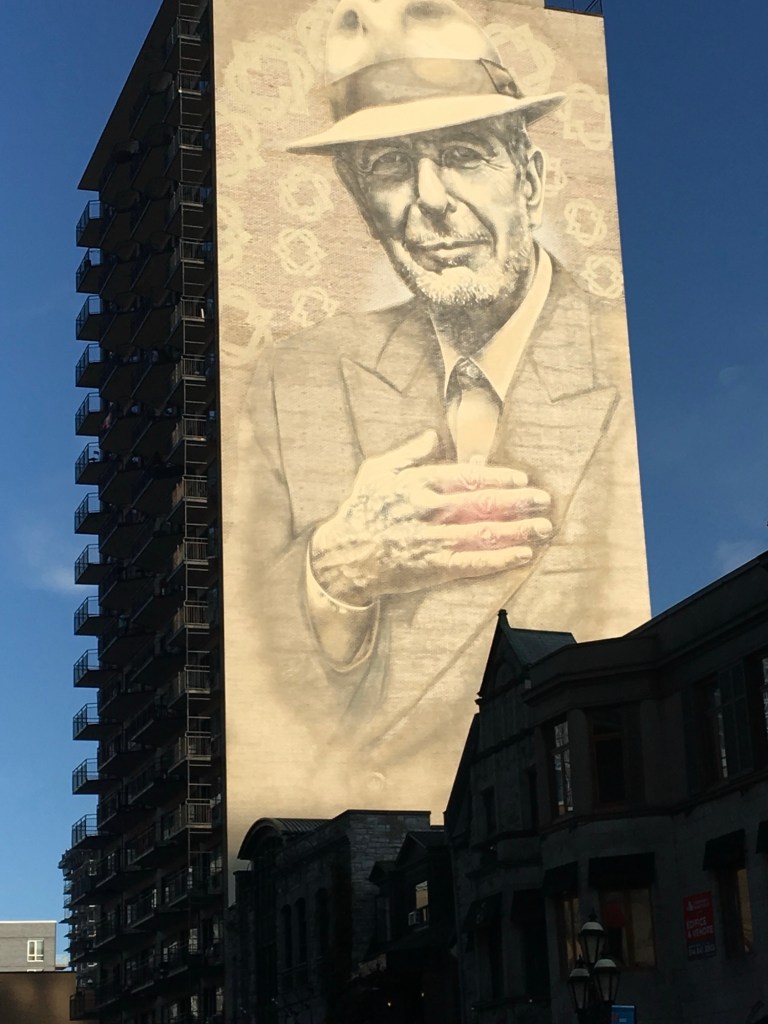
Reading Joan Didion

By Ralph E. Melcher

”We tell ourselves stories in order to live.”

Born into a conservative Republican family in Sacramento California, Joan Didion started writing at the age of five. She was shy, and because the family moved from place to place to follow her father, an army finance officer during World War Two, she grew up with the sensibilities of an outsider. Raised to favor limited government, low taxes, balanced budgets and non interference in citizen’s private lives, her first vote was for Barry Goldwater. When the Republican Party in the time of Ronald Reagan began to stray from its principles, she became the first and only one in her family to register as a Democrat. In her book, Political Fictions she comments, ”That this did not involve taking a markedly different view was a novel discovery, and one that led me to view the ‘American Two Party System’ with…a somewhat doubtful eye.” She eventually became a reporter, an essayist, and an accomplished novelist. In all of these genres she brought an extraordinary precision of language and a passion for delving into the deeper currents that shape the stories Americans believe about themselves.

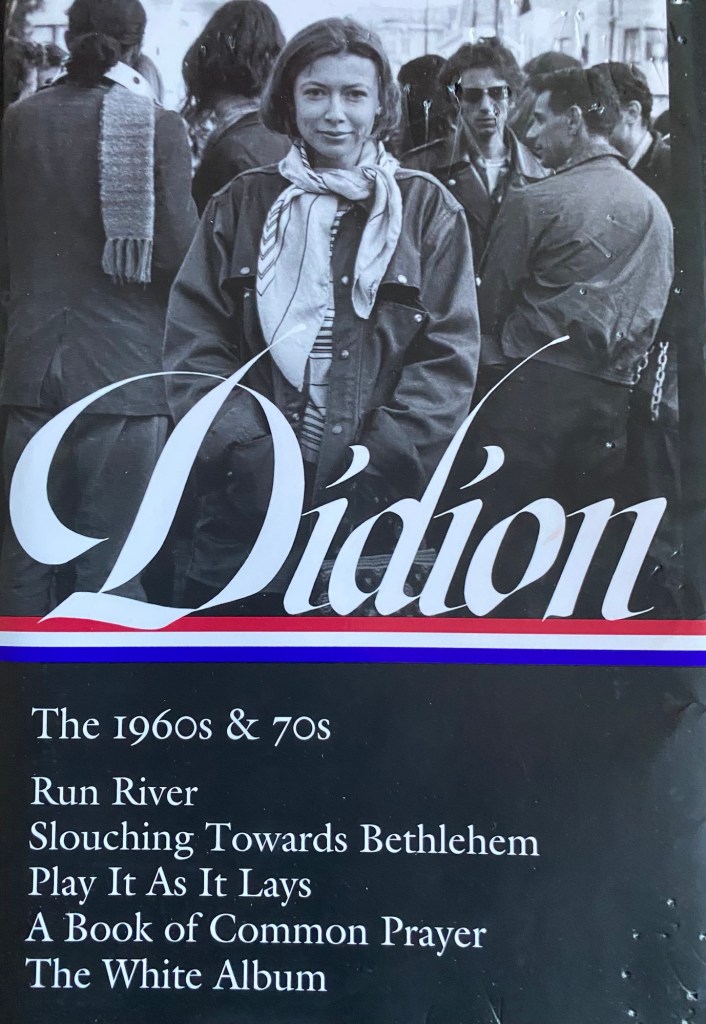
I recently picked up a copy of Didion: The 1960s and 70s, the Modern Library’s anthology of work she published in those decades. The collection includes her first three novels and two books of essays. They’re dispatches from an era of disruption, told in cool rhythms of sharply analytical prose, often tinted with a tone of ironic skepticism, never taking cover in speculation or fantasies, and never looking away from unpleasant truths. These were the works that brought Didion originally to my attention. Not only written in immaculate and original prose, they provide a chronicle, from a uniquely personal point of view, of a time when every American myth was being challenged, and the culture was taking a plunge toward dissolution.

During those tumultuous decades a number of prominent novelists and journalists, including Norman Mailer, Tom Wolfe, Hunter Thompson and Truman Capote began to incorporate the techniques of fiction with the reporting of events in the real world. The movement took on the name of the New Journalism. It challenged the conventional pretense of objective reporting, employing stylistic structures of fictional storytelling that used dialogue for dramatic exposition, moved through nonlinear time and constructed dramatic narratives drawing readers viscerally into the scenario. We were made privy to the writer’s thoughts and reactions to events, aware that these stories were told through the experiences of particular people with particular styles and points of view. Joan Didion took to these techniques with a natural grace and skill, combining the precise selection and description of details with penetrating commentary that illuminated the significance of the moment. With a high literary sensibility she engages both the imagination and the intellect. The specificity and color of her style approaches the cinematic.


Leading the anthology is her first novel, Run River, the story of a family living in Sacramento that carries a hint of the home sickness Joan Didion was feeling while living in New York City. It carries echoes of her own childhood, depicting the loneliness and uncertainty of people who are unsure of their place in the world. At its center is the drama of a troubled marriage, against an emotional backdrop of restlessness in the face of change. Characters are caught between familiar rural values and the pressure of an oncoming real estate boom. Lives follow the shifting seasons of river culture, the waters bearing witness to the social currents that push against people, sometimes leading to tragic outcomes. The novel’s compelling rhythms of prose and dialogue display the early talent of an accomplished storyteller, employing distinctive techniques for summoning time and memory, precursors to all of the work that will follow.


The title essay of the collection, Slouching Toward Bethlehem, is taken from The Second Coming, a poem by William Butler Yeats that speaks of anarchy and the loss of innocence as things fall apart. It recounts the writer’s forays as a reporter into the thickets of a burgeoning ‘hippie’ scene in San Francisco’s Haight Ashbury district in 1967. Hordes of young people were arriving in flight from their families, rejecting what they saw as the conformity and hypocrisy they identified with middle America. Where they land is in a fragile community filled with dreamers and their followers, lost and struggling to thrive amidst the rock and roll, the poverty and the reveries of LSD. This account was published in The Saturday Evening Post, and it introduced much of the nation to the social upheaval that was gathering on their doorsteps. All of the pieces in the collection appeared in popular newsstand publications like the Post, New York Times Magazine, Holiday, Vogue and The American Scholar . Among these essays are accounts of crime in suburbia, sketches of celebrities like John Wayne and Joan Baez, California think-tanks, the experience of living in Los Angeles and working in Hollywood, growing up in Sacramento, visits to Hawaii, deciding to leave New York City, and the inner process and discipline that one brings to writing itself.

The times in which these essays were written were not easy for Joan Didion. In ‘Goodbye to All That‘ she describes her life in New York City, when she was young and writing for Vogue and ‘in love’ with the city and when ”Nothing was irrevocable: everything was in reach.” After eight years she was desperate and feeling the loneliness and longings of an exile. She married the writer John Gregory Dunne and they moved to Los Angeles. The last years in New York had left her feeling empty and withdrawn, struggling with feelings of doubt and despair, overwhelmed with anxiety, and questioning her purpose. She’d ‘mislaid’ the plot, not only in her own life but in whatever gave meaning to the chaos she perceived in the world around her. Through it all she continued to write, and one can see these essays as beacons on a long and painful return to herself.

In ‘A Preface‘ she offers a view of herself as a writer. She describes, with a hint of irony, her own strengths and limitations, claiming that as a reporter her main advantage is in being ”…so physically small, so temperamentally unobtrusive, and so inarticulate that people tend to forget that my presence runs counter to their best interests.” She warns us that ”…writers are always selling somebody out.” Given what she shows us in these efforts, the ‘somebody’ she refers to includes herself.


Themes of loss and displacement are carried forward in her second novel, Play It As It Lays, the tale of Maria, a woman whose life begins in a failing Nevada gambling town and ends up in Hollywood, where everyone and everything is shuffled around like pieces in a card game. After a series of tragedies, separations and failures we witness her disassociation from all those around her, until closing the door on all of the pain of the past, she also severs her connections with the present, and ends up sequestered in a mental institution. This journey through an intricate maze of relationships and disappointments unfolds in a series of short revealing scenes and flashbacks, delivered like cuts in a movie. (The book was eventually made into a film.) The author exhibits her personal familiarity with the harrowing descent across the boundaries of anxiety and despair.


The third novel, A Book Of Common Prayer, partly draws from personal impressions of traveling with her husband, John Gregory Dunne, to Columbia and El Salvador in the eighties. (Accounts of these journeys are found in ‘The White Album‘ and her book, ‘Salvador.’) The mysterious origins of a character are gradually unveiled through the accounts of a witness, an anthropologist who marries into the ruling family of a politically unstable Latin American country. She befriends the wealthy American who arrives in the country as a tourist, choosing to stay long term, apparently waiting for someone’s arrival. We follow a narrative through changing points of view, moving from the accounts of the narrator, then into flashbacks that reveal intimate moments in the woman’s past. As the clues to her solitude gradually reveal a history of loss and tragic disappointment, we come to realize what she’s waiting for is unlikely ever to arrive. In the oppressive atmosphere of a decaying civil order, the country descends into a spiral of political violence, and we are helpless witnesses, along with the narrator, unable to alter the fate of someone who invests her existence in an unlikely version of reality.


The second essay collection, ‘The White Album‘ , gives us in the title essay, an account of the trying period when she was raising a daughter and carrying on with life as a normal person, but losing the narrative thread that made the world make sense. While living in a large old house in the Hollywood section of Los Angeles, Didion reported on murder trials, met a member of the Manson family, hung out with the Doors, interviewed Huey Newton and Eldridge Cleaver and covered campus uprisings. In 1968 she was named a Los Angeles Times “Woman of the Year”, but was growing increasingly depressed and withdrawn. The summer of 1968 brought the My Lai massacre and the assassinations of Martin Luther King and Robert Kennedy, followed in short order the next spring by the Manson murders. At the time she grew desperate, checking herself into an outpatient psychiatric clinic after suffering an attack of vertigo and nausea and feeling like she would pass out. Included in the essay is a full transcript of a very harrowing psychiatric diagnosis. Around the same time she was diagnosed with latent signs of multiple sclerosis, which remained latent for the rest of her life. She continued to struggle with anxiety and depression for the next three years. Most of the essays in this collection were written and published after this period. One could consider them to be a journalistic record of a person who is in recovery, reconnecting with the stories that keep us alive.

The second section, titled “California Republic” is filled with collected snapshots and vignettes of people and life in the state of her birth. She writes about Bishop James Pike, the California water system, the Governor’s Mansion, the Getty Museum, the highway Operations Center and Hollywood charities. In the last piece she relates an encounter with the suburban Jaycees of Santa Monica, who represent for her ”…the true underground, the voice of all those who have felt themselves not merely shocked but personally betrayed by recent history…“ as they perform a social ritual to times that appear to have passed, getting together weekly to solve America’s problems.


In the three essays in the “Women” section Didion displays the core values she invests in her own work and the standards she considers fundamental to the mission of artists and writers. ‘The Woman’s Movement‘ is a critique of ‘second wave’ feminism’s tendency to follow deterministic models that confine women to a ‘class’, defined solely by the circumstances of oppression. Seeing the world solely in terms of ‘struggle’ holds women back from living as fully realized human beings. Her position is further defined in the piece on Doris Lessing, whom she characterizes as ”…a writer of considerable native power,”_under the undue influence of ”…the guiding delusion of her time.”_ This she defines as an assumption that human behavior can be altered through versions of collective conformity. By creating characters that are mere representations of ideas Lessing abandons the irreducible ambiguities of human behavior and gets drawn into the trap of ideology. For Didion ”…fiction is in most ways hostile to ideology.” By contrast, in the essay on Georgia O’Keeffe, Didion extols a woman who embodies the true obligation of the artist: to courageously pursue her own vision in the face of both critics and admirers. She calls O’Keeffe ”…a straight shooter, a woman clean of received wisdom and open to what she sees.” Her art embodies the principle that style is character. She quotes the painter when speaking of the creative process, ”I believe that to create one’s own world in any of the arts takes courage.” Whether one agrees or disagrees with Didion’s arguments, these three essays, insisting that artists must free themselves from cultural dogmas to release their imaginations, constitute a personal manifesto by a fiercely independent thinker. ”Some women fight and others do not. Like so many successful guerrillas in the war between the sexes, Georgia O’Keeffe seems to have been equipped early with an immutable sense of who she was and a fairly clear understanding that she would be required to prove it.”

In the section called, “Sojourns,” Didion assumes a more contemplative posture, reflecting on the sense of growing alienation she felt while living in New York, and the several trips she took to Hawaii for restoration and recovery. She writes of the history of the Royal Hawaiian Hotel and of the National Memorial Cemetery of the Pacific, which contains American casualties of World War II, and where the Vietnam dead are first shipped on their way back home. She visits Schofield Barracks, portrayed in the novel From Here To Eternity by James Jones, visiting the sites mentioned in the book and reflecting on the times of war that have left shadows in the present. She gains some solace in reflecting on the things that last and those that are left in the past, and reflecting that this is just the way life goes.

In Hollywood,” is a commentary on the insider culture of the studios, where economics rule over art, and the studio heads treat movie making like a casino game played among deal makers, usurping the pursuit of glamour and fame. “In Bed” is an account of her frequent migraines, “On The Road” describes traveling on a book tour, “On the Mall” offers a history of shopping malls, and “In Bogota” relates her impressions while attending a film festival in Columbia. The final essay in this section offers a meditation on the Hoover Dam, as embodying the inflated dreams of America, ”…the several million tons of concrete that made the Southwest plausible, the fait accompli that was to convey, in the innocent time of its construction, the notion that mankind’s brightest promise lay in American engineering.”


The book concludes with two short pieces. In the title essay, “On The Morning After The Sixties” Didion reflects on being a child of her time, part of a ‘silent’ generation that identified relentlessly with the personal, choosing to live ‘outside of history’, accepting that humanity at large was not perfectible. They believed that the meaning of life wasn’t to be found in social action but in the acceptance of our own finitude. They’d experienced a world enveloped by a war that was largely driven by attempts at social engineering. They were bewildered by my own generation, the Boomers, watching as we threw ourselves into trying to ‘make the world a better place’. The counsel she offers is not to get so caught up in the sweeping movements of history that we loose ourselves completely.

In the final coda, “Quiet Days In Malibu,” she tells us of life with her husband and daughter, living in a house near the beaches and beneath the Santa Ana winds. It was a time when they knew the neighbors and life wasn’t always easy deal with radical changes in the weather, but people looked out for one another. She tells us of Amado Vasquez, a grower of rare orchids, who tended his greenhouse up the canyon. After her family moved away, an enormous brush fire, pushed by 100 miles per hour winds ravaged the coast, destroying many homes along the Pacific Coast Highway. Returning for a visit, she sees that the greenhouse has burned, but Amodo is moving to a new location to begin once again. The fire had stopped within 123 feet of the house the family had lived in for five years, before they moved on to Brentwood Park in L.A..

Why have I returned so avidly to Joan Didion at this time? For one thing it’s simply a pleasure reading these sentences, like driving across a familiar landscape that consistently presents new revelations. When I encounter her prose I feel like I’m engaged in a lively conversation, where all of my lazy assumptions are challenged, and my eyes are pried open to new ways of looking into my own past. The tale she tells of writing and struggling to make sense of the chaos and cruelty of an era feels familiar. The unique blend of personal memoir and reflection brings her reporting to a level that illuminates both the mood and meaning of the time. I find her writings only improve with rereading, shedding light on terrain we both travelled.


From The White Album:

”We tell ourselves stories in order to live…We look for the sermon in the suicide, for the social or moral lesson in the murder of the five. We interpret what we see, select the most workable of the multiple choices. We live entirely, especially if we are writers, by the imposition of a narrative line upon disparate images, by the ‘ideas’ with which we have learned to freeze the shifting phantasmagoria which is our actual experience.”


Joan Didion went on to write two more novels and ten books of essays and nonfiction. Along with her husband, John Gregory Dunne, she wrote four major screenplays. Her novel, Play It As It Lays, was made into a film. She continued to report on American myths and values and wrote memorable accounts of her personal life, including The Year Of Magical Thinking and Blue Nights about the tragic deaths, in the same year, of her husband and daughter. The Year Of Magical Thinking won the 2005 National Book Award and was later made into a stage play.
Michael

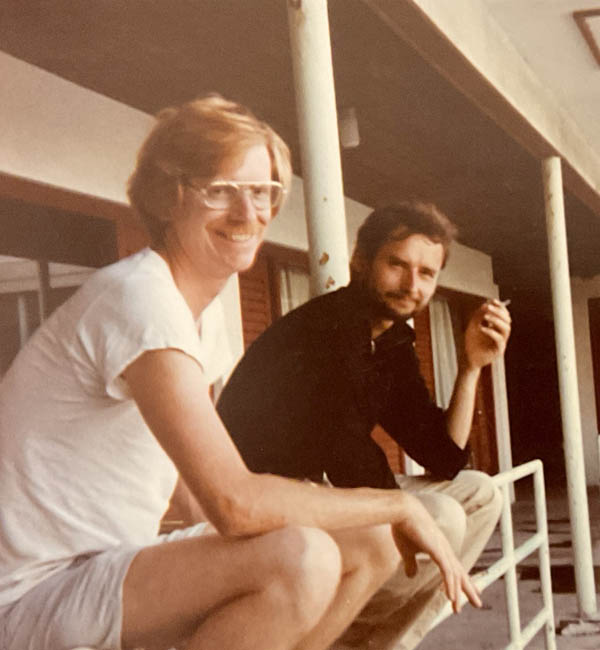
He was tall and very thin, with the striking red hair and fair skin of a person of Irish descent and temperament. He’d grown up in rural Appalachia. At some point in his college years the breadth of his awareness expanded dramatically and he, along with many of our post war generation, became a vocal reformer, a gadfly, and a revolutionary in spirit.

In the years following he migrated to Detroit, here he became a union organizer in the auto industry. He took from his reading and studies an insightful, yet contrarian view of the American state. He told me once of accompanying a group of activists to Cuba to experience the new order as well as effects of America’s animosity from the inside. They were invited to a dinner in a hotel ballroom one evening when the lights all went out, due to a blackout. In the darkness a single match was lit, and it was Fidel Castro lighting up a cigar.

Around the time that America retreated from Vietnam and the Nixon administration collapsed in disgrace, Michael met and married his first wife, and they began raising a daughter. The nation had begun to enter a period of serious disillusionment, and a reactionary backlash arose to the progressive advances as well as the excesses of the sixties. The wave of cultural disruption that fueled the Civil Rights and anti-war movements brought down barriers of racial and class divisions that trace back to the nation’s founding. New music, the advent of television and the liberal college education of a generation of middle class white students, thanks to the GI Bill, accelerated the Civil Rights and anti-war movements. Deep fissures widened between opposing visions of America’s history and its role in the world. Many of us were feeling both frustrated and rudderless, and actively searched for alternatives to the faltering assumptions of our elders.

Leaving Michigan, at the same time I left Ohio, the young family moved west, looking for better opportunities in growing communities like Denver, that appeared less calcified in their sense of the possible. We joined a growing community, led largely by a cohort of politically aware refugees from the culture wars. We coalesced around a dynamic and inspiring spiritual leader from a different country with a different (non-Christian) tradition. It was a common phenomenon in that era. Whatever reservations we might have had about the religious basis of the community, it inspired the communal energy and the organizational experience in its members that accomplished remarkable results. It was in the midst of all of this enlightened energy where I met Michael.

I don’t remember the details of our meeting, but from the beginning we recognized a shared vision for our future and a set of interests that flowed naturally into an immensely supportive partnership. We were both political contrarians and irritants to group thinking. We both of us had a consuming interest in the growing and equitable distribution of food and resources in a healthy society that cared for the land. Over a short time our friendship blossomed into a deep sense of brotherhood. To me he was like an older brother with a deeper experience of the world. My literary interests and his political experience complimented one another. We worked on projects together, starting our own ‘community garden’ on a slice of vacant public land (now covered by condominiums). We commiserated with each other’s successes and failures. We were not always in agreement and both of us carried strong opinions, and although never reluctant to challenge one another, and at times we could put people off by our stubborn positions, the disagreements between never violated our trust in one another, and were always more illuminating than destructive.

Finally time and change caught up to us. The community began to break up, along with our marriages. Michael pursued his dream and his roots, moving to North Carolina, starting a small farm and a new family in tobacco country. I stayed in the west, eventually moving to Santa Fe, but I managed to visit him more than once, hiking through the Appalachian countryside or canoeing down the French Broad River near Asheville. Once, when he was studying law he gave me an instructive walking tour of Durham and its politics. Eventually he became a lawyer. I visited with him and other friends in North Carolina, where I was introduced to southern quisine (scrapple) and country dancing. I watched Michael’s son grow up. Much later on, when taking the southern route on my way to visit friends on the East Coast, we briefly got together on an afternoon near Raleigh. Our lives had gone through various dramas and we’d fallen out of frequent contact. Two years ago he came to Santa Fe with his wife and part of his extended family, and after a long hiatus we renewed our connection.

Last year he was diagnosed with cancer. The last couple of times I spoke with him he was optimistic, but soon after he went into a rapid decline. When I was told he was dying I regretted that I’d been so distracted with my own situations that we hadn’t talked more often. Now he’s gone. His wonderful wife has told me that he always called me his brother and kept me in his heart. A feeling we shared. We were indeed brothers in arms, and farmers, and students of the world together.

In Peace.

For Michael Smith

(Revolutionary, Farmer, Teacher, Lawyer, Family Man)

Jan 7, 1945 – May 15, 2026

R. Melcher

A Solace In Sentences

(Pynchon as Parenthesis)

by Ralph E. Melcher

”It’ll get easier. Someday it’ll all be done by machine. Information machines.” Gravity’s Rainbow (1973)

While stranded in this moment, awash above the blank pages in a Sargasso Sea of bewilderment that borders too often on despair, or at least demoralization, questioning who we are and what we are to do, placing words on screen or paper that appear too often useless. How can I meet the YouTube moment, when contraptions made of outmoded words float like garish headlines against images that appear for short moments and then gone, while the world arranges itself around another passing crisis. What is it that endures against the nihilistic forces stalking across the earth like a million metaphorical monsters, puncturing every dream and aspiration for no apparent purpose outside of the blind and momentary pleasure of watching things explode. In my local community I’m like a ghost. What do I have to communicate besides brittle hope or the pain of loss when so much is lost to stupidity and greed. The question always is, what remains?

I find respite in the oceanic and ancient desert landscapes of this beautiful state, as it flows past my car windows, and indulging in the exquisite paragraphs of my favorite writers, the best of them having been with me almost as long as I can remember.

I grew up in a post-war world of weekly air raid sirens and useless nuclear drills. I saw pictures of bombs going off above Hiroshima and Nagasaki, and watched ex-Nazi Wernher von Braun on Disney explaining the nuclear reaction, using ping pong balls and mousetraps. I endlessly fantasized about fallout shelters. My family drove past fields full of surplus tanks and obsolete aircraft on our way to church, all of this hardware useless in a war of total obliteration. I watched movies at Saturday matinees featuring mutant monsters wandering through the wreckage of cities. Most of my nightmares were of inescapable destruction.

The fathers of my generation gathered in VFW halls. They shared the fellowship of men and women who’d survived through a holocaust. They were often reluctant to reveal to their children any details of the horrors they’d encountered and survived. With fascination we gleaned fragments and artifacts of memory from books and photographs. We watched television documentaries, roughly cut in black and white, narrated by Walter Cronkite or Edward R. Murrow, of battles and bombardments and ruined cities. There were the romanticized exploits in popular movies starring our favorite movie stars, portraying sacrifice, heroism and always victory. There were the morality plays of TV westerns that dominated the evenings. As boys our favorite backyard fantasies featured plastic guns and makeshift arsenals. We retreated from history into our imaginations, and it served as our defense against a backdrop of mortal terror.

Amid the doom and gloom and people taking themselves too seriously, there were other things to think about. Our childhoods, like every childhood, were filled with discovery and wonder. A fresh world of technological possibilities was opening all around us. Television itself was new. We launched ourselves into space, and the pace of ambition and invention rapidly altered the landscape. We thought about careers and success, and believed in times of growing tolerance and opportunities.

Still, many of us found ourselves stranded in a marsh of questions and indecision. As the decades passed, we entered an extended interval of useless and dangerous conflict, of burning cities, assassination of our heroes, and a rising sense that civilization itself had an uncertain future. For those who stepped off the shores of safe and sound behavior, the plunge into unknown waters took a healthy sense of humor and a strong dose of aspiration, or at least enough momentum to move forward.

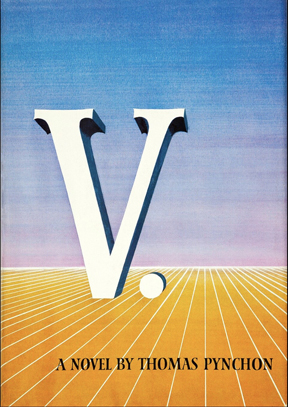
When I was 17 years old, I wandered through the fiction racks in the downtown branch of the Carnegie library in my hometown of Cleveland, Ohio. One day, passing a display of contemporary novels, I looked upon a thick and serious looking hardcover volume, with a single letter, V. , as its title. The letter stood monumental, upon a surrealistic plane of parallel lines converging toward a vanishing point, beneath an empty blue sky. In the foreground, in smaller letters below, the words proclaimed, A NOVEL BY THOMAS PYNCHON. Something about that image and title suited the world as I’d begun to see it, a mysterious and isolating landscape of endless searching and uncertainty. Like Pynchon’s characters in this, his first novel, my friends and I moved among bewildering scenarios with sensibilities that blended both hopefulness and paranoia. Like Pynchon’s Whole Sick Crew , we wandered through the moral confusion that followed the chaos and tragedy of a World War. Underneath it all there lingered the frightening suspicion that everything that might have made sense to our parents was on the edge of coming apart.

Thomas Pynchon writes in the words of a prophet, a comedian, a poet of times of transition, when one world collapses into another, and people find themselves somewhat lost, seeking some kind of anchor in the tempest. His novels are mysteries. They take us, along with their sketchily drawn protagonists, to witness worlds both bizarre and familiar, packed with lush detail, profoundly beautiful and monstrously grotesque, full of both darkness and hilarity. His characters, as they search for patterns that might reveal some sense of ultimate purpose, skirt the edges of discovery, driven forward by circumstance, picking up messages and signs that hopefully provide clues, or at least an indication of direction. Each of his novels takes us through the beauty and violence of landscapes in a different period of history.

We hang out with Benny Profane and Herbert Stencil in search of a mysterious woman in the 1950’s, follow Oedipa Maas through a Northern California real estate maze uncovering an underground postal system, Tyrone Slothrop caught in the London blitz and the boundryless zones of Europe at the end of World War Two, Zoyd Wheeler protecting and searching for a daughter between the tumult of the Nixon years and Reagan’s War On Drugs, Charles Mason and Jeremiah Dixon in the 1700’s measuring the border that will split America against itself, the Chums Of Chance flying above realms of fantasy and possibility, between the 1893 Columbian Exhibition in Chicago and the ‘War To End All Wars’ in Europe, Doc’ Sportello tracking down a mysterious cartel of dentists at the tail end of the 60’s, Maxine Tarnow navigating New York City and the internet, between the dotcom crash and 911, Hicks McTaggart caught between Prohibition and the rise of fascism in Europe and the USA.

Thousands of characters make an appearance. Pynchon’s style is said to be encyclopedic, and it is, dealing not merely with characters and events, but with the sensibilities of every moment, where the mythical blends into the factual and the imaginative informs the real. He surveys the fleeting joys, horrors, and absurdities of the centuries. We shift among as many points of view as there are situations, and at times his people break into songs and poetry, even limericks, to illuminate the mood. Pynchon’s writing challenges and often breaks many of the conventions of prose, as if he’s daring us to trade in our box of expectations for a new sense of freedom.

There are dozens of essays and books written about and/or inspired by Pynchon, and as many interpretations of his work. I can offer my own, although it’s continually under revision. Like a trickster he challenges us to see through the patterns of history into worlds always in flux, driven as much by imagination as intent, old orders always collapsing while new ones arrive, never quite reaching a conclusion. We see humanity in a constant struggle between opposing urges of freedom and control, and beneath all the hopes, the curiosity and paranoia, finding no final answer beyond the absolute mystery of beginnings and endings, and everything inbetween.

Pynchon is one of the most influential writers of his generation. He certainly influenced me. Through the years every one of his reviewers and readers has attempted to plumb the mysteries and meanings that thread through his voluminous work. The worlds he creates are equally beautiful and monstrous, and each is a maze littered with both absurdity and wisdom. Pynchon himself is a cipher, almost never photographed, never sitting for interviews. Other than in the introduction to his early short stories in ‘Slow Learner’, he’s never offered explanations outside of his work, thus leaving conclusions fully to his readers.

My personal enjoyment is in his magnificent sentences, lush and long, often the length of a whole paragraph or page, exquisite and wanting to roll off the tongue, more like poetry than prose, or maybe something in between. They are filled with the beautiful, the mundane, the grotesque, enigmatic and profound, and the sheer adventure in rereading them has often brought me to tears and gotten me through very difficult times.

Here’s an example, from my favorite novel, ‘Against The Day’.

Yashmeen’s white tall figure, parasol over her shoulder, already a ghost in full sunlight, went fading into the crowds flowing in and out through the trees between the quay and the Piazza Grande…

Plum and pomegranate trees were coming into flower, incandescently white and red. The last patches of snow had nearly departed the indigo shadows of south-facing stone walls, and sows and piglets ran oinking cheerfully in the muddy streets. Newly parental swallows were assaulting humans they considered intrusive. At a cafe off Katunska Ulica near the marketplace, Cyprian, sitting across a table from the cooing couple (whose chief distinction from pigeons, he reflected, must be that pigeons were more direct about shitting on one), at great personal effort keeping his expression free of annoyance, was visited by a Cosmic Revelation, dropping from the sky like pigeon shit, namely that Love, which people like Bevis and Jacintha no doubt imagined as a single Force at large in the world, was in fact more like the 333,000 or however many different forms of Brahma worshipped by the Hindus—the summation, at any given moment, of all the varied subgods of love that mortal millions of lovers, in limitless dance, happened to be devoting themselves to. Yes, and ever so much luck to them all.

October Surprise

I sit in this cafe in Santa Fe drinking my coffee and reading about the approaching hurricane, billed as potentially ‘one of the most destructive hurricanes on record for West-Central Florida.’ I open the MAPS app on my phone and enter St. Petersburg, Florida, zeroing in on the strip of barrier island beaches along the Gulf of Mexico, until I find the section called Treasure Island. I scan the shoreline to see if there’s anything I might recognize from the time I lived there in 1972. Outside of the main road facing the hotels and resorts it’s hard to imagine that any trace remains of what I knew back then.

Most of Treasure Island at that time was made up of slightly run down motels and beach cottages inhabited by seasonal vacationers, boat people and retirees. In the middle of this were two structures that remained from a previous complex mostly washed away in a previous hurricane. Separated from neighbors by wide strips of beach sand they were inhabited by an odd population standing well apart from the surrounding social fauna. I shared one half of a duplex shack with a high school friend from Cleveland who’d attended college in St. Pete and had taken up with a community of boat builders and maintenance people centered in a nearby boat yard. I was just a year out of college, having dropped out after the Vietnam Draft Lottery missed my number. I’d spent months traveling by thumb all across the western states and through Canada back to the Great Lakes. After working briefly as a dishwasher in the local department store, I left my family in Cleveland, coming to Florida at my friend’s invitation.

A young couple lived on the other side of the duplex. A larger separate dwelling edged closer to the Gulf shore, headquarters for the president of a local motorcycle gang and his occasional guests and associates. ‘Pappy’ is what they called him. His gang, the Pagans, was apparently rather notorious in the region, having carved out territory in competition with a local chapter of the Hell’s Angels. We were young, college educated dropouts that had more in common with Volkswagens than motorcycles. It sounds rather scary, but it worked out quite well all around.

Whenever Pappy’s gang went on extended ‘runs’ to whatever piratical adventures they were engaged in, he asked us to watch over the house and property, and was grateful for our vigilance. When in residence he always treated us respectfully as his neighbors. We assumed his gang’s adventures involved some forms of drug running or other illegal activity, as he appeared to be rather prosperous, if out of place in the neighborhood. He possessed a very nice boat, cars and motorcycles, and had no discernible employment.

The complex appeared to be under regular surveillance by the local cops. Pappy often came out to greet them on their patrols carrying his small pet boa constrictor, the gang’s mascot, around his shoulders. There was often a steady parade of guests in and out of the residence, and when he and other gang members occasionally gathered to drink and party we learned it was wise for us to stay clear. In all other matters, as long haired hippies being also somewhat out of place in the middle of a community of white conservatives, the intimidating presence of Pappy was actually reassuring.

St. Petersburg at the time was divided into distinct social groups. There was the established population of mostly very conservative southern white people. They barely tolerated the presence of a growing insurgent population of young people that orbited various college campuses. A large, mostly segregated black population lived in tightly knit communities along unpaved streets in the semi-rural neighborhoods on the fringes of the city. They worked mostly in municipal service and maintanence jobs, tending the roads and the parks and collecting the trash. On the weekends they gathered in Baptist churches nestled in cozy subtropical tree lined lots.

There was a constant ebb and flow of vacation visitors, spending their money and luxuriating near the beaches or out fishing and sailing on boats and yachts in the Gulf or in the Tampa Bay. Then there were the vagabonds like us, mostly refugees that circulated among all of these groups, taking advantage of the climate and whatever marginal employment that was available.

When I moved south I brought with me a collection of books and articles documenting the decade of political activity that had moved me through high school and then as a college student between 1966 until 1972. Much had come to light in those years for the generation born just after the Second World War. We had been thrown into the first age of television and simultaneously educated through the benefits of the GI Bill and the rough awakening of the Civil Rights and Antiwar movements. The world in those years had been both disorienting and an opening to new possibilities and perspectives.

The so-called progressive environmental movements in those days emerged out of the shock and passions of the sixties toward something more organized and enduring. The seeds had been initially planted by pioneering books like Rachel Carson’s Silent Spring, Scott and Helen Nearing’s Living The Good Life, Paul and Anne Ehrlich’s alarmist The Population Bomb and Stewart Brand’s compilation of alternative resources and philosophies, The Whole Earth Catalog, inspired by the first photographs of the global biosphere taken from space.

I used my time in Florida, while living on the beach, smoking marijuana, listening to music and drinking cheap liquor from the state stores, I reviewed all the currents and options effecting my life. It was sort of a suspended state between the stages of a life as I sought my own path forward in pursuit of a better world.

Sitting beneath the parachute canopy that blew gently in breezes from the Gulf, I watched the sun rise and set over the always restless waters and imagined new possibilities as alternatives to the industrial wilderness I’d grown up in. It seemed possible that humanity would awaken from its nightmare of wasteful conflict and pursue collective survival and the chance for contentment.

I look at the present map of those beaches on my iPhone and see that the roads have all been closed to traffic as the communities have mostly been evacuated. The expected storm surge is predicted to be as high as 15 feet. There have been over 40 tornado warnings so far across the state of Florida, and at least one large tornado has already devastated parts of Fort Myers, south of St. Petersburg, then cut across the Interstate 75. Millions of people are fleeing on roads away from the Gulf and most of the gas stations are out of gas. This has been called a ‘once in a century’ storm, but it follows by barely a week the previous ‘once in a century’ storm. Milton follows Helene, with two more months of hurricane season to go.

When I left Florida I moved to the West with the thought of devoting my life to pursuing possible alternatives in a world drowning in waste and ignorance. Having grasped and accepted a new understanding of history and what we are responsible for, I found it impossible to turn away. Since those times, for more than 60 years, many of us struggled and hoped and achieved a greater clarity of our options. We went from dreaming to innovating. We constructed new technologies to harness our visions. At the same time we watched as the fear of change grew into the fierce backlash of denial that now threatens to throw us backward into the destructive cycles of the past.

I remember the innocent days when the most extreme harshness of the backlash kept us out of bars along the beach because our hair was too long. We were young and arrogant and resilient and we flaunted our sense of pride and indifference. The petty prejudice we encountered we saw as a relic of the past. If at times we felt like strangers in a strange land, we mostly shrugged it off as we faced the future with what we thought was a clear sense of its possibilities.

I remember sailing free over the clear waters that could be both gentle and sometimes overwhelming in its sense of awesome scope and majesty. I remember the fear inspired by lightening and thunder over the distant waves in the night, and the warm currents that caressed my body as I floated beyond the breakers beneath an endless sky. The world moves in crazy currents, just like the wind and the oceans, and we are only human. We navigate the waves and sometimes get caught in the backwash and sometimes we get swept away.

We were so young, and we thought we could reshape the world, just because we believed we could. We threw ourselves on the currents and trusted them to take us to where we needed to be. Hippies, motorcycle gangs, college students, even Christians and communists, believed we could push the whole world toward the good as we released our imaginations and accomplished miracles. But we forgot in our pride that advancing our vision required that we leave no one behind.

I now look at the map and see images of the storm’s advance, I know that the world I remember will be changed beyond recognition, and feel some pity for those forced to flee the wrath of the waters and the wind.

I no longer live near the sea. Where I live these desert heights often seem like a calm island floating above rough weather and the waves upsetting the rest of the world. Looking at my screens with their views of the storm, amid the world’s violence, ignorance and misery, my heart sometimes threatens to turn to stone. I know that, unlike the ocean, stone eventually gets worn away and vanishes to nothing. Once totally open and filled with hope, now I often feel almost empty and ready to blow away in the wind.

Neither time nor history flows backward. The tides and cycles repeat, the days and years pass through darkness and light. Whenever we grow complacent we’re jolted awake. The world and human civilization has passed through many fevers. We’ve survived cataclysms, ice ages, plagues and world wars. Through each cycle the lessons have become more obvious and the stakes have become greater. We learn again and again the lesson that we all share the same small planet and the borders between us are mostly illusions.

“Shut Up and Get Back To Work”

I could only be somewhat amused at U. S. House Speaker Mike Johnson’s performance addressing students and the press at Columbia University, telling them to stop their nonsense and get back to classes. Behind him stood a grinning Elise Stefanik, joining in the act, both performing for stock footage to be used in the upcoming fall campaigns.

It struck me that a major lesson to be taken in a week of escalating campus demonstrations across the world, was the apparent inability of generations in power to learn from history or to avoid repeating the same tactical errors again and again.

For me the events are somewhat nostalgic.

I recall an evening in 1970 when a large part of the student body at Case Western Reserve University gathered in the student union cafeteria to debate a response to the newly launched expansion of the Vietnam War into Cambodia. The meeting was part of an escalation of activity centered that had been building on campuses for many months after events at New York’s Columbia University in March and April of 1968. Partly In response to the war and touched off by resistance to plans for the university to build a segregated gym on the fringes of Harlem, students and ‘outside agitators’ occupied buildings, debated one another, conducted ‘teach-in’ activities and generally obstructed normal college business. Eventually Columbia administrators called in the NYPD, who proceeded to brutally attack the demonstrators, injuring many and arresting over 700 participants. The consequence was an expansion of actions in solidarity driven by organized coordination on campuses all across the country. (Governor Abbot and DeSantis take note)

Listening to the rising militancy of rhetoric in that student union meeting it became obvious to my friend Robert and I that impending action was in he works, and Impatient with all of the talking we headed over to the ROTC building which had emerged as the likely target. Being the first to arrive at the location we took positions seated on both sides of the steps leading to the front doors. Just then a closeted group of middle aged men in suits looking somewhat bewildered and uncertain, apparently summoned from their evening cocktails, approached from across the plaza. Foremost in the group was the University president. He cautiously approached the two of us sitting like quiet Buddha’s on the steps and asked who we were. In a moment of smart ass mutual inspiration we both replied that we were ‘gargoyles’. The president gazed at us blankly for a moment, then turned back to the little group, leading them away into the night. A moment later the large group of students arrived from the irmeeting, marched up to the front door and proceeded to occupy the building for the next few days.

The student movement in those days was responding to an unpopular war and a rising awareness of racial injustice, but it was more than that. We were addressing fundamental questions about the relevance and responsibilities of our educational institutions in addressing inequities in the larger world. In virtually every classroom deep questions were being asked challenging the growing dissonance in times of accelerating change, between what and how we were being taught, and how it related to the outside world. The challenges were made using every conceivable form, from classroom debate to teach-ins and street theater, to poetry and artwork, to obstruction of business as usual. Outside of campus social activism began to explode in the streets. Inmates were taking over the asylums. Before the tide had receded and things returned to a new normal, many changes were made, and in spite of the forces of reaction the social movements of those decades laid foundations for the movements and counter movements we are seeing today.

Societies thrive and advance to the degree that they respond to ever new realities of the present. Intelligent leaders and pioneers must be encouraged to think and to continually question the status quo. Universities are designed to be laboratories for discourse and discussion. Students are ideally trained to be more than receptacles for predigested opinions and established ideologies. The young see the world with fresh eyes that are less tolerant of dogma and hypocrisy, and more willing to take risks and learn from their mistakes. Inexperience and ignorance are to be overcome, but they are not a crime.

When faced with the spectacle of injustice the young are more outspoken and generally feel they have less to loose. Back in the day, when president Richard Nixon held up the ‘silent majority’ of middle America as his standard for patriotism, angry college students were portrayed as irresponsible and out of touch, or else as naive victims of shadowy bands of outside agitators and ‘far left’ college elites. It appears that nothing much has changed in the rhetoric of reaction since those times.

The Mike Johnsons and Elise Stefaniks will always find hooks and divisions upon which to hang their campaigns based on fear and self righteousness. In the sixties the paranoid establishment along with the media exploited tactical squabbles between black and white protestors in order to divide them and pacify dissent. Today the tactic is to label any objections to Israeli military excess and apartheid policies as ‘antisemitic’, even while campus protestors include Jews, Muslims, Christians and people simply appalled at the horrific images seen everyday in the media. In some cases the diversity of participants’ backgrounds and opinions have led to heated disagreement and sharp debate. Irresponsible actors on all sides have at times resorted to harassment and even occasional violence. Some students and teachers have felt alienated and fearful. Never missing an opportunity to fan the passions of a moment, politicians and instigators portray every unfortunate incident as the norm. In fact, the preponderance of violence in nearly every instance has been perpetrated by the forces of law and order.

The gap in life experience between generations raised in the last half of the 20th century and those now coming of age in the 21st is almost unbridgeable. The decades that followed the last World War were characterized by an almost constant state of expansion and innovation. America stood at the center of a global project to build the new world order. Whatever flaws existed in America’s self image were covered over by almost continual economic growth and innovation, low unemployment, low inflation, huge stock dividends and an overlay of conspicuous consumption.

The new century brought an unrelenting succession of national traumas. It began with the dot-com crash and recession in 2001, closely followed by the attack on the World Trade Center. Then followed two decades of war in the Middle East and Afghanistan, a housing crash and the Great Recession of 2007-2009. After brief respite of hope and civility in the Obama years came the daily nightmare of the most ethically challenged presidency in United States history. All of this was interrupted by the worldwide COVID pandemic along with the rapid proliferation of disastrous consequences in the wake of climate change. Finally the Russian invasion of Ukraine and the war in Israel have brought about the most destabilizing global situations since the Cold War.

My generation was the first raised on television and under the threat of nuclear holocaust. Almost from birth we were exposed to images of war and mayhem in foreign lands running counter to the idealization of America’s self-image. The moral pontification propagated in our churches and schools and in the mainstream media became increasingly detached from the reality of people’s lives. We were told that all of the ‘bad’ people and situations were somewhere else. By the time we arrived at college our view of American exceptionalism had changed dramatically from that of our parents. They’d suffered through the horrors and triumphs of a World War, in which the very foundations of democracy had been nearly defeated by the forces of totalitarianism. We were summoned instead to serve and support a futile war against a small foreign nation while watching on our daily screens our cities catching fire, our most admired leaders being assassinated, and our sons and brothers killed in the jungles and brutalized on the streets. We questioned, and then we rebelled.

Not only is the current cohort of college age students much more diverse than it was in the sixties, it’s a generation that’s experienced first hand the cracks in the foundations of the American dream widening almost beyond repair. Our established institutions appear to languish in denial. Justice has been challenged and has failed repeatedly. The truth is continually subverted by lies and fantasies. Freedoms that have been won through centuries of struggle are being discarded while the very survival of civilization is threatened by changes in the weather. Our political institutions appear inadequate or unwilling to address these situations in any meaningful way.

The campus movements of the sixties culminated in the execution of four students by the Ohio National Guard in May of 1970. Although this event didn’t stop the inevitable momentum toward change, it made us take a hard look at the consequences of poking the beast head-on. These days, when I hear the rhetoric of people like Josh Hawley and Tom Cotton and the words and actions of leaders like Greg Abbot and Ron DeSantis I wonder whether their ultimate goal is to provoke violence and fear in order to justify the suppression of all alternative points of view. Are they pushing for another Kent State massacre? Do they imagine that this strategy will work any better than it ever has? I guess if your ‘go to’ strategy is _God, Guns and Trump,_ there isn’t much of an alternaive.

I question whether these purveyors of fantasies of the past can presume to know, evaluate, or judge the motives of young people, whose entire living experience has born witness to the breakdown of those very illusions?

These students are the future, and the future will not be denied. Like we who grew up in the fifties and sixties, they see much more clearly how the world has changed than their parents who cling to the status quo. Ultimately, the young will prevail because they must. Like every human generation they have to grapple with the world as it is, and not as we wish it to be.

The catalyst for the current uprising on campuses is a costly war between nations and peoples who’ve made a long series of unfortunate political and strategic decisions that have lead into a death spiral of almost imprenetable anguish. Both sides in this war have dehumanized their opponents in order to justify horrific violence and the daily spectacle of unchecked slaughter. Both sides are committing violence against the rest of humanity, as the constant stream of images are in fact its extension. In such an ongoing ‘all or nothing’ conflict neither side will achieve the final resolution it desires, while each player appears willing to pull the entire world into the struggle.

Perhaps we can understand motivations on both sides of the war. Both see this as an existential struggle deeply rooted in generations of displacenent, appropriation and vengeance. But more than understanding is required to bring about a pause in the conflict. Concerned nations need to intercede forcefully to bring the violence to a halt. The Land of Palestine has long been a regional proxy for the very powers that both persecuted Jews and colonized the people of the Middle East and Africa, and for the forces that have risen in resistance to empire. All nations in the region and beyond share responsibility for the repercussions. America, as Israel’s ‘unconditional’ ally, has the biggest role to play.

Until the violence stops the protests will not stop, and attacking the institutions of higher education, firing college presidents or advocating military or police interference will most likely backfire. If conservatives have their way this internal conflict could escalate, and increasingly authoritarian measures could fuel even more destructive cycles of resistance and repression. History repeats, but it never goes backwards. The young, who grow frustrated with the refusal of governments to deal realistically with their concerns, will eventually inherit the earth and all of the powers that play upon it.

It was the eve of my 20th birthday. After the occupation we wandered back to the campus radio station, where Robert conducted a late night show playing eclectic music and recordings and where we had access to the Associated Press teletype and got the latest news of the day as it was being generated.

That evening a brand new album by Crosby, Stills, Nash and Young had just arrived, and we ended up playing the first song.’Carry On’ repeatedly, all through the night.

Rejoice, rejoice, we have no choice

But to carry on..

Halas

In the afternoons, following a day grappling with my high school insecurities, I’d stroll down the street from school to visit my friend Bill Halas at his home. Sometimes I’d bike over there in the evenings. Bill’s mother accepted me as an addition to a household that once included a husband and five older siblings. She and Bill, the latecomer, were both avid cooks and gardeners and active readers, sharing sophisticated tastes in music and art. Bill’s father passed away when he was very young, and when I met him his older siblings had long departed the household. Having an extraordinarily precocious and active mind his life had taken a rather solitary trajectory, his mother being the most reliable companion and sometimes his intellectual adversary. My own teenaged life was made unusual by the experience of being recruited for a special government program that took poor kids with high IQ’s out of their normal milieu and sent them to spend the summer living on college campuses. Our friendship flourished. Together we navigated the complexities of a rapidly changing world in the late 60’s, our bond growing from a shared sense of alienation and a drive for mutual discovery.

We met amidst a shifting cultural landscape with war, race riots, and assassinations unfolding in real time on our television screens. Popular culture was shifting radically from the segregated milieu of radio and the movies. Grasping for alternatives, we immersed ourselves in diverse music genres, from jazz to classical to experimental, and engaged in earnest discussions on philosophy and politics. We wandered the city smoking cigarettes rolled with pipe tobacco. We agreed and disagreed on everything. Sometimes we took his mother’s little Honda on road trips across the northern Ohio countryside, making up poetry inspired by highway signs (‘Pass With Care’).

I was the idealist and Bill was the purist, who took everything down to its roots. When I first met him he was experimenting with hydroponics. When he became interested in weaving he built his own loom and wove his own cloth and made his own hats. When he took up photography he began by studying its history, then building his own pinhole camera. Finally, he took up his brother’s old Nikon and developed the photos in his dad’s basement darkroom. My own nature was less grounded, tending toward the pursuit of imaginative utopian speculation and obscure strains of idealistic thinking. I felt compelled to understand the whole of everything, and very path I took led me down side roads, making it difficult to pursue a single course or become a model student.

Bill’s political awareness was way ahead of my own. He travelled to Chicago with his brother in 1968 to demonstrate at the Democratic convention and brought back photos and first hand accounts from the fringes of the police riot that we’d all watched on television. Later in our high school career we conspired with like minded friends to create an alternative journal that we mimeographed at the local anti-war office. We passed out leaflets and marched in circles chanting slogans in downtown Cleveland and attended meetings of a small radical organization led by a retired teacher and veteran of the Lincoln Brigade who fought in the Spanish Civil War.

888

Our friendship endured beyond high school as we pursued separate paths in college, delving into alternative communities and exploring the back-to-the-land movement. Bill’s quest for self-sufficiency and my search for spiritual revelation led us on distinct journeys. During those years in the early seventies everything everywhere was in flux and was being questioned, and for both of us the quest took us out of the proscribed path of college and career.

After we’d both left school we got together for a road trip east, tracking down old classmates and exploring alternative possibilities. We proceeded to Boston, where we met a friend of Bill on a sidewalk near Harvard Square. A large expansive figure closely resembling the British actor Peter Ustinov (with a beard), he sold carnations on the street, playing a concertina and disarming prospective customers with a performance that came right out of magical fairytales. We spent that evening at his lodgings in the attic of an unheated and condemned three story house in Roxbury. The next morning we crawled out of our sleeping bags to get breakfast at a nearby cafe. Our appetite for squalor satiated, we made our way out of the city and headed back to the Midwest.

Eventually, after making a long pilgrimage to the West I moved to Denver. Occasionally, while visiting my family back east I’d get together with Bill and he’d demonstrate for me whatever new endeavor had absorbed his interest. Over time these became increasingly esoteric even for my taste, involving dowsing and ley lines evidence for antedeluvian alien carvings left behind in rocks and boulders. He poured over old maps illustrating the mysterious energetic pathways determining the placing of streets and structures in small towns all over Ohio.

Our contacts dwindled over the years, and the last I heard from Bill was through letters filled with further interpretations of ancient artifacts and faces found in the rocks. I’d heard he was in contact with the Edgar Cayce people in Virginia and intended to build his own private settlement on a plot of land that his brother owned in Vermont. After at a year of hearing nothing I found out from his mother that he’d fallen out of communication with everyone. In a last message to his older brother, Bill had mentioned spotting a brown bear on the plot of land. After months of trying to track down his whereabouts the family concluded that he’d disappeared without a trace. For the sake of closure they accepted that he’d probably been eaten by the bear.

I don’t know what really happened to Bill Halas. All I’m sure of is that

All I know is that we shared a moment in time, embarking on uncompromising journeys, determined to face the mysteries of the world, whether in the rocks, the forest, or the primal currents beneath.”

Trial

I just imbibed two healthy pints of Scotch Ale, a small handful of psychedelic mushrooms and a chunk of potent marijuana brownie…while printing 32 greeting cards so that I can replenish my rack at the grocery store and contribute to my gasoline fund for future trips into the present.

I’m hoping that some combination of the above will somehow blast me out of a sense of helplessness in the face of all the craziness and suffering, although I know it’s not really my responsibility and that I’ve done my part to advance this whole contraption…

I’ve been watching VICE NEWS documentaries looking into the darkest corners of the world, watching ‘Severance’ and ‘The Man Who Fell To Earth’, reading a Jonathan Franzen novel about a Christian youth group and reliving so many moments in the deep past in order to write about them, and writing about them, and wondering if this voluntary isolation from all the world matters anything at all.

I can only bear witness:

“This happened…this is what I felt.”

There are moments

There are moments

Hough – 1966

I stand on the corner of Euclid and Liberty, the University at my back, the edges of the ghetto across the street and about a block away, the rotating flashes of cop cars at a blockaded intersection. It’s a little past the curfew, but I’d been pulled by some compulsion to come this way and have a look.

I participate in a summer college prep program that’s part of the president’s ‘War On Poverty’. Two nights ago, returning from a concert in the suburbs with a small group of students and counselors, we found the lights around the dormitories and in the courtyards mysteriously dark. The dorm entrances were locked, and everything was weirdly quiet. When we banged on the doors to be let in, a counselor furtively appeared and breathlessly asked us where we’d been. Someone earlier had heard gunfire at the edges of the campus and everyone had gotten quiet and had hunkered down in their rooms. Coming inside, we found the lights inside the hallways and in the stairwells also extinguished. So we hustled into the elevator and took it up to the second floor. When I started down the hallway toward the open door of my corner room, I saw that a couple of people were sitting on the desk and gazing out through the wide window. As I approached, I realized that the whole horizon of the city appeared to be on fire. The people in my room, friends of mine, had families living in those neighborhoods that were on fire.

The next few days were strange, as if we were living in a war zone. One evening we sat on a balcony, watching National Guard convoys streaming out from the college into the neighborhoods. Earlier in the day they’d descended from the armory up the heights and set up camp in the sports field next to the dorms. As darkness fell they proceeded, guns at the ready, from the wealthy halls of learning out into communities seen as epicenters of unrest. I’d begun to look at the architecture and arrangement of University buildings as a literal fortress against the poor. Troops and supplies were channelled down a wide highway into the campus. The university was like an island of higher learning, with the upper middle class heights at it’s back, surrounded on three sides by the ghetto.

Earlier today I watched a Guardsman playing Gershwin on a grand piano, in the student Union.

Tonight I have to be a witness, so I walk right up to the borders of a frontier, where the stores are closed and everything is tense, but quiet, in the aftermath of a receding wave of explosive anger. I can sense that there’ll be more waves, perhaps many more, to come. Given our history, maybe in 50 years the geography will have shifted, but we may still be under siege. At this moment, I stand in the shadows, on a quiet corner, watching a scene of roadblocks and paranoia, wondering whether its safe to cross the street.

Cleveland

Robert, campus shaman, student of medicine and law, late night DJ, always scruffy and aromatic, with lank and greasy looking hair and patchy beard, wears like a primitive vest the fuzzy unzipped liner of his trench coat. He stands behind me, holding a pair of wooden shoe trees, one in each hand, occasionally rattling them imperiously. We are thirteen stories up, on the roof of Robert’s dormitory, surveying a landscape of lit up buildings and the strange activity below. A group of our friends are wandering in a group that gathers to sit in a circle on a concrete plaza between the fountain and the lights. They’ve taken to howling like a pack of wolves.

A week ago we sat down during rush hour in the middle of the busy street that bisected the University, protesting the war. More than a hundred students joined us. Traffic stopped, the police arrived, and we spent hours being chased across the campus lawns, dodging cops on horses and clouds of tear gas. That evening Robert and I ran ahead of a mass gathering of demonstrators at the Student Union, to post ourselves on either side of a stairway leading into the ROTC building. As we sat awaiting the impending march, the president of the University and a coterie of deans and professors, having been roused from their evening cocktails, approached the stairs and asked us who we were. We dutifully replied that we were “Gargoyles”. The bewildered clique of administrators and elite instructors retreated, just ahead of the mob of students that soon arrived to occupy the building. As the excitement subsided and the party began, Robert and I walked over to his gig in the basement of the student radio station. All night we played ‘Carry On’, the first song on a new release by Crosby, Stills and Nash…”Carry On, Love Is Coming To Us All…”

This week ‘Students for a Democratic Society’ are in town for a national conference, organizing against the Vietnam war. A slew of delegates have arrived to share space in the dorms and make use of various classrooms and student facilities for councils and teach-ins. In advance of and perhaps in preparation for their arrival, the campus is awash with a plentiful supply and variety of cannabis and psychedelic product. When evening arrives, for the first time ever a general state of paranoia has vanished, towels as smoke barriers are removed from under doors, all doors are thrown open, music and parties flourish everywhere. Thus a great anti-war gala and political convention is launched.

Withdrawing from the celebrations, I retreat to my dormitory room, having ingested a quantity of LSD. I feel the need to be apart from the company of others while being launching into this chemically triggered revery. When I enter the dark room, all is quiet and empty and reassuring. Before I can take another step, the calm and familiar voice of Timothy Leary breaks the silence. It issues from the speakers on my stereo that I’d earlier left tuned to the campus ‘underground’ FM station. The voice sad, “Sit down Ralph”.

Frozen in motion and completely astounded, I obediently sit on the edge of the bed near the door, and listen.

The good ‘Doctor Tim’ takes me on an amazing guided tour of my own nervous system, the surrounding universe and the whole history of evolution that leads to the miracle of my human DNA. As he speaks my mind is gently and relentlessly forced to open, in stages. I hitch a ride, from the perspective of our amoebic ancestors, through the unwinding narrative of the evolution of my brain, on to a transcendent vision of a common destiny that’s beyond all space and time. The whole time, out of time, I hardly move a muscle, sitting on the edge of the bed as the story unfolds. Finally I’m talked gently into a safe landing, back in the room I’ve never left, and in the present dimension.

I carried the puzzled surprise and synchronicity of that evening in my imagination for many years. At times I questioned whether the experience was just an elaborately constructed hallucination. Otherwise I viewed it as some kind of unexplainable and secret initiation. Decades later I came across the account of an early psychedelic session, guided and taped by Timothy Leary with one of his grad students at Harvard. The student’s name happened to be Ralph Metzner. Mystery solved?

Colorado

Hitchhiking across the deserts and plains of the southwest, between California and Utah, I’m stranded in a small town with a growing band of fellow travelers. We’ve stood around for hours, having left Salt Lake City going east, descending on the other side of the Wasatch Mountains into a community at a crossroad for tourist and trailer park families. As our numbers keep growing it becomes increasingly unlikely that anyone in middle America will stop for a scary looking gaggle of long-haired young people.

Fortunately there’s a U-Haul agency in town. Someone has the inspiration to pass a hat, in which is collected enough cash to rent a truck, big enough to hold us all, pay for gas, and pick up a few stragglers along the way. We load up and cruise through the night, across the sage covered flats of western Colorado. We finally arrive in the early morning at Granby Reservoir, near the base of the high Rocky Mountains, where a growing campsite of wanderers gather for their walk up mountain trails to the site of the first Rainbow Gathering.

Negotiations have commenced with nervous ranchers and farmers that have set up a roadblock on the road between this camp and our destination. With the help of a sympathetic rancher the barrier is dismantled and we’re able to complete this last short stretch in our pilgrimage. We’re ferried by school bus up a dirt road, from the outskirts of the small town of Granby to the borders of national parkland. A steep winding trail leads us up to a wide meadow that borders a small alpine lake, surrounded by pine forests and overlooked by snow covered peaks. Strawberry Lake. A banner stretched across the final leg of the trail welcomes us “Home”, to this temporary collective refuge in the wilderness. Pilgrims arrive from all directions, most of them escaping the cities in this crazy nation with its crazy politics and prejudices, after years of frustrating struggle in the political trenches. We were looking for some better way forward, or maybe some kind of magic to manifest in the natural world.

I take off along a narrow trail that skirts the edge of the valley, hauling my rucksack and heavy sleeping bag, looking for the perfect spot to set down. In my pack are copies of the first Whole Earth Catalog and the Oxford Annotated Edition of the Bible. I walk beneath pine forests swaying in summer breezes, listening to the soft whisper that carries the sound of not so distant drumming, and the scent of community cooking fires. Finally I come upon an inviting patch of level earth beneath a sheltering tree. The ground is flat and covered with a carpet of pine needles, a little elevated from the path. I decide this is my place, and lay out my sleeping bag and pack. Carefully collecting small pine cones, I place them in a border around the space and outline a welcoming path to enter for anyone who might pass by. I’ve claimed the spot as my own magical circle in the wilderness. All are invited to share.

For hours I sit, listening to the constant sound of drums that come from clearings around the meadow, were people gather for food, conversation and rest. Through the treetops I can see distant snowfields just below the mountain peaks that loom above. Where I come from there aren’t any mountains, except in movies and fairytales. After absorbing the awesome landscape for a bit, I walk down a path that continues to the center of the meadow and the shore of the lake. A council, made up of whoever chooses to attend, gathers continually to tell stories of their journeys, to relate prophecies and mystical visions, and to discuss plans for the days and the ceremonies ahead.

We are dreamers who grew up in the shadow of violence, wishing for a better future. Many like me, had been to the Woodstock Festival or something like it. We’d witnessed the sheer power of our collective will, for better and worse. We hoped that here in the wild, away from the electricity and the crowds and the dependent delusions of civilization, we might encounter some revelation to guide us forward on a path toward some sort of universal peace.

On the last day we gathered in wide prayer circles on top of a high plateau that had been sacred to the displaced people who once lived here. I stood in a wide circle, surrounded by all of these mountains, and hundreds of people praying or chanting or being silent. We were all are waiting for a sign. In the middle of a moment of collective silence, the voice of a single person interrupts. The voice comes from a tall dark man with a shaved head and an incredibly open smile. He’s wearing saffron colored robes, his accent is rather thick, and his presence suggests simultaneously calm wisdom and innocence. For many, the voice is a rude interruption. For others it’s a guide.

For me, I came to realize in the years that followed, it was the sign.

Orlando

We arrive on a special flight from Denver to Orlando to attend the event, on a plot surrounded by Florida forest, a couple of miles from Disneyworld. We work in a community grocery store run by Divine Light Mission, an organization built to spread the words of our teacher and master. To keep the store running during the week long celebration, a skeleton crew is left behind during the first half of the event. We tend the shelves and counters and listen in the evening to the talks and music broadcast across a short wave connection in a downstairs office. For the final days we’re brought across the country to fully take part in the festivities.

The first morning after arrival I’m assigned the duty of porta-potty supervision and sanitation. By late afternoon I’m switched to service in the darshan tunnel, where I attach gardenia blossoms to the silky blue fabric of the walls. Through this fragrant space each one of the thousands of devotees will walk, to receive a moment of attention at the feet of the teacher. From toilets to tunnel is a journey of a few yards that feels like a journey between dimensions.

The Florida weather is clear and immaculate, an occasional bird or butterfly drifting overhead in light warm currents that carry the scent of ocean air. I sit in a grassy field next to a row of my traveling companions, at the front of an audience of several thousand people. On stage before us is a colorful throne surrounded by flowers and framed by cascades of cloth drapery. Just below the front of the platform a small band of amplified musicians sings and plays a mixture of devotional tunes, interweaving elements of American folk and rock with Indian themes. Everything harmonizes in this soundtrack for a large summer celebration.

The music weaves a rapturous spell over the crowd. A vacant field is transformed into a village, in a corner of heaven. From nothing we built a small community in a matter of days, with campsites, showers, latrines and international kitchens. A multicultured army of people that spoke every language on earth, shared a common will, to celebrate life and love together and have an opportunity to be with the one who brought us together.

In the afternoon we sit, entranced in a state of near ecstasy and expectation, until the teacher, dressed in a ceremonial costume evoking a Hindu deity, steps from behind the drapes and takes his seat upon the throne. As the band launches into an electric version of an ancient hymn, he beams down at his audience, like a rock star overseeing adoring fans. Suddenly, a young woman, dressed in a colorful sari, stands up from our row at front and center, and begins to dance. As she gracefully sways to the music, her arms in the air above her head, the colors she wears swirling around her, the teacher stands in resplendent grace, and begins himself to dance.

In that moment for me the time stops, the birds and butterflies for an instant are frozen in flight, and the sunlight and breezes pause in expectant silence. All of my attention is carried by the dance, and all of time and space stops as witness, and there is no separation between anything that exists in the world.

Idaho

The child held her hand as they cross the road in the middle of the valley. Where I stand, at the edge of a forest where the highway begins to climb on its way toward more distant heights, the wide alpine valley is in full view. In its center is a row of buildings along the strip, tiny in the distance. There are the resort cabins where we sleep, beside them a restaurant and convenience store, all perched above a meadow bordering a meandering creek. Across the asphalt what passes for a village includes a widely scattered collection of residences, a real estate office and a clinic. Behind the town and clinic is a small lake bordered by wide pastures, that eventually ascend to the edges of forests which sweep in graceful steps upward toward the distant Sawtooth Mountains, arrayed in sharp display against an endless sky.

The woman and child below are my wife and four year old son. They cross the road to climb a short path toward the clinic. Having come down with a mild but persistent cough that afternoon, and having a history of asthma, my wife decided to take him to the doctor for a cautionary checkup. Meanwhile, I take this short walk in the hour before dinner.

Before I come to the edge of the tall trees on the top of the ridge, while I watch my young family below, so exposed amid this enormous vista of primitive majesty, when my sense of time and space is suspended. Beneath these vast mountain skies, in the shadow of these mountains, I feel something within me expanding far beyond the usual boundaries of affection. For a moment my feelings embrace it all; people, mountains, valley, stream and village. More than at any previous moment in my life, everything I witness is enveloped within a boundless atmosphere of love.

Then I turn again toward the trail, and that feeling is lost to the winds.

Black

Living in the middle of a White Sea
I apologize to John Mike Thom Daryl Sonia Jamal Ken
Nicolle Tameka Jolene Diane Erika Barclay
Malcolm Shirley Joshua Sergia Nathaniel
so many more

To all those who succeeded
Who got to their goal
Because they were brilliant and creative
and got lucky
And those who didn’t
And those who died going under
While I didn’t do anything special
floating in a world of white dreams
white luck white privilege
without trying
Because I could
Because I am
Because I’m lucky
I am sorry so sorry
You were my friends
I allowed myself to be pulled away
and lost you
I forgot your names
but remember your faces
Now I live on a mostly white Island
Far away from you
Your streets your beautiful homes
Your inviting arms and spaces
I don’t know how to return

The night I drank too much ‘Orange Flip’
and threw up in your basement
on your mothers dress
You drove me back
To my house on the West Side
The white side
Where it was dangerous
for black boys to be seen
we were boys
so brave
You left me on the front lawn
Because it was after dark
Now I know that you were afraid

The women used to run their hands
through my hair
amazed at how light and fine it was
I would offer it now
toward reparations

Endless Grief

Grief is an ocean. It comes to us in waves, every wave possessing a different character and momentum. This is an ocean we all live in from the moment of our birth. The grief of a child is easy to see; in growing up we learn to hide our grief beneath an endless variety of disguises. We weep, we are depressed, we stare at the walls or create art. Some of us learn to project our grief on others in the form of hatred and prejudice. Some of us seek redemption through power and influence. Some become saints and some become monsters.

We’re often told that we can ‘get through it,’ and once we manage to do so the grief will no longer dominate our lives.

I can locate two points in my life where the waves peaked. I was torn between total numbing withdrawal and the painful and cathartic release of the deepest pain. My freedom from the struggle came in the act of unrestrained weeping. Both events were in response to the loss of someone very close and dear to me, one was mostly due to my own regrettable choices and one was a suicide.

This past year I spent mostly in bed or on the couch fighting the onset of cancer (if ‘fighting’ is the proper word). My main occupation, besides taking drugs for sleep and pain, finding new ways to eat, and showing up for chemo, was reading esoteric fiction and Doctor Strange comic books going back to the early sixties. I watched old Star Trek episodes on Netflix and made cannabis tea. My strategy in dealing with the loss of function was partly nostalgic and partly a form of pure escape. It stifled the sense of passing time that was leading me toward some mysterious ending.

I was given a reprieve. Time returned me from a state of suspended possibilities, bringing me new opportunities for choices and a chance to reflect upon my interrupted journey. Release from work and the need to meet schedules set by others put me on a bridge between regret and hopefulness. I’d survived for now but had lost a degree of functionality. It left me with no certainty about where I was headed or where I wanted to land.

It left me reeling between feelings of almost absolute freedom and a deep conviction of failure and incompetence. When I finally arose from my time upon the couch, I faced an altered world. The peak of the worldwide pandemic coincided with the height of my own illness. Everything was changed. The undercurrents of grief and anger had risen to the surface. Everyone appeared to be traumatized in some way. Businesses were closed; streets were full of the homeless and hospitals full of the dying. Nearly everyone now is masked in public, while hidden emotions and collective resentments force their way toward the surface. Politics have split the nation into warring factions, to a degree that the basis of trust that makes a functioning society possible is seriously, and perhaps irrevocably, frayed.

Grief appears to be everywhere.

In spite of all of this I forced myself to climb out of the hole of indecision and aimlessness that had ruled my existence through a year of trauma. I resumed the discipline of sitting every morning in meditation, observing my mind in a mirror. I witnessed the ghosts and demons of repetitive patterns that carry me through both hope and despair. Gradually my life regained a sense of direction and purpose that informed my daily routine of waking, sitting, reading, listening to podcasts while making breakfast, then making the time to write or to practice photography. A feeling of freedom began to ascend over thoughts of self-hatred and despair.

In the ocean in which we swim only change is certain.

A couple of weeks ago I opened a series of doorways into computer hell. I automatically upgraded my computer to the latest operating system software without thinking very much about it. After the upgrade the application in which I did the organizing, processing and printing of my photographs simply ceased to function. Nothing I tried solved the problem. No help was available from either the software provider or the computer maker. The advice of these massive corporations was to wait a month or two until they managed to coordinate with one another.

My forward motion was brought fully to a halt as I spent many hours desperately seeking help online. Instructions provided by people having similar problems not only didn’t work, but their results forced me to take the whole mess to a professional technician. He first encountered the same problems I did, but eventually a workaround was found that not only cost me a lot of cash, but also led to the irrecoverable loss of a good chunk of historical data.

I found myself once again floundering in the waves. I felt incompetent and helpless, angry and depressed in turn. I couldn’t find the inspiration to write while obsessing on the problem. My feelings began to bleed into my relationship with the world of other people. Friends who could see my distress offered well-meaning advice, and the advice was angrily rejected. I felt that I was on my own, that there was no help to be had, that every choice I made led to worse problems. My anger was petty and mean and an expression of accumulated grief for the loss of relationships, the community of work, my bodily functions, and as much as anything the loss of the world I’d grown accustomed to living in.

I’m now in recovery mode, sorting through this relatively minor wreckage, and yet I feel some kinship with those who experience the aftermath of flooding, fires, earthquakes and economic collapse and have to rebuild their lives from the ground up. Although small in comparison, my problems evoke reactions based on far more than the event in itself. I carry with me the sense of everything I’ve personally lost and gained, as well as the victories and losses experienced by people all around me.

In the West we worship our individuality as if it were a Holy Grail, but it’s mostly a fiction. As much as we isolate ourselves and our feelings from others, we are inescapably social beings who share together both joy and pain, immersed in the currents that surround us.

Here I stew alone in my ‘laboratory’, surrounded by computers, camera, iPhone and streaming television, struggling to find my own voice through all of this. The place is small, two rooms with a kitchen alcove and a tiny bathroom. Every move in the past decade has seen me downsizing, sorting through every object that has a story, deciding which to let go. There’s little room in here to live in the past, so I’m forced to live somewhat ruthlessly in the present. Although I stay up on the affairs of my country and of the world, I’m growing more of a protective shell to separate my feelings from the emotional maelstroms provoked by our collective struggles. I often fail. The struggles continue and will never end, but their weight is never mine to carry alone.

Loss is a given, grief is forever, and I swim in the same ocean as all of you. We can’t stop the storms that are coming, but maybe we can learn to swim with the tides.

“Have at it”

From the NYTimes:
”Legal experts say that broad provisions given to the federal government and the public health emergency caused by the coronavirus could ultimately protect against legal challenges. Jennifer Shinall, a law professor at Vanderbilt University, said in an interview that the mandate for federal workers is almost certain to encounter lawsuits, but these are likely to fail.
As long as there are provisions for workers not healthy enough to get the vaccine and probably to some extent religious accommodations,” Ms. Shinall said, “I think that the legal challenges fail.”


From Ron Chernow’s book on ‘Washington:
”Washington felt powerless to stop this sometimes-ludicrous barrage of falsehoods. Owing to “party disputes,” he complained to Pickering, the “truth is so enveloped in mist and false representations that it is extremely difficult to know through what channel to seek it.” Washington was especially pleased when his ex-treasury secretary (Hamilton) launched a lengthy series of essays under the signature of ‘Camille,’ providing a detailed defense of the Jay Treaty. Washington gave way to gloomy musings about republicans government, viewing his Republican opponents as full of passionate intensity – “always working, like bees, to distill their poison” – while government supporters were either cowed or spineless, trusting too much to the good sense of the people.


Again, from the NYTimes:
”Mr. Biden had anticipated the attacks. In announcing his plan on Thursday, he said that he would do what he could to “require more Americans to be vaccinated to combat those blocking public health,” adding “If those governors won’t help us beat the pandemic, I will use my power as president to get them out of the way.”


My own comment:
This is like the ‘Whiskey Rebellion’, a test of the powers of the Federal government. We are either one country or we are not, one community or merely competing factions. Perhaps it’s time to find out. While we fight the rest of the world moves on.


What do you think?

Arclist.com

______________________________________________
“Only under the stresses of total social emergencies do the effectively adequate alternative technical strategies synergetically emerge.” – Buckminster Fuller